
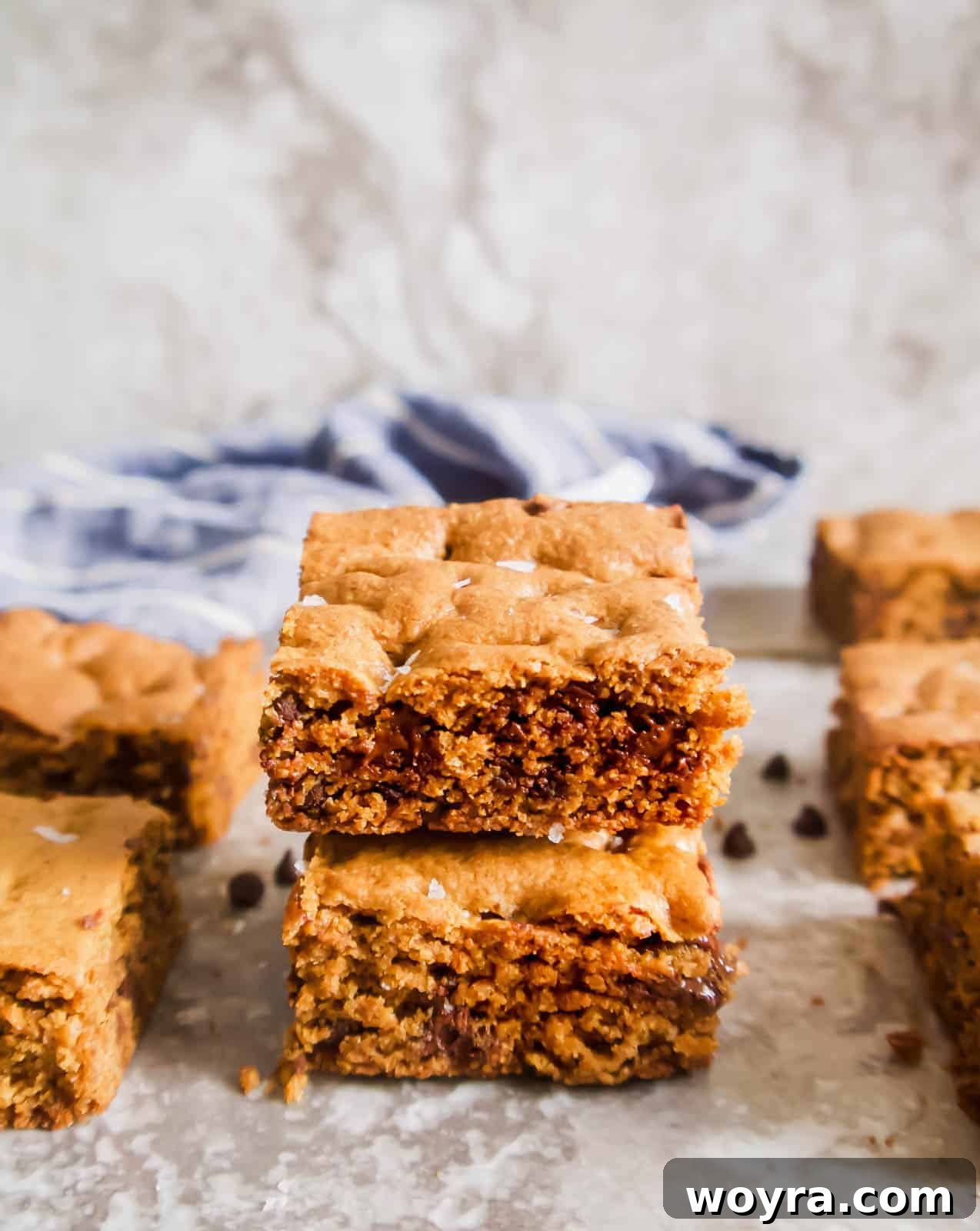
Indulge in these incredibly soft and chewy gluten-free chocolate chip cookie bars, crafted with a delightful blend of wholesome ingredients like almond flour, tapioca flour, coconut flour, and natural coconut sugar. This recipe delivers a truly satisfying dessert that is naturally Gluten-free, Dairy-free, Grain-free, and Paleo, making it a perfect choice for anyone seeking a healthier, yet utterly delicious, sweet treat that doesn’t compromise on flavor or texture.
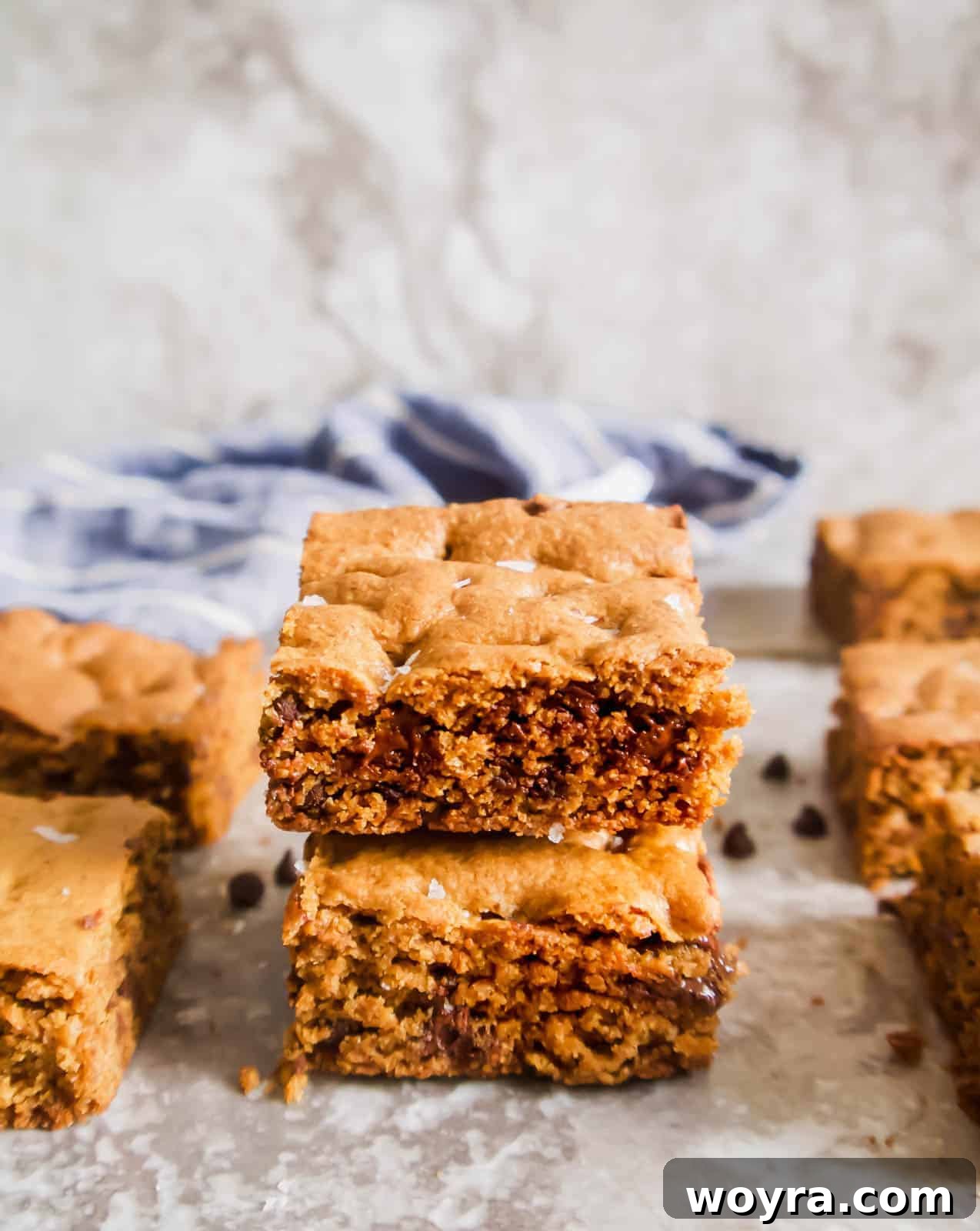
As an avid baker and chocolate chip cookie enthusiast, my culinary adventures have led me through countless variations. From banana oatmeal chocolate chip cookies to white chocolate chip cookies and even gluten-free chocolate candy cookie bars, I’ve explored many delightful recipes. However, these particular gluten-free chocolate chip cookie bars hold a special place. They offer an unparalleled combination of thick, substantial texture and a wonderfully chewy bite, delivering a deeply satisfying chocolate chip cookie experience in bar form.
What truly elevates these cookie bars beyond just their delicious taste is their thoughtful formulation for diverse dietary needs. They are meticulously designed to be Gluten-free, Dairy-free, Grain-free, and Paleo. This means you can savor a beloved classic without any common allergens or refined ingredients, making them an excellent option for those with sensitivities, specific dietary preferences, or simply anyone looking for a more wholesome dessert. They are proof that healthy eating can be incredibly indulgent and easy to achieve right in your own kitchen.
Table of Contents
- Why These Healthy Cookie Bars Are a Must-Try
- Essential Ingredients for Paleo Chocolate Chip Cookie Bars
- Smart Substitutions and Flavor Additions
- Baking Perfection: Step-by-Step Instructions
- Frequently Asked Questions About Gluten-Free Cookie Bars
- Explore More Delicious Gluten-Free Cookie Recipes
- Recipe Card: Gluten-Free Chocolate Chip Cookie Bars (Paleo)
Why These Healthy Cookie Bars Are a Must-Try
These gluten-free chocolate chip cookie bars are more than just a sweet treat; they are a fantastic, guilt-free indulgence for anyone craving a classic dessert. Here’s why this recipe should become a staple in your healthy baking repertoire:
- Superior Gluten-Free Flour Blend: The secret to their ideal soft and chewy texture lies in the expertly balanced combination of almond flour, tapioca flour, and coconut flour. This trifecta creates a robust gluten-free base that avoids the common pitfalls of dry or crumbly gluten-free baked goods. Almond flour provides structure, healthy fats, and a rich, nutty depth; tapioca flour contributes elasticity and chewiness, ensuring the bars hold together beautifully; and coconut flour, with its high absorbency, adds a subtle sweetness and helps maintain moisture without making the bars dense. This blend mimics the best qualities of traditional wheat-based cookie bars.
- Inclusive for Various Diets: Designed to be incredibly accommodating, these bars are naturally dairy-free, gluten-free, grain-free, and Paleo. This makes them a perfect dessert option for individuals with various dietary restrictions or preferences. Whether you’re managing allergies, avoiding grains for health reasons, or simply choosing a cleaner eating lifestyle, these cookie bars allow you to enjoy a beloved classic without any compromise. They truly offer a delicious solution for a wide audience.
- Effortless to Prepare: Despite their impressive health credentials and gourmet taste, these cookie bars are surprisingly simple to make. The recipe involves straightforward steps, making it accessible for bakers of all skill levels, from beginners to seasoned pros. You don’t need any special equipment beyond standard baking tools, and the process is quick enough to whip up a batch for an impromptu treat or a planned gathering.
- Made with Wholesome, Unrefined Ingredients: One of the greatest benefits of this recipe is its commitment to healthier ingredients. By replacing refined flours and sugars with nutrient-dense almond, tapioca, and coconut flours, and naturally sweetening with coconut sugar, these bars offer a more nutritious alternative to traditional desserts. You can feel good about every bite, knowing you’re nourishing your body with high-quality, unrefined components that taste absolutely incredible. This approach not only enhances the nutritional profile but also introduces richer, more complex flavors.
Essential Ingredients for Paleo Chocolate Chip Cookie Bars
Creating these perfect gluten-free and Paleo chocolate chip cookie bars relies on a selection of key ingredients, each playing a vital role in achieving their signature taste and texture:
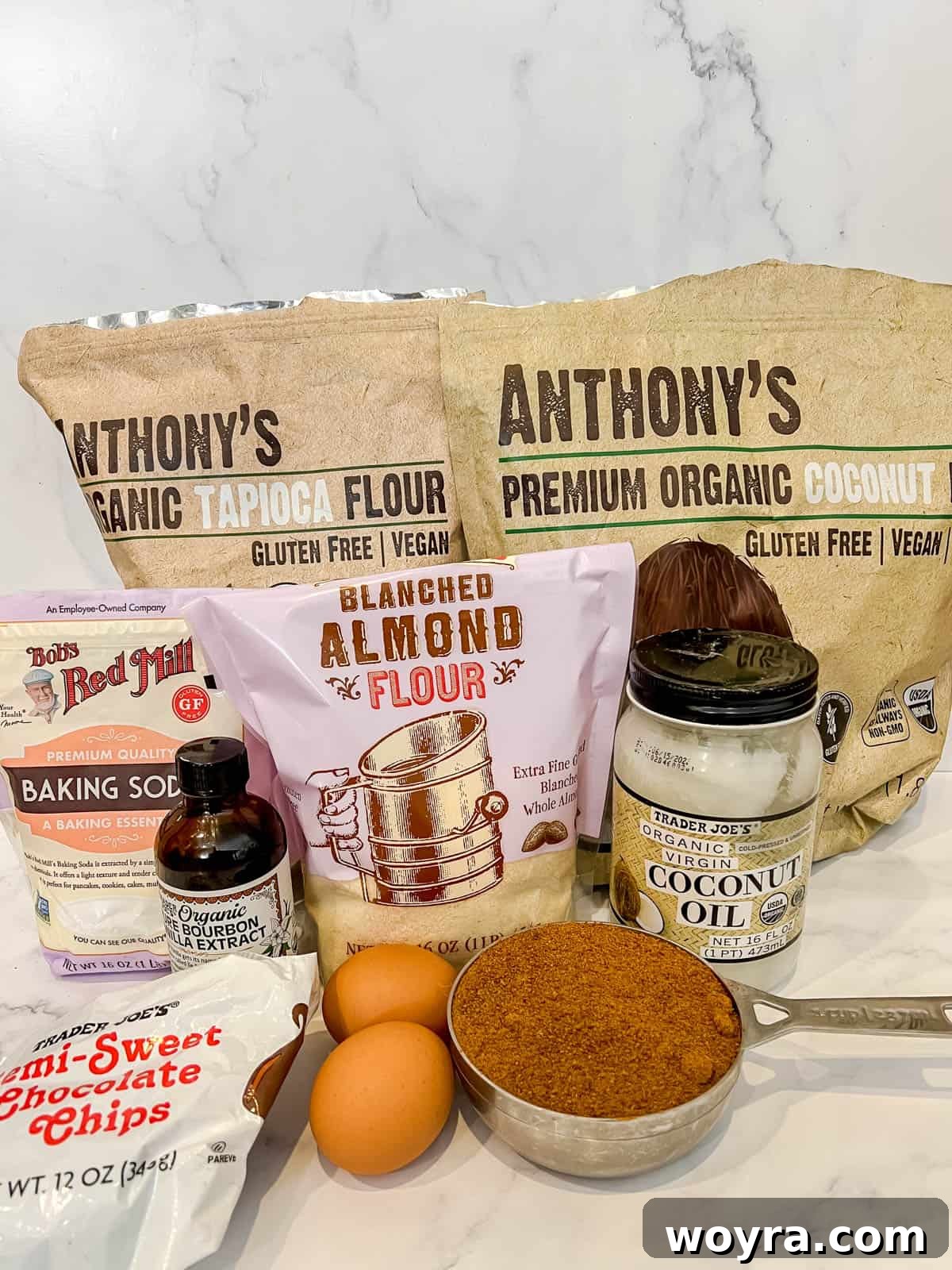
- Almond Flour: As the cornerstone of our gluten-free flour blend, blanched almond flour is preferred for its fine texture and ability to create a tender crumb. It’s a nutrient powerhouse, offering protein and healthy fats, while contributing a delicate, nutty flavor that beautifully complements the chocolate.
- Tapioca Flour (or Starch): This ingredient is crucial for the chewy characteristic of these cookie bars. Tapioca flour acts as an effective binding agent, providing the necessary elasticity to prevent the bars from being too crumbly and ensuring a satisfying bite. It integrates seamlessly with almond and coconut flours.
- Coconut Flour: Highly absorbent and rich in fiber, coconut flour is used in smaller quantities to help bind the dough and add a subtle sweetness along with its distinct, pleasant flavor. It perfectly rounds out our unique gluten-free flour mixture, contributing to the overall structure and moisture balance.
- Baking Soda: A fundamental leavening agent, baking soda reacts during baking to produce carbon dioxide, which gives the cookie bars their desired rise and a lighter, airier texture, preventing them from becoming too dense.
- Olive Oil: Chosen as a healthy fat and a dairy-free butter alternative, a light-flavored olive oil provides essential moisture and richness without imparting an overwhelming flavor. This helps achieve a tender crumb and a moist interior. Avocado oil is another excellent neutral-tasting substitute.
- Coconut Sugar: This natural sweetener is a fantastic Paleo-friendly choice, known for its lower glycemic index compared to refined sugars. It lends a wonderful caramel-like sweetness and a rich, deep flavor profile that enhances the complexity of the cookie bars.
- Eggs: Eggs are vital for binding all the ingredients, providing structure, and adding moisture. The combination of one large egg and an additional egg yolk contributes extra richness and helps create that signature chewy, almost fudgy texture.
- Vanilla Extract: A classic flavor enhancer, vanilla extract deepens the sweet and chocolatey notes, adding a comforting aroma and a well-rounded taste to the cookie bars. Both alcohol-based and alcohol-free versions work well.
- Dairy-Free Chocolate Chips: No chocolate chip cookie bar is complete without generous amounts of chocolate! Be sure to select high-quality dairy-free chocolate. Popular options include Enjoy Life chocolate chips, which are both dairy-free and gluten-free, or HU chocolate chips for a strict Paleo option, often sweetened with coconut sugar. A mix of mini chips and chunks adds delightful texture in every bite.
For exact quantities and comprehensive preparation steps, please scroll down to the full recipe card.
Smart Substitutions and Flavor Additions
Flexibility is key in baking, and this gluten-free chocolate chip cookie bar recipe is wonderfully adaptable. Here are some smart substitutions and delightful additions you can consider to customize your batch:
- Tapioca Flour Alternative: If tapioca flour is not available, arrowroot flour (also known as arrowroot powder or arrowroot starch) makes an excellent 1:1 substitute. It offers similar thickening and binding properties, helping to achieve the desired chewy texture in your bars.
- Choice of Oil: While olive oil provides a neutral foundation, you have other healthy oil options. Avocado oil is another fantastic alternative, prized for its very mild flavor profile that won’t interfere with the cookie’s taste. If you choose to use coconut oil, remember to measure it in its melted state for accuracy. Be aware that coconut oil will impart a slight, pleasant coconut flavor to your bars, which many find delicious!
- Sweetener Considerations: For those not strictly following a Paleo diet, brown sugar can be a viable substitute for coconut sugar. It will lend a more traditional, rich caramel note and can contribute to an even moister bar. However, it’s important to note that brown sugar is not Paleo-compliant. Stick to granulated sweeteners for consistency in this recipe, as liquid sweeteners would alter the dough’s moisture balance too significantly.
- Enhancing Flavor: Elevate the taste profile by adding a pinch of ground cinnamon or a tiny dash of instant espresso powder to the dry ingredients – both work wonders in complementing and deepening the chocolate flavor. A sprinkle of flaky sea salt on top of the dough before baking is also highly recommended; it provides a delightful contrast to the sweetness and makes the chocolate pop.
- Mix-ins for Texture: For an extra layer of crunch and flavor, consider folding in about half a cup of chopped nuts, such as walnuts or pecans, along with the chocolate chips. Ensure they are unsalted and fit within your dietary guidelines. Dried fruit like chopped dates or cranberries could also be a fun, chewy addition.
Baking Perfection: Step-by-Step Instructions
Follow these detailed instructions carefully to ensure your gluten-free chocolate chip cookie bars turn out perfectly soft, chewy, and utterly delicious every time.
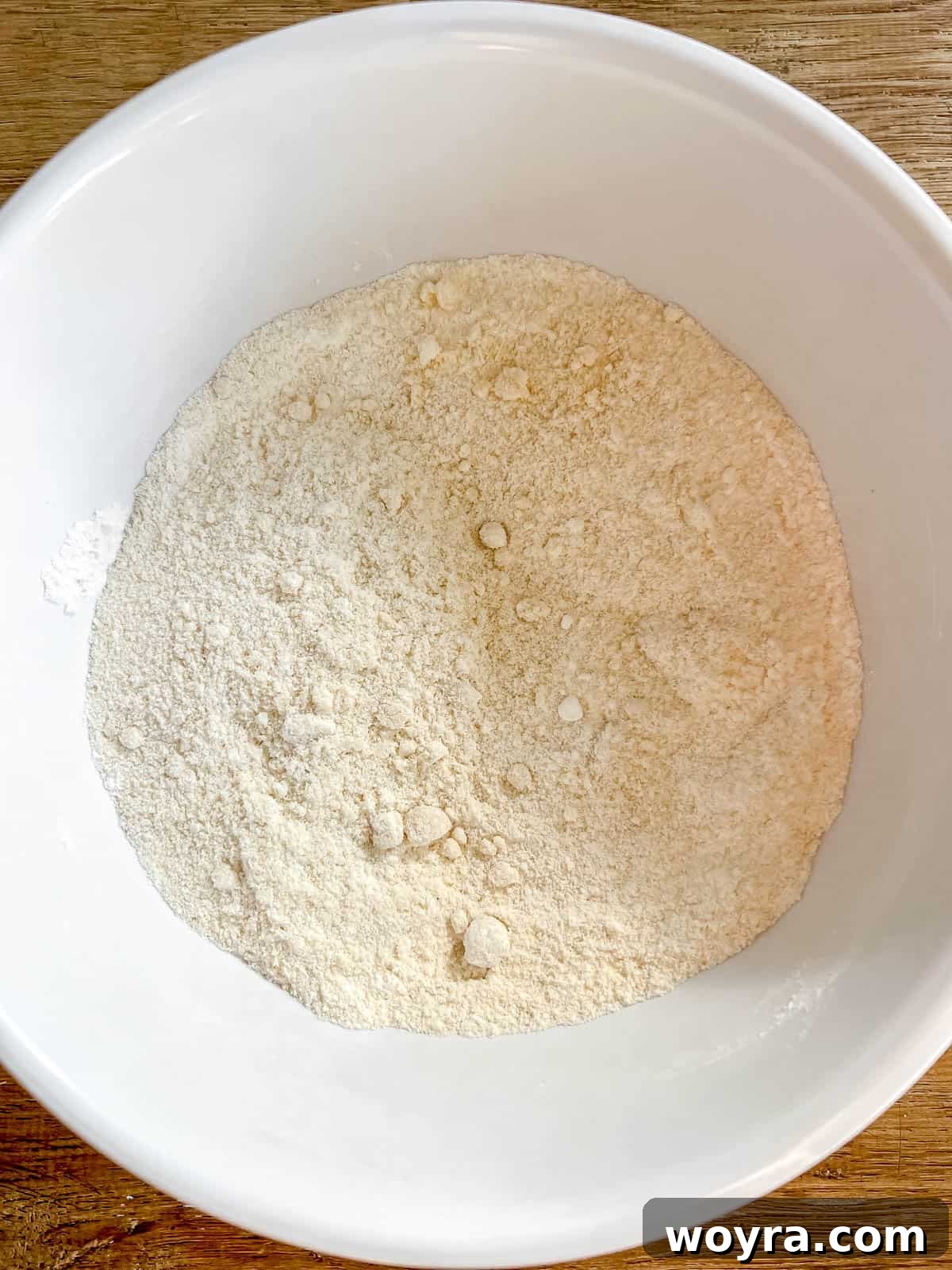
Step 1: Prepare Your Dry Mix. Begin by preheating your oven to 350°F (175°C). Line a 9×9-inch (23×23 cm) square baking pan with parchment paper, allowing some overhang on the sides. This makes it incredibly easy to lift the finished bars out later. In a large mixing bowl, combine the almond flour, tapioca flour, coconut flour, baking soda, and salt. Use a fork or a whisk to thoroughly blend these ingredients until no lumps remain and everything is evenly distributed. Set this bowl aside.
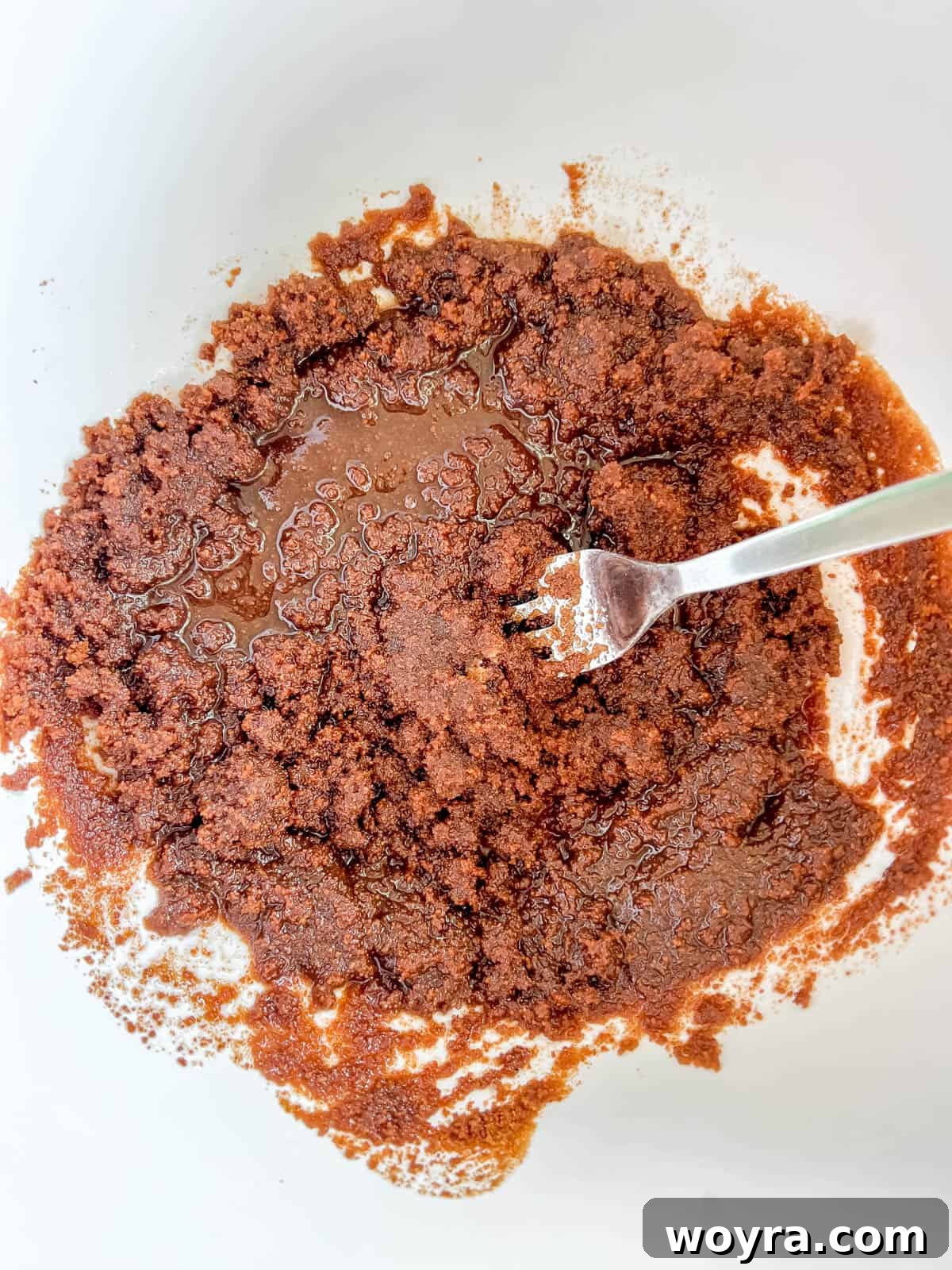
Step 2: Start the Wet Mix. In a separate, medium-sized bowl, pour in your olive oil (or chosen alternative oil) and add the coconut sugar. Whisk these two ingredients together vigorously for about 1 to 2 minutes. The goal is to achieve a smooth, slightly creamy mixture where the coconut sugar is well incorporated into the oil, which helps in creating a consistent and tender bar.
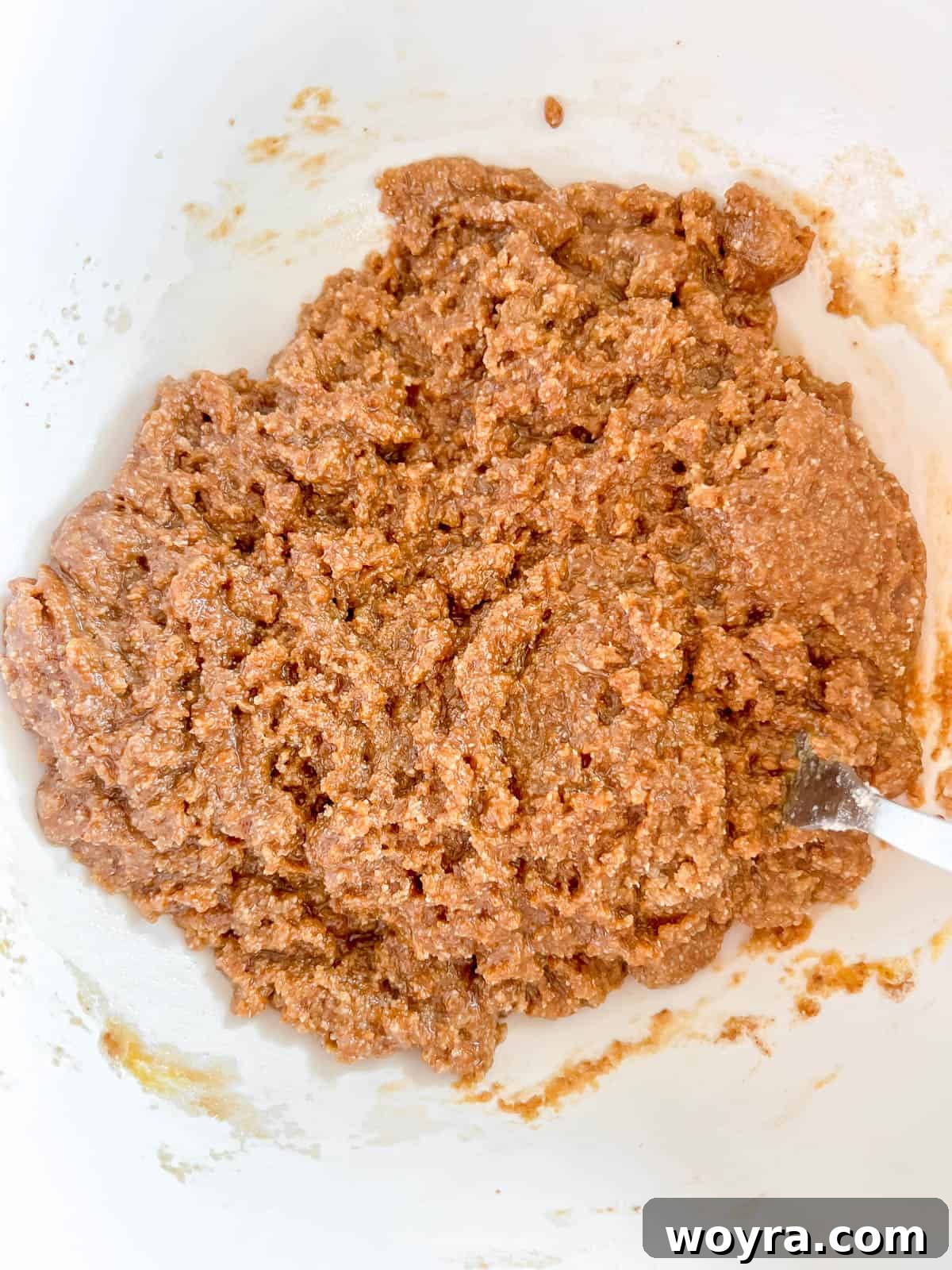
Step 3: Add Eggs and Vanilla, then Combine. To your oil and coconut sugar mixture, add the large egg and the additional egg yolk. Whisk again until the mixture appears light, fluffy, and thoroughly combined, ensuring the eggs are fully integrated. Next, stir in the vanilla extract, whisking briefly to distribute its delightful aroma. Now, gently add the previously prepared dry ingredients into the wet mixture. Use a fork or a sturdy rubber spatula to mix until just combined, being careful not to overmix the dough. Overmixing can lead to a tougher texture in the final bars.
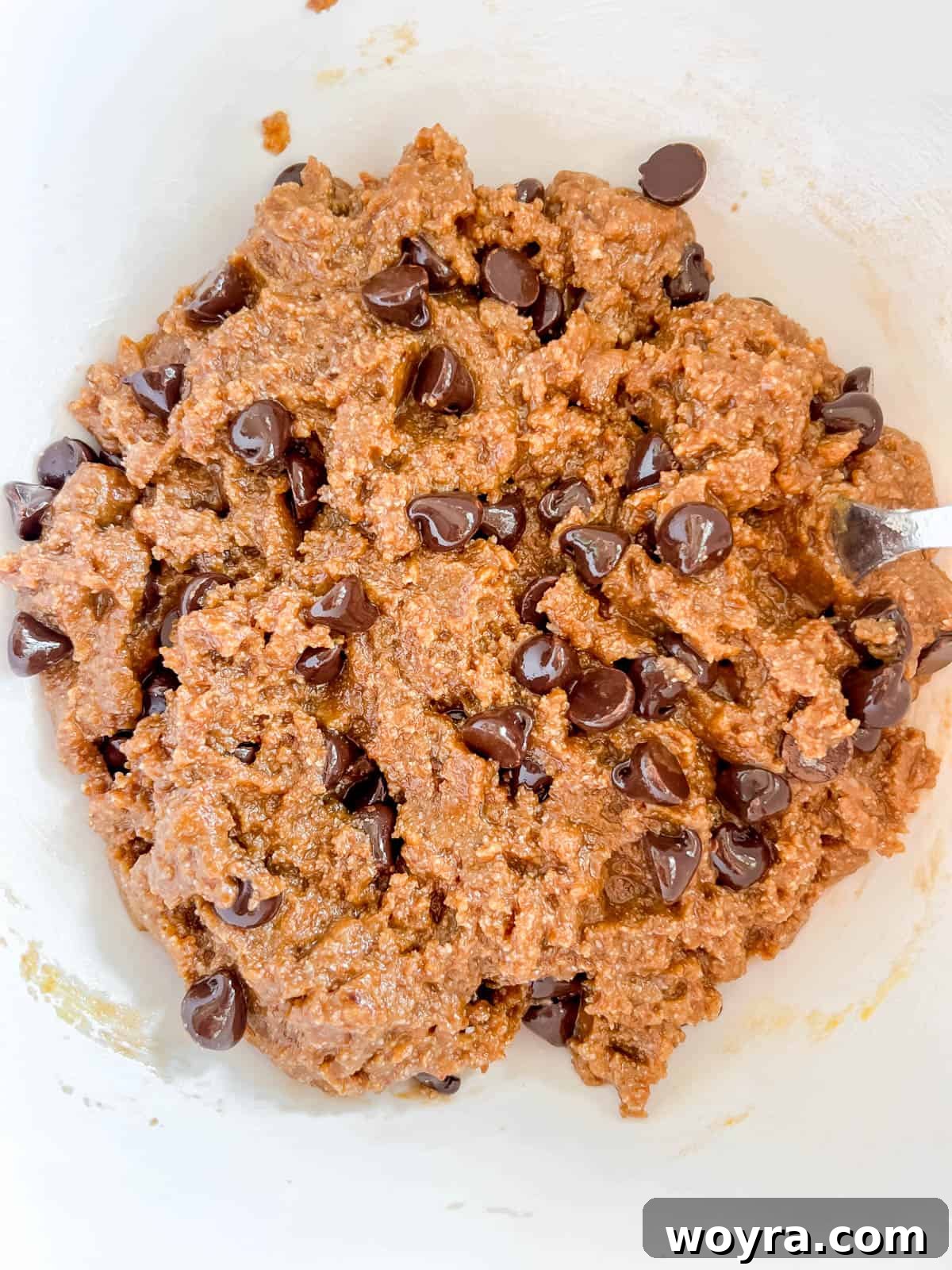
Step 4: Incorporate the Chocolate. Now for the best part – gently fold in your chosen dairy-free chocolate chips. For a truly sensational experience with varied texture and maximum chocolate in every bite, I highly recommend using a mix of mini chocolate chips and larger chocolate chunks (approximately ½ cup of each). Mix just until the chocolate is evenly distributed throughout the rich dough, ensuring not to crush the chips.
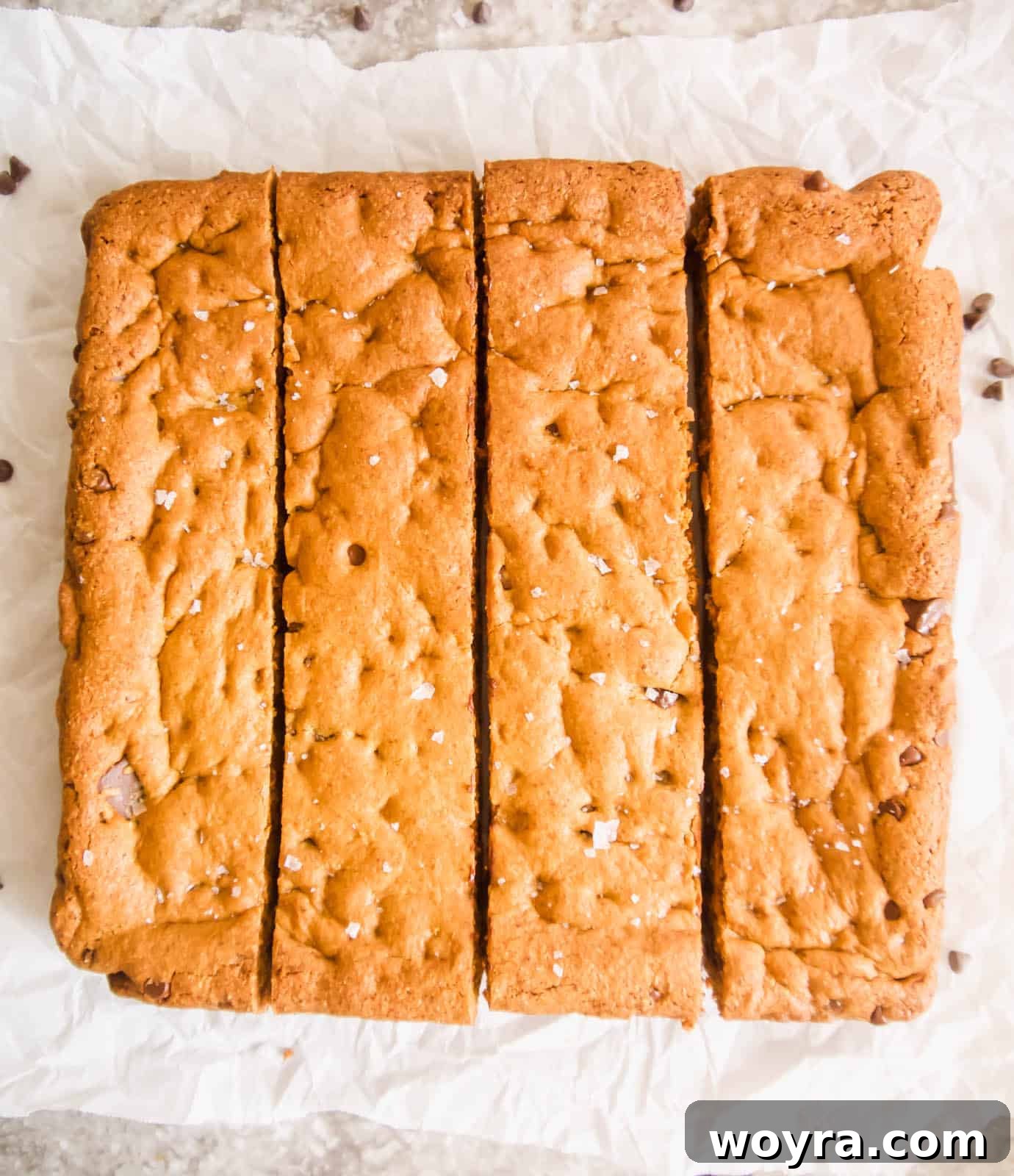
Step 5: Bake and Observe. Carefully pour the prepared cookie dough into your parchment-lined baking pan. Using a rubber spatula or the back of a spoon, gently press and smooth the dough into an even layer across the entire surface of the pan. This step is crucial for uniform thickness and even baking. Transfer the pan to your preheated oven and bake for approximately 30 minutes. The bars are ready when their edges are lightly golden brown, and a toothpick inserted into the center comes out clean. The center should appear set and firm, not wobbly.
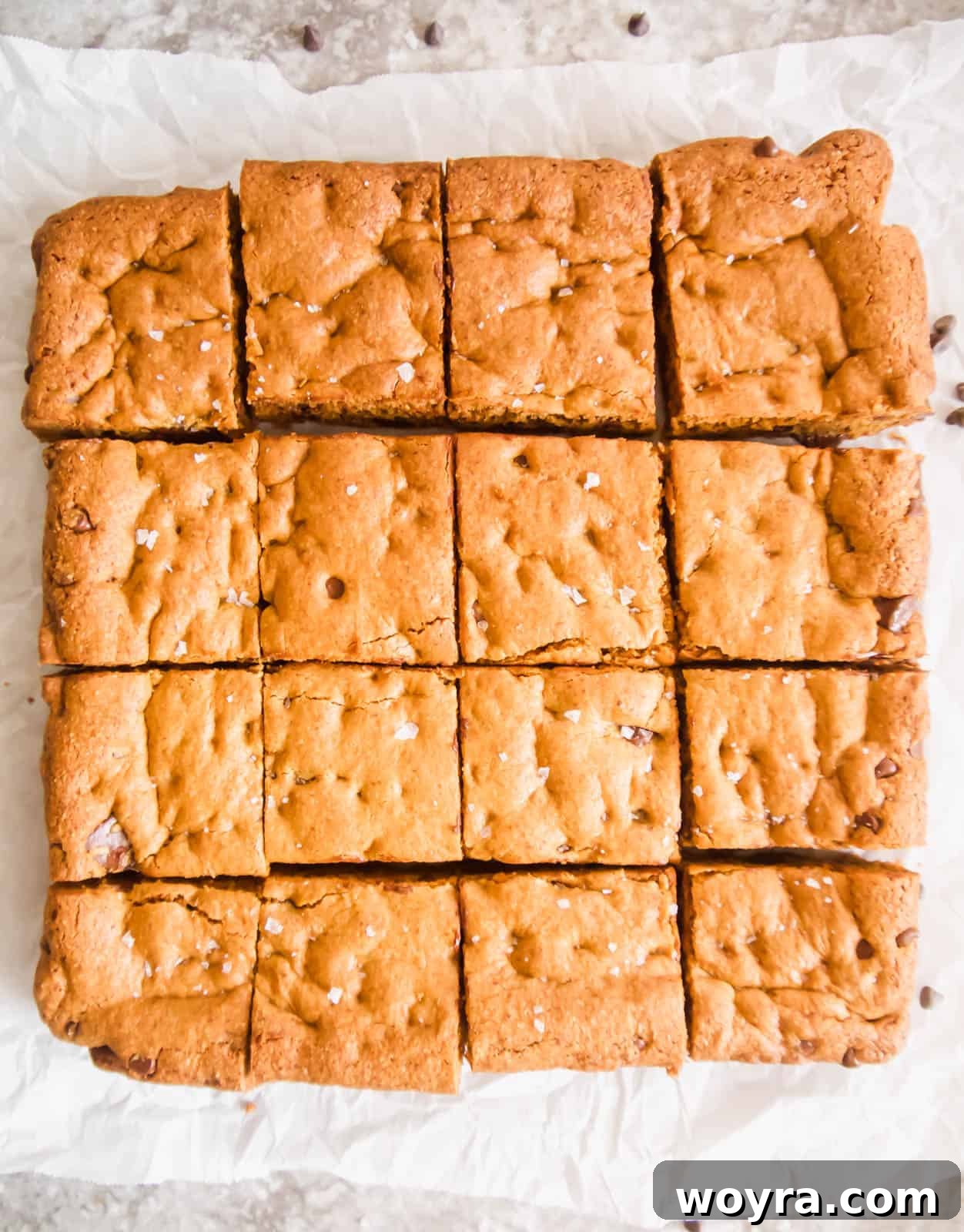
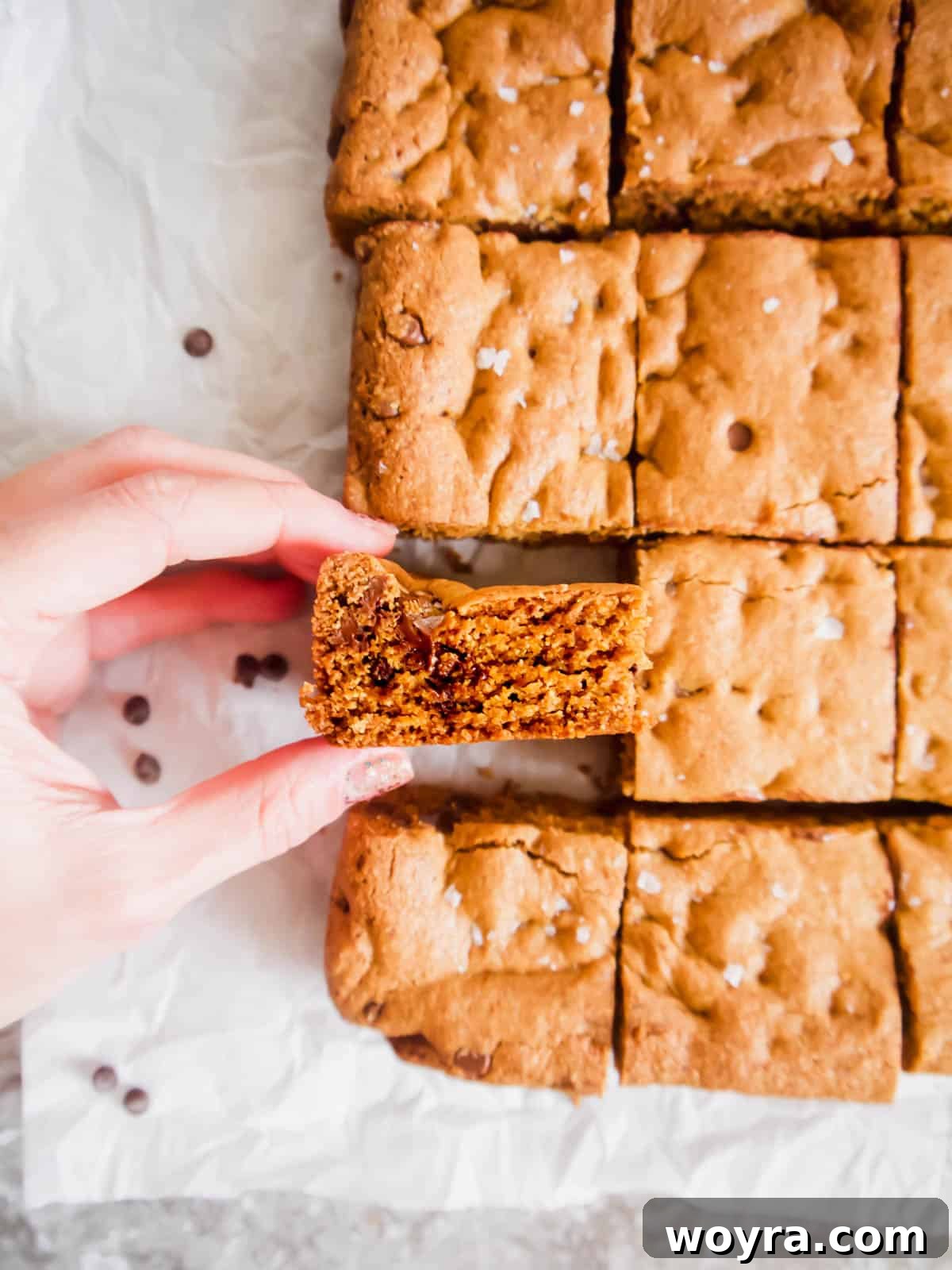
Step 6: Cool Completely Before Cutting. This step is absolutely critical for achieving perfectly structured, non-crumbly bars! Once removed from the oven, place the baking pan on a wire rack and allow the bars to cool completely for at least one hour. Resist the temptation to cut them while warm, as they will be fragile and prone to breaking. Once thoroughly cooled, use the parchment paper overhang to gently lift the entire slab of cookie bars out of the pan and transfer it to a cutting board. Slice into 16 uniform squares. If you simply can’t wait for a warm, gooey experience, you may cut them after about 15-20 minutes of cooling, but proceed with extreme gentleness!
Frequently Asked Questions About Gluten-Free Cookie Bars
Here are answers to some common questions about making and enjoying these delectable Paleo and gluten-free chocolate chip cookie bars:
No, you absolutely have flexibility with the oil choice. Olive oil is a great option for its neutral flavor, but you can certainly use other liquid oils. Avocado oil is an excellent alternative, as it also has a very mild flavor that won’t compete with the rich chocolate or sweet coconut sugar notes. If you opt for coconut oil, be aware that it will impart a subtle coconut flavor to your cookie bars. This can be a delicious addition if you enjoy coconut, but it’s something to consider. Regardless of your choice, ensure the oil is in its melted state when measuring.
When substituting coconut oil, precise measurement is key to maintaining the recipe’s balance. Since coconut oil solidifies at cooler temperatures, scooping it directly from the jar can lead to an inaccurate volume. To measure it correctly, spoon a slightly generous amount into a microwave-safe bowl. Microwave it in short bursts (typically 10-15 seconds) until it is fully melted and clear. Then, pour the liquid coconut oil into your measuring cup to get the exact amount specified in the recipe. This method ensures the proper fat-to-dry ingredient ratio, which is vital for achieving the perfect bar texture.
To preserve their delightful soft and chewy texture, store these gluten-free chocolate chip cookie bars in an airtight container at room temperature. They will remain wonderfully fresh and delicious for up to a week. If you reside in a particularly warm or humid environment, or if you simply prefer your treats chilled, you can also store them in the refrigerator. Refrigeration might extend their shelf life slightly. For the best eating experience, allow them to come to room temperature or warm them gently in the microwave for a few seconds before serving.
Absolutely, these cookie bars freeze beautifully, making them an excellent candidate for meal prepping or having a convenient, healthy treat on hand. Once the bars have completely cooled and been cut into individual squares, arrange them in a single layer on a parchment-lined baking sheet. Flash freeze them for approximately 30 minutes until they are solid. Then, transfer the frozen bars to an airtight freezer-safe container or a resealable freezer bag. They will maintain their quality in the freezer for up to 2-3 months. To enjoy, simply thaw them at room temperature for an hour or two, or gently warm them in the microwave for a few seconds to restore that freshly baked feel.
Crumbly cookie bars can usually be traced back to a few common culprits. Firstly, precise flour measurements are crucial; too much dry flour, especially the highly absorbent coconut flour, can result in a dry dough. Using a kitchen scale for flours can significantly enhance accuracy. Secondly, ensure that any liquid fats, like coconut oil, are measured in their melted state. Thirdly, insufficient binding from the eggs or an overall lack of moisture can contribute to crumbling. Double-check that your eggs are fresh and thoroughly incorporated into the wet ingredients. If your dough feels excessively dry before baking, a tiny extra splash of oil or a teaspoon of unsweetened non-dairy milk can sometimes help to achieve a better consistency, but this recipe is generally well-balanced so review your steps carefully.
Explore More Delicious Gluten-Free Cookie Recipes
If you’ve enjoyed these wholesome gluten-free chocolate chip cookie bars, you’ll undoubtedly love exploring other fantastic cookie creations from our collection. Each recipe offers a unique take on satisfying your sweet cravings while adhering to dietary needs:
- Paleo Coconut Oil Soft Chocolate Chip Cookies – These individual cookies are an absolute dream for anyone who cherishes a classic, incredibly soft, and melt-in-your-mouth chocolate chip cookie. Made with wholesome Paleo-friendly ingredients, they are rich, gooey, and deliver a truly satisfying dessert experience. A guaranteed hit for all chocolate lovers!
- Edible Eggless Chocolate Chip Cookie Dough – Sometimes, the best part of baking is the dough itself! This unbelievably delicious recipe creates a safe-to-eat cookie dough (thanks to being eggless and using heat-treated flour options) that is also Paleo, gluten-free, and vegan. It’s perfect for snacking straight from the bowl, or you can even bake this incredibly versatile dough into cookies if you prefer.
- The BEST Gooey Paleo Chocolate Chip Cookies – An enduring favorite and a highly-rated recipe on the blog, these cookies consistently deliver a super soft, delightfully chewy texture with an irresistibly gooey center. They stand as a testament to just how incredible and satisfying Paleo baking can be, proving that healthy treats don’t have to sacrifice flavor or fun.
Did you try this recipe? We would love to hear about your experience and see your creations! Please leave us a ⭐ review below! Your feedback helps other bakers too.
Gluten-Free Chocolate Chip Cookie Bars (Paleo)
Cook Time: 30 mins
Resting Time: 1 hr
Total Time: 1 hr 40 mins
Soft, chewy, and thick chocolate chip cookie bars that are naturally Gluten-free, Dairy-free, Grain-free, and Paleo! Perfect for a wholesome treat.
Ingredients
- 1 ¼ cups almond flour (blanched recommended for best texture)
- 2/3 cup tapioca flour (or arrowroot flour)
- 1/3 cup coconut flour
- 1 tsp baking soda
- 1/2 tsp salt (fine sea salt is recommended)
- 3/4 cup olive oil (or avocado oil; if using coconut oil, measure it in its melted state)
- 1 cup coconut sugar (or brown sugar for non-Paleo)
- 1 large egg plus 1 large egg yolk (for extra richness)
- 2 tsps vanilla extract (pure vanilla recommended)
- 1 cup dairy-free chocolate chips (a mix of mini chips and chocolate chunks is highly recommended for varied texture)
- Optional: A sprinkle of flaky sea salt for topping
Instructions
- Preheat your oven to 350°F (175°C). Line a 9×9-inch (23×23 cm) square baking pan with parchment paper, allowing an overhang on the sides for easy removal of the bars after baking. Set the prepared pan aside.
- In a large mixing bowl, combine the almond flour, tapioca flour, coconut flour, baking soda, and salt. Whisk or use a fork to thoroughly mix these dry ingredients together until they are uniformly blended, ensuring proper distribution of the leavening agent. Set aside.
- In a separate, medium-sized bowl, pour the olive oil (or your chosen oil) and add the coconut sugar. Whisk vigorously for 1-2 minutes until the sugar is well incorporated and the mixture appears smooth and slightly creamy. Then, add the large egg and the additional egg yolk, whisking until the mixture becomes light and creamy. Finally, add the vanilla extract and whisk once more to combine.
- Gradually add the dry ingredients mixture to the wet ingredients bowl. Using a fork or a rubber spatula, mix until the ingredients are just combined. Be careful not to overmix, as this can lead to tougher bars. Gently fold in the dairy-free chocolate chips. For a delightful mix of textures and chocolate in every bite, I recommend using a combination of mini chocolate chips and larger chocolate chunks.
- Pour the cookie dough into the parchment-lined baking pan. Use a rubber spatula or the back of a spoon to gently press and spread the dough evenly into a uniform layer across the entire pan. This ensures consistent baking and a well-formed bar.
- Bake for approximately 30 minutes, or until the edges are beautifully golden brown and a toothpick inserted into the center of the bars comes out clean. The center should appear set and firm to the touch.
- Once baked, remove the pan from the oven and place it on a wire rack to cool completely for at least one hour. This crucial cooling period allows the bars to set properly, preventing them from crumbling when cut. Once thoroughly cooled, use the parchment paper overhang to lift the entire slab of cookie bars out of the pan. Transfer to a cutting board and slice into 16 even squares.
- Note on Serving Warm: If you’re eager to enjoy a warm, gooey treat, you can cut the bars after about 15-20 minutes of cooling. However, they will be more delicate, so handle them very gently.
- Storage: Store the cooled gluten-free chocolate chip cookie bars in an airtight container at room temperature for up to one week. They are so delicious, they might not last that long! For longer storage options, refer to the FAQ section above regarding freezing.
Recipe Notes
- Tapioca Flour Substitution: Arrowroot flour can be used as a direct 1:1 substitute for tapioca flour.
- Oil Alternatives: Avocado oil is an excellent neutral-flavored alternative to olive oil. If using coconut oil, ensure it is melted before measuring.
- Sweetener Flexibility: For those not following a strict Paleo diet, brown sugar can be used in place of coconut sugar, offering a different flavor profile.
- Flavor Enhancements: A light sprinkle of flaky sea salt on the dough before baking can add a fantastic sweet-and-salty contrast, highlighting the chocolate flavor beautifully.
Nutrition
Nutrition information is automatically calculated and should only be used as an approximation. Actual values may vary based on ingredients used and preparation methods.
- Calories: 261 kcal
- Carbohydrates: 23 g
- Protein: 3 g
- Fat: 19 g
- Saturated Fat: 4 g
- Polyunsaturated Fat: 1 g
- Monounsaturated Fat: 7 g
- Trans Fat: 0.001 g
- Cholesterol: 10 mg
- Sodium: 170 mg
- Potassium: 6 mg
- Fiber: 3 g
- Sugar: 12 g
- Vitamin A: 15 IU
- Calcium: 35 mg
- Iron: 1 mg
Additional Info
Cuisine: American