
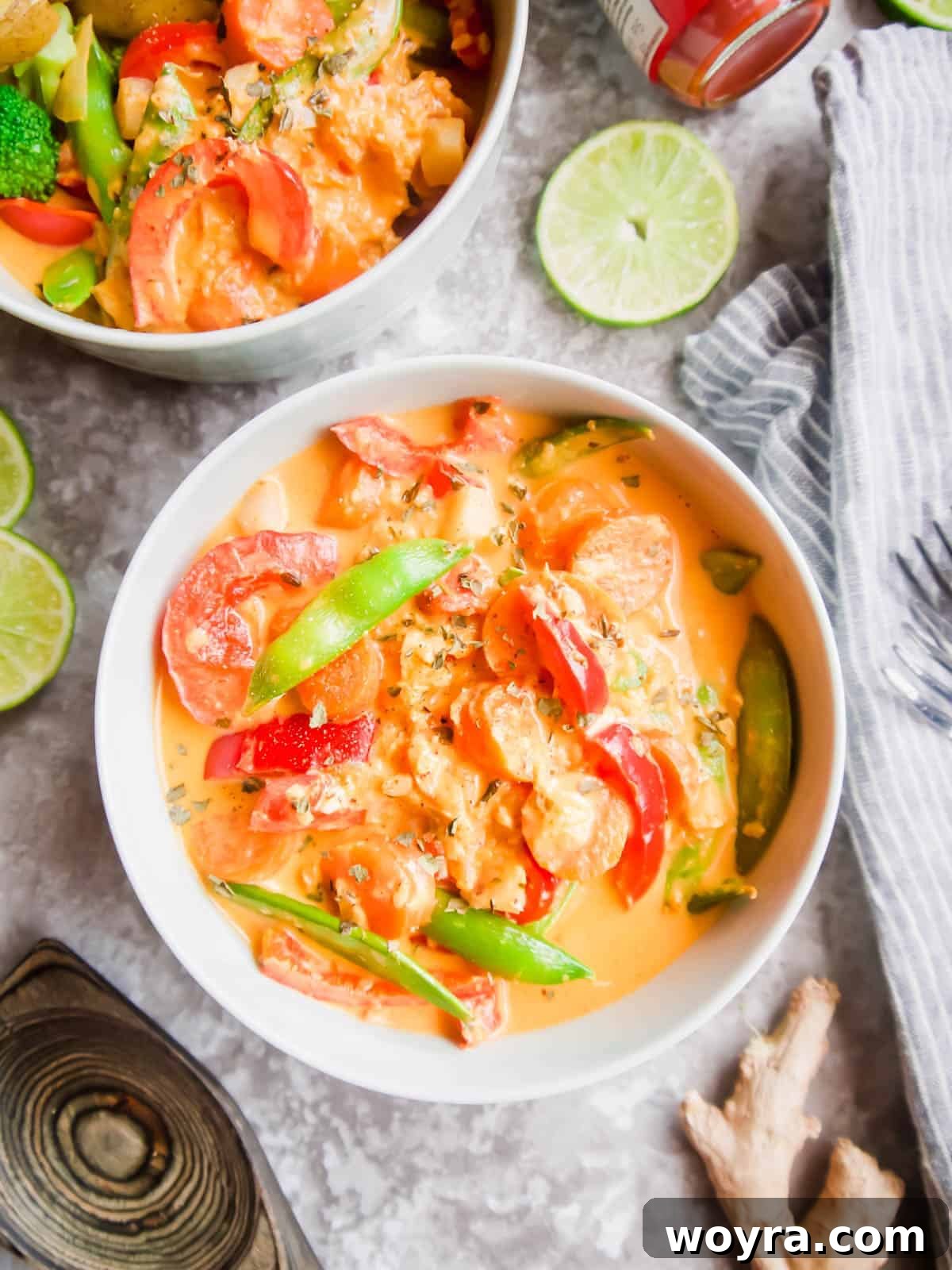
This incredibly easy and deeply flavorful Vegan Thai Red Curry offers a healthy, vegetable-packed meal experience. It features an utterly amazing sauce – creamy, savory, sweet, and perfectly spiced with coconut cream. Designed to be naturally vegetarian, Paleo, dairy-free, grain-free, and gluten-free, this recipe caters to a wide range of dietary needs without compromising on taste.
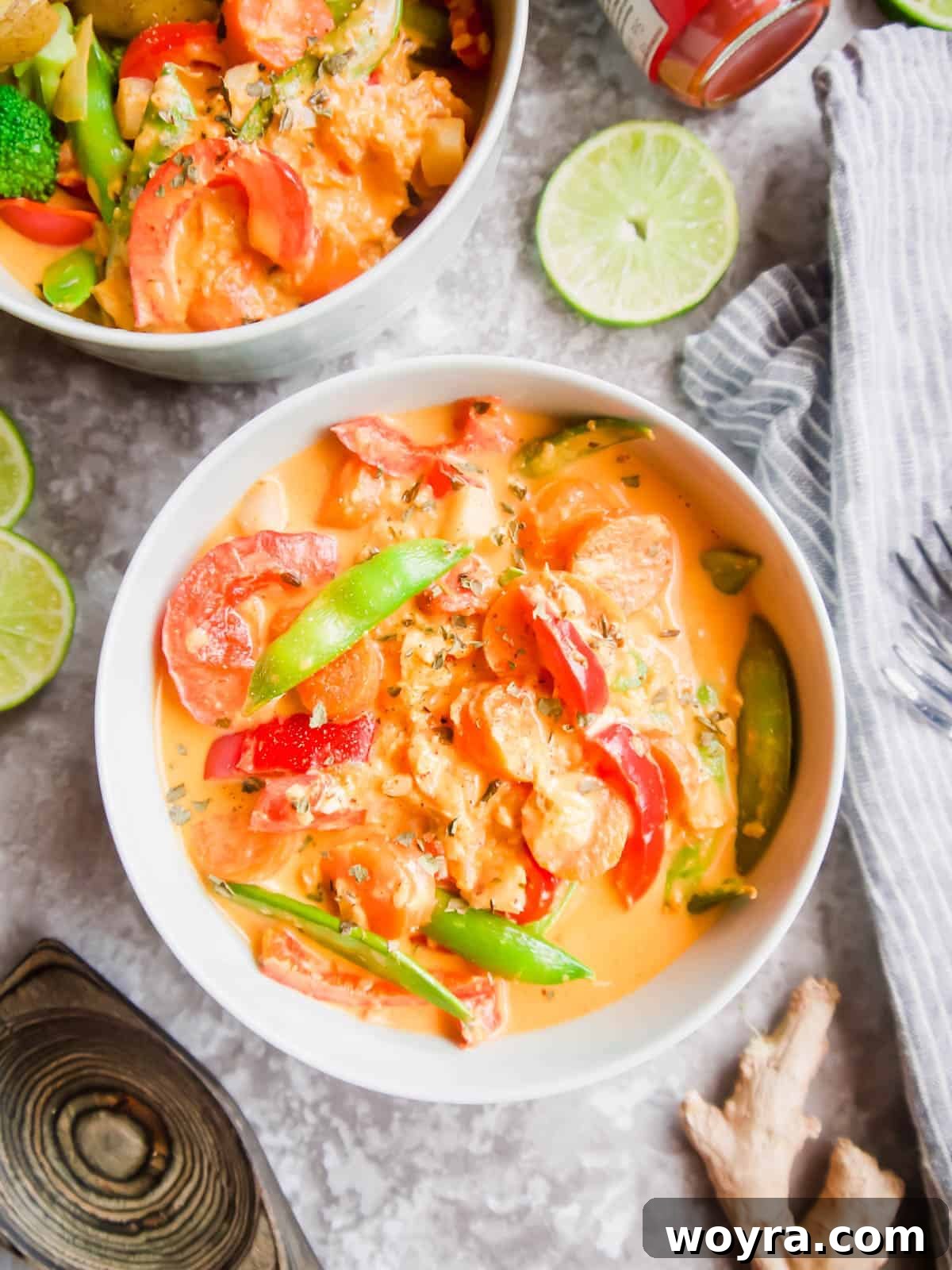
Thai red curry holds a special place in my heart. From the very first spoonful, I was captivated by its complex flavors, and my appreciation grew even stronger when I realized how simple it is to recreate this culinary magic right in my own kitchen. This particular red curry recipe has quickly become a staple for me, cherished for its adaptability and the sheer ease with which it can be customized using whatever fresh vegetables or ingredients you have on hand.
Beyond the delightful vegetables, it’s truly the sauce that steals the show in this recipe. Its rich, velvety texture and harmonious blend of flavors are so exceptional that you’ll find yourself wanting to savor every last drop. If you’re someone who appreciates a truly outstanding sauce, you might also enjoy my Creamy Brussels Sprouts Casserole or my Tastiest Paleo Paprika Garlic Shrimp. Both of these dishes boast sauces that are equally remarkable and sure to impress.
Table of Contents
- Why This Vegan Thai Red Curry Stands Out
- Essential Recipe Ingredients
- Customizing Your Curry: Additions and Substitutions
- Step-by-Step Guide to Making Thai Red Curry
- Expert Tips for the Perfect Vegan Thai Red Curry
- More Irresistible Coconut Cream Sauce Recipes
- Vegan Thai Red Curry (Paleo) Recipe Card
Why This Vegan Thai Red Curry Stands Out
This isn’t just another curry recipe; it’s a culinary experience designed for health, convenience, and deliciousness. Here’s what makes this Vegan Thai Red Curry a must-try for your weekly meal rotation:
- Healthier Than Takeout, Yet More Delicious: While restaurant Thai curries can often be laden with hidden sugars and unhealthy oils, this homemade version offers all the authentic flavor you crave with the added benefit of wholesome, fresh ingredients. You’ll enjoy a lighter, more nourishing meal that’s bursting with flavor and far superior to any takeout option.
- Incredibly Versatile for Any Palate: One of the greatest advantages of this recipe is its flexibility. It welcomes a wide array of vegetables, making it easy to use whatever fresh produce you have on hand or what’s in season. Feel free to experiment with different textures and flavors. For those not strictly vegan, it also adapts beautifully to include your protein of choice, such as chicken, tofu, or shrimp, without altering the core deliciousness of the sauce.
- Allergy-Friendly and Diet-Inclusive: Navigating dietary restrictions can be challenging, but this recipe effortlessly accommodates several common allergies and preferences. It is naturally dairy-free, gluten-free, soy-free, and nut-free, making it a safe and satisfying meal for many. This broad appeal ensures that everyone at your table can enjoy a delightful, flavorful dish without worry.
- Quick and Easy Weeknight Meal: Despite its rich and complex taste, this Thai Red Curry comes together remarkably quickly. With minimal prep and cooking time, it’s an ideal solution for busy weeknights when you need a healthy, satisfying meal without spending hours in the kitchen.
- A Symphony of Flavors: The balance of creamy coconut, aromatic ginger and garlic, bright lime, and the subtle heat of red curry paste creates a truly harmonious flavor profile. Each bite offers a delightful interplay of sweet, savory, and spicy notes that will transport your taste buds straight to Thailand.
Essential Recipe Ingredients
Crafting the perfect Vegan Thai Red Curry starts with a selection of fresh, high-quality ingredients. Each component plays a vital role in building the layered flavors and wonderful texture of this beloved dish. Here’s a closer look at what you’ll need:
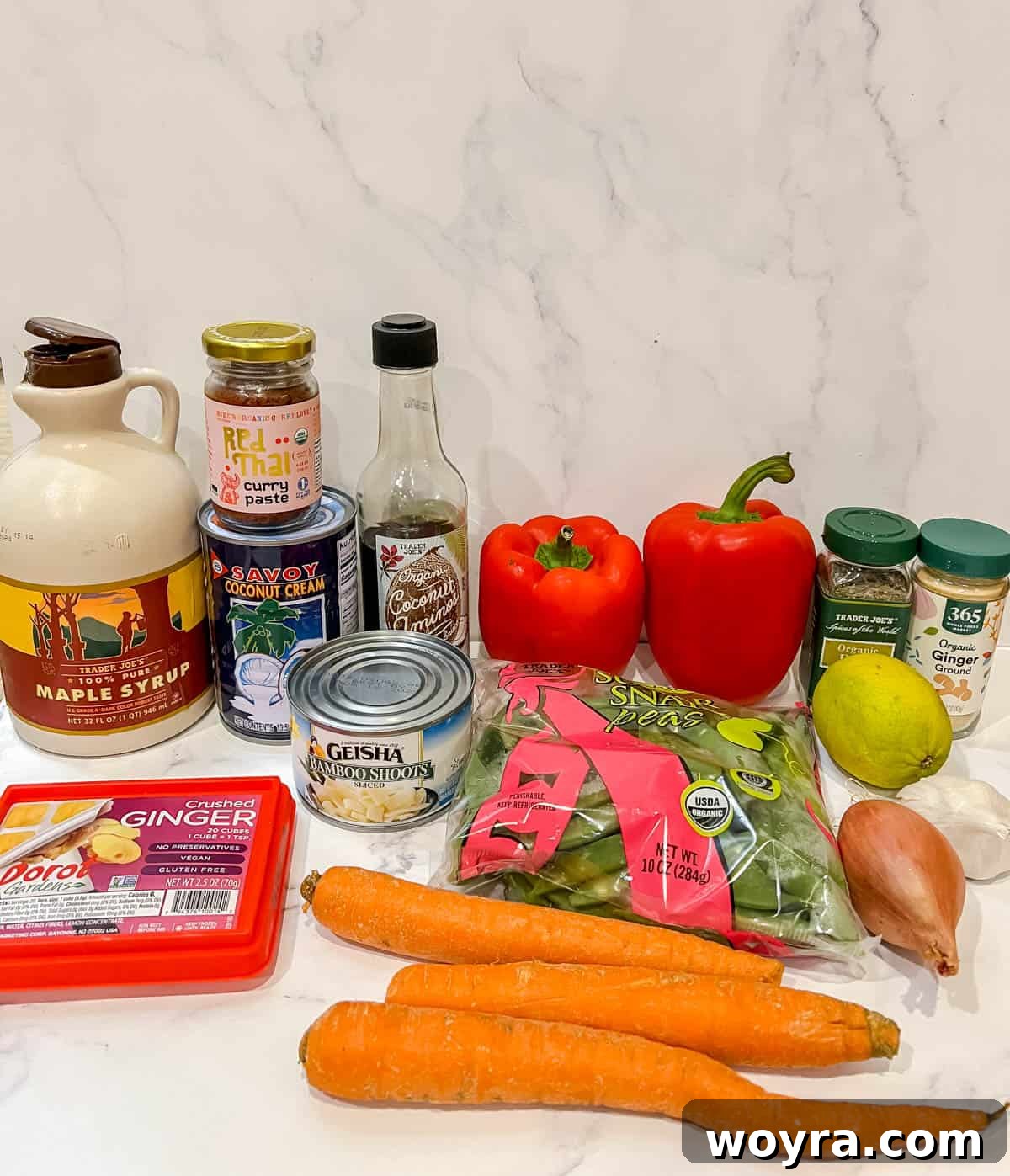
- Garlic and Onion (or Shallots): These aromatic foundations are crucial for building a deep, savory base. They release their fragrant oils as they cook, infusing the entire dish with warmth and complexity. Shallots offer a slightly milder, sweeter alternative if preferred.
- Carrots: Sliced carrots contribute a lovely sweetness and a satisfying crunch, adding texture and a vibrant color that brightens up the curry. Their earthy notes complement the rich sauce beautifully.
- Bell Peppers: I personally favor red bell peppers for their inherent sweetness, which harmonizes wonderfully with the other Thai flavors. However, feel free to use yellow or orange peppers for a similar sweet profile. While green bell peppers can be used, be aware that their slightly bitter taste might subtly alter the overall flavor of the dish.
- Red Curry Paste: This is the heart of your Thai curry. The quality of your red curry paste significantly impacts the final flavor. I highly recommend using a good quality paste like Thai Kitchen red curry paste, which is a fantastic choice as it’s typically Paleo, Vegan, Gluten-free, and non-GMO, ensuring your curry meets all dietary requirements.
- Fresh Ginger: The pungent, spicy kick of fresh ginger adds an authentic warmth and zesty aroma. While grating fresh ginger is ideal, using frozen crushed ginger can be a convenient time-saver without compromising flavor.
- Coconut Cream: For that signature rich, creamy texture that defines a great Thai curry, coconut cream is paramount. It provides a luxurious mouthfeel and mellows the spices beautifully. While coconut milk can be used, coconut cream offers a denser, more indulgent base. Always opt for canned coconut cream or milk without any added preservatives; Savoy coconut cream is my go-to for its purity and quality.
- Lime Juice: Freshly squeezed lime juice is a non-negotiable ingredient. Its bright, acidic notes cut through the richness of the coconut cream, balancing the flavors and adding a refreshing zest that truly elevates the dish.
- Maple Syrup: To achieve that perfect sweet-yet-spicy balance characteristic of Thai cuisine, maple syrup provides a natural, unrefined sweetness. Ensure you use pure maple syrup, free from high fructose corn syrup or other additives, to maintain the Paleo and clean-eating aspects of this recipe.
- Dried Basil: While fresh basil can be used, dried basil offers a concentrated flavor that melds well into the simmering sauce. It imparts a subtle herbaceous note that is quintessential to Thai curries.
- Ground Ginger: In addition to fresh ginger, a touch of ground ginger adds another layer of warmth and depth, intensifying the overall ginger flavor in the sauce. It contributes a lovely aromatic “oomph” that rounds out the spice profile.
- Coconut Aminos: This is a fantastic soy-free alternative to soy sauce, offering a savory, umami depth without the gluten or soy. While you can use traditional soy sauce if not adhering to Paleo or soy-free diets, coconut aminos are highly recommended for their distinct flavor and health benefits.
- Bamboo Shoots: Canned bamboo shoots introduce a wonderful, crisp texture and a subtle earthy flavor that is classic in Thai curries. They absorb the sauce beautifully and provide a delightful contrast.
- Snap Peas: Fresh snap peas are a fantastic late addition to the curry. They retain their vibrant green color and crisp-tender texture, adding a burst of freshness and natural sweetness just before serving.
Refer to the detailed recipe card below for precise measurements and a full list of ingredients to ensure you have everything ready for this delectable curry.
Customizing Your Curry: Additions and Substitutions
One of the beauties of Thai Red Curry is its incredible versatility. Don’t hesitate to get creative and adapt the recipe to your preferences, dietary needs, or whatever ingredients you have readily available. Here are some fantastic ideas for additions and substitutions:
- Coconut Cream vs. Coconut Milk: If you prefer a lighter sauce or can’t find coconut cream, good quality full-fat canned coconut milk can be used. Note that the resulting curry will be slightly less thick and rich, but still incredibly flavorful.
- Sweetener Alternatives: While maple syrup is used to keep this recipe vegan and Paleo, you can substitute it with honey for a different natural sweetness. Just be aware that using honey will make the recipe no longer strictly vegan. Agave nectar is another vegan option that works well.
- Adding Protein: For those who wish to include animal protein, thinly sliced chicken breast or thighs can be added to the sauce during the cooking process. Alternatively, cook chicken separately (grilled, pan-fried, or roasted) and add it to individual bowls just before serving. Remember, adding meat will change the recipe from a vegan dish. For a plant-based protein boost, pan-fried or baked tofu cubes, tempeh, or chickpeas can be stirred in during the last few minutes of cooking.
- Boost Your Veggies: This curry is a fantastic way to enjoy a wide variety of vegetables. Consider adding baby corn, water chestnuts, broccoli florets, cauliflower, sliced zucchini, or shredded cabbage to the sauce while it is simmering. Leafy greens like spinach or kale can also be stirred in at the very end until wilted.
- Serving Suggestions Beyond the Bowl:
- With Rice: Traditionally, Thai red curry is served over steamed rice. White or brown rice, jasmine rice, or even cauliflower rice (for a low-carb, grain-free option) are all excellent accompaniments to soak up every drop of that delicious sauce.
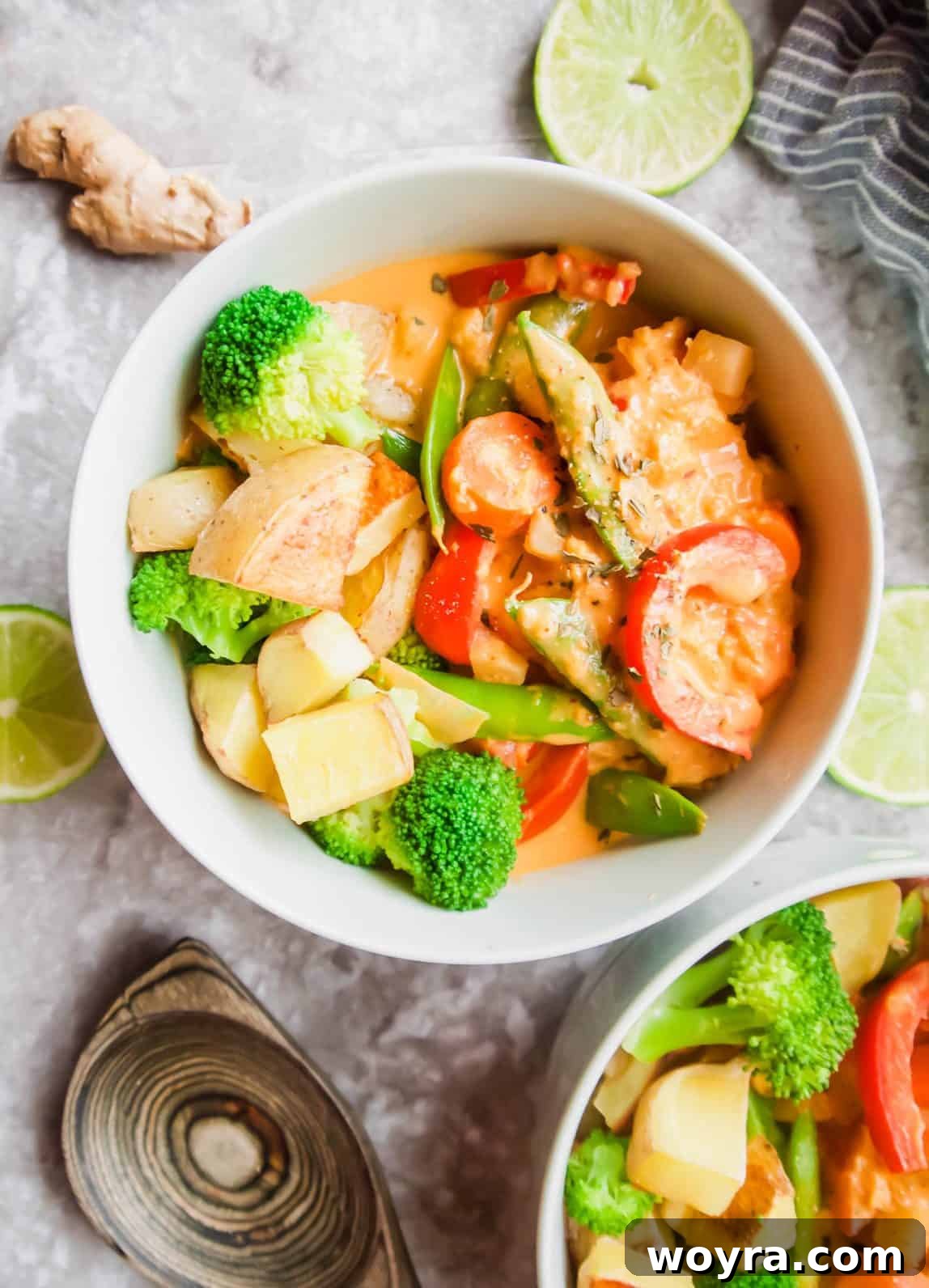
- With Roasted Potatoes: For a hearty, satisfying meal that’s still grain-free, try serving your curry with a side of crispy roasted potatoes or sweet potatoes. Their earthy flavor and soft texture provide a comforting contrast to the spicy curry.
- With Noodles: Rice noodles or even zucchini noodles can be a great base for your curry, offering a different textural experience.
- As a Soup: If you add a bit more vegetable broth or water, this curry can easily be enjoyed as a warming, hearty soup.
- Spice Level Adjustment: If you like more heat, consider adding an extra tablespoon of red curry paste, a pinch of red pepper flakes, or a few slices of fresh Thai bird’s eye chilies to the sauce. Taste and adjust as you go!
Don’t be afraid to experiment and make this Vegan Thai Red Curry truly your own. Its forgiving nature makes it perfect for culinary exploration!
Step-by-Step Guide to Making Thai Red Curry
Creating this flavorful Vegan Thai Red Curry at home is a straightforward process, broken down into simple, manageable steps. Follow these instructions to achieve a rich, aromatic, and deeply satisfying meal:
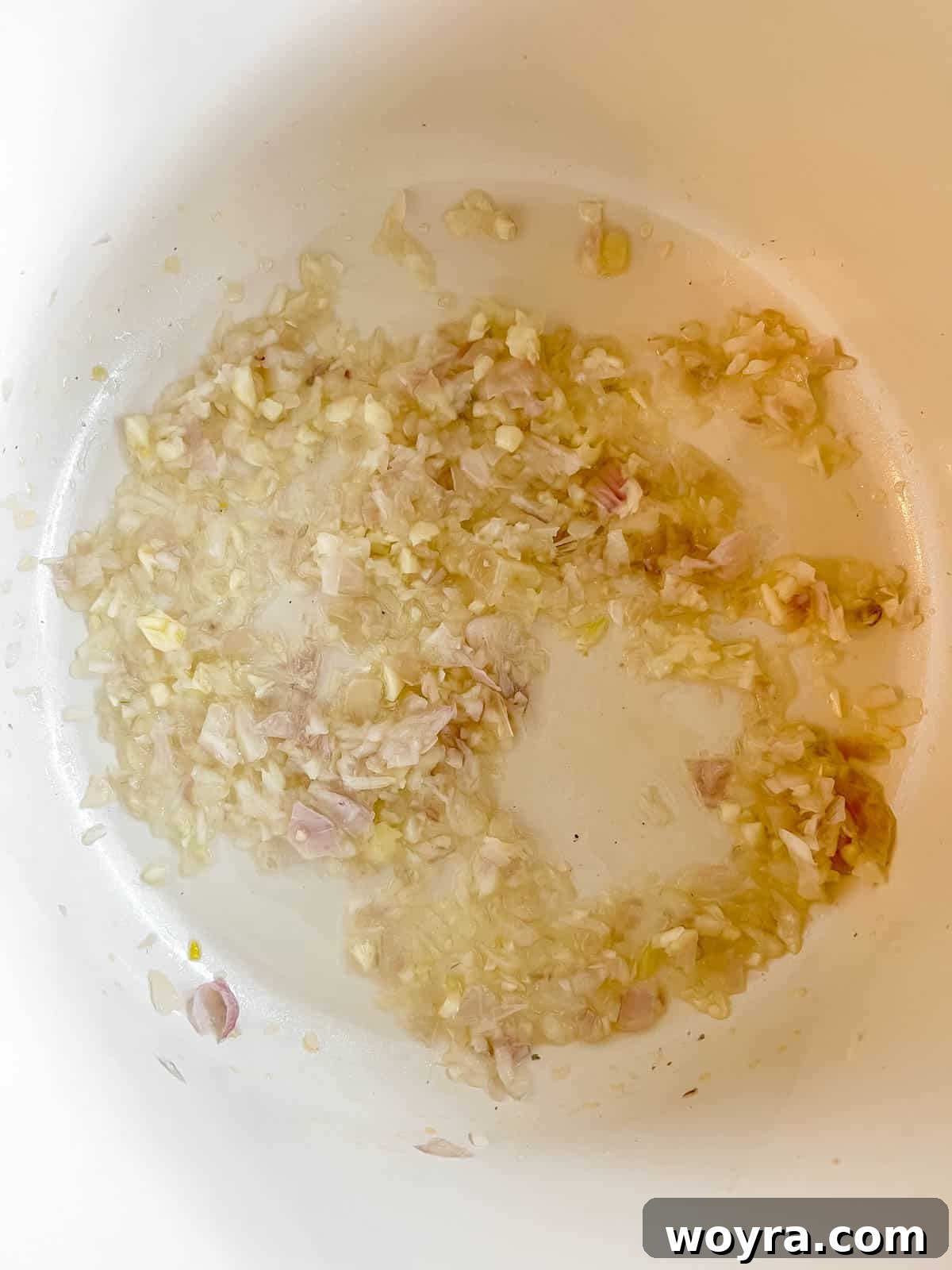
Step 1: Build the Aromatic Base. Begin by heating 1 tablespoon of olive oil in a large saucepan or Dutch oven over medium-high heat. Once shimmering, add the minced garlic and chopped onion (or shallots). Sauté for 2-3 minutes, stirring occasionally, until the onions soften and become translucent, and the garlic releases its irresistible fragrance. This aromatic foundation is key to a flavorful curry. Reduce the heat to medium.
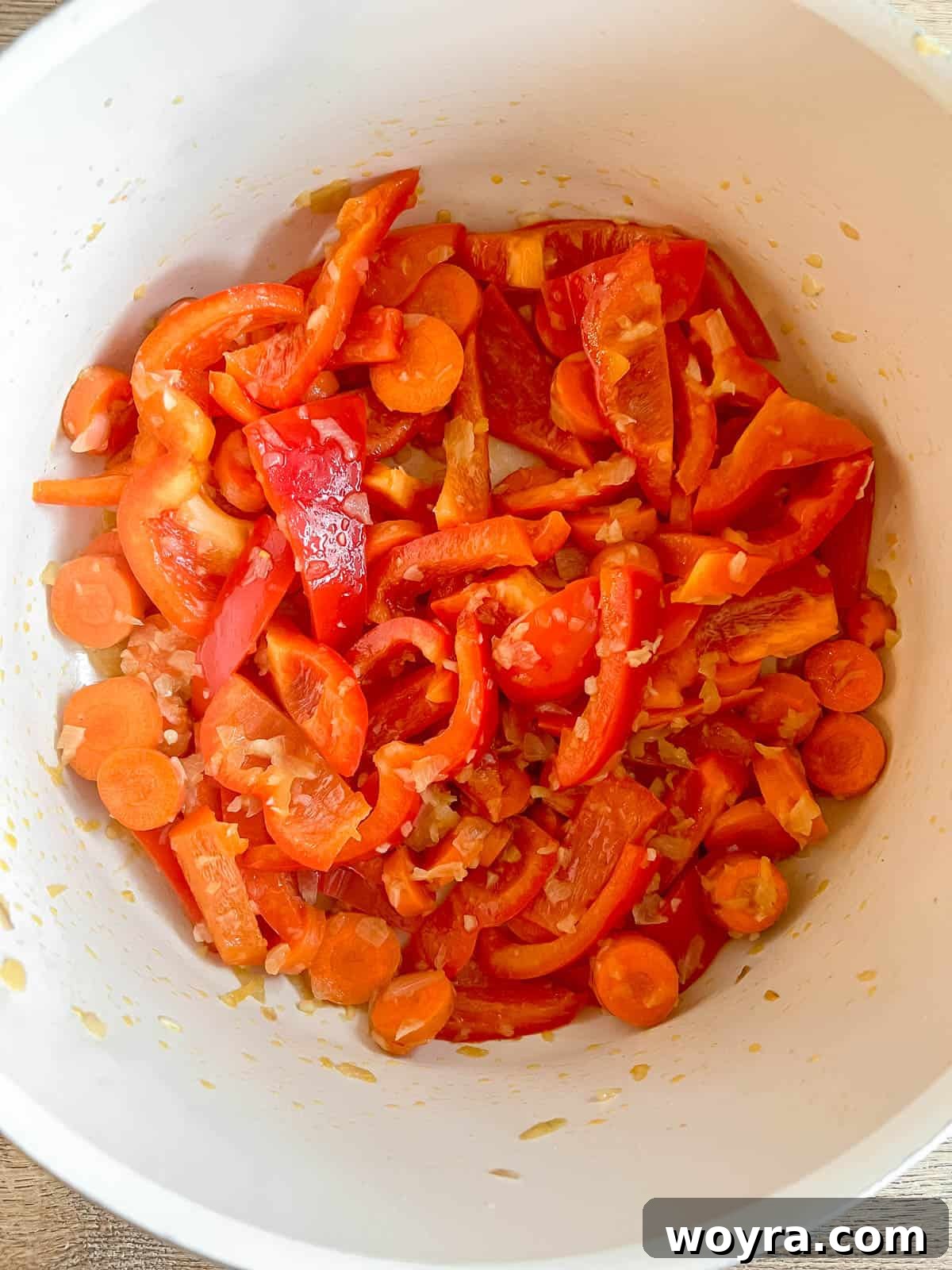
Step 2: Introduce the Core Vegetables. To the pan with the aromatics, add the sliced carrots and red bell peppers. Continue to cook for another 5-6 minutes, stirring frequently, until the vegetables begin to soften slightly but still retain a pleasant crispness. This ensures they’re tender but not mushy in the final dish.
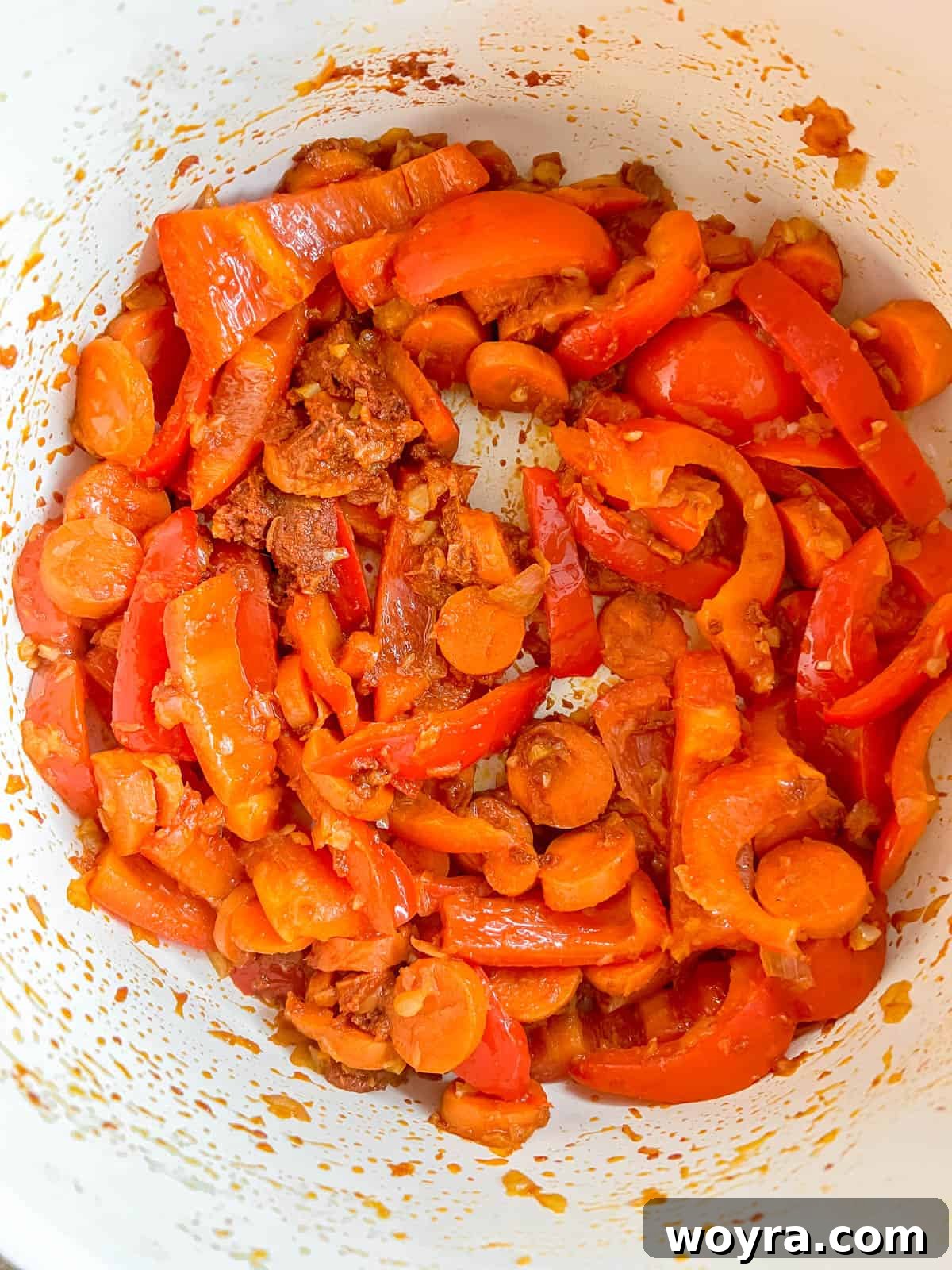
Step 3: Infuse with Curry Paste and Ginger. Stir the red curry paste and freshly grated ginger into the vegetable mixture. Cook for about 1 minute, stirring constantly. This step, known as “blooming” the curry paste, helps to deepen its flavor and release its aromatic spices. The kitchen should now be filled with a wonderful fragrance.
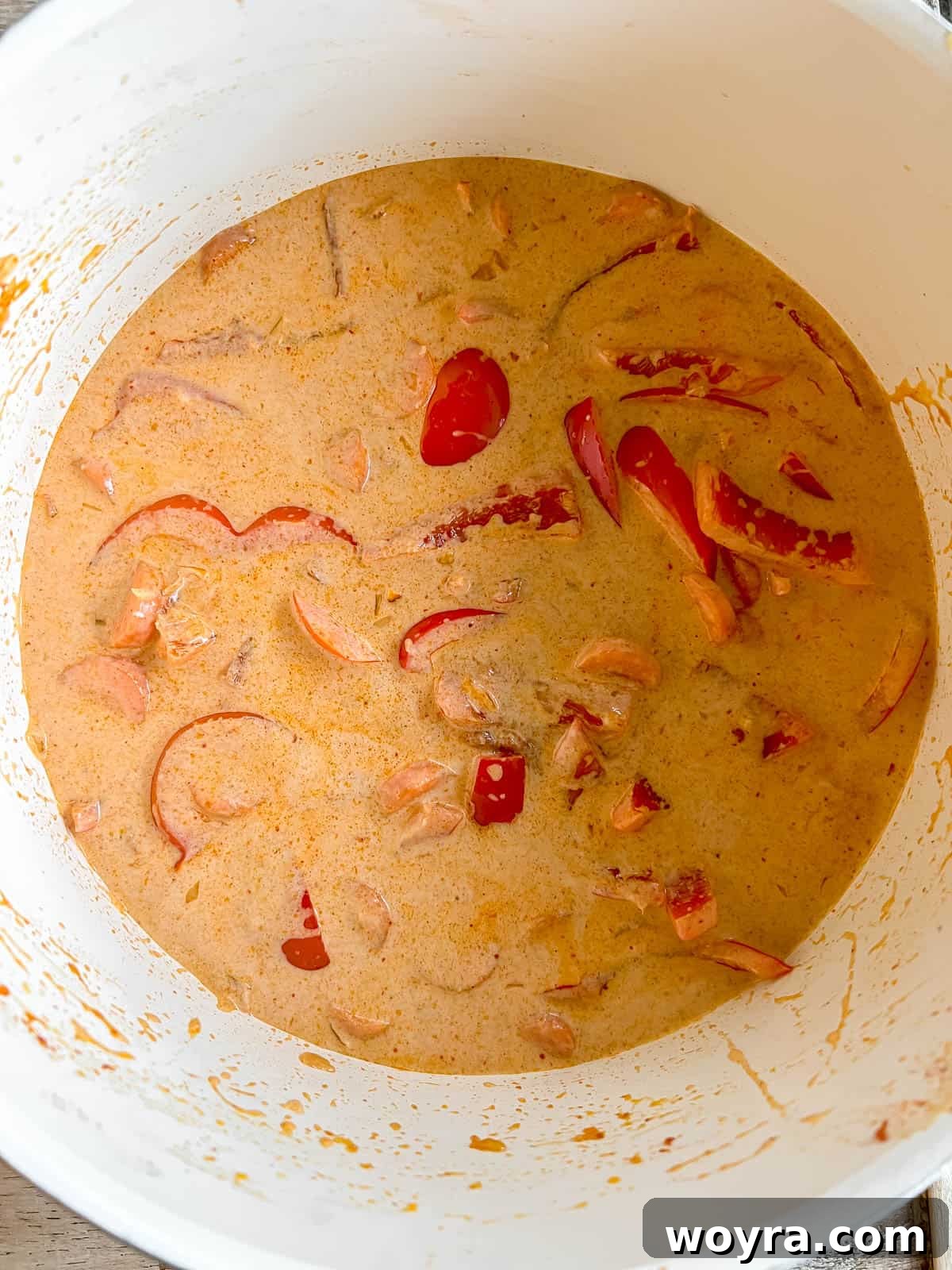
Step 4: Add the Coconut Cream. Pour in the full can of coconut cream, scraping the sides of the can to get all the rich cream. Stir well to fully combine the coconut cream with the curry paste and vegetables, creating a smooth, vibrant base for your sauce. Ensure no lumps of curry paste remain.
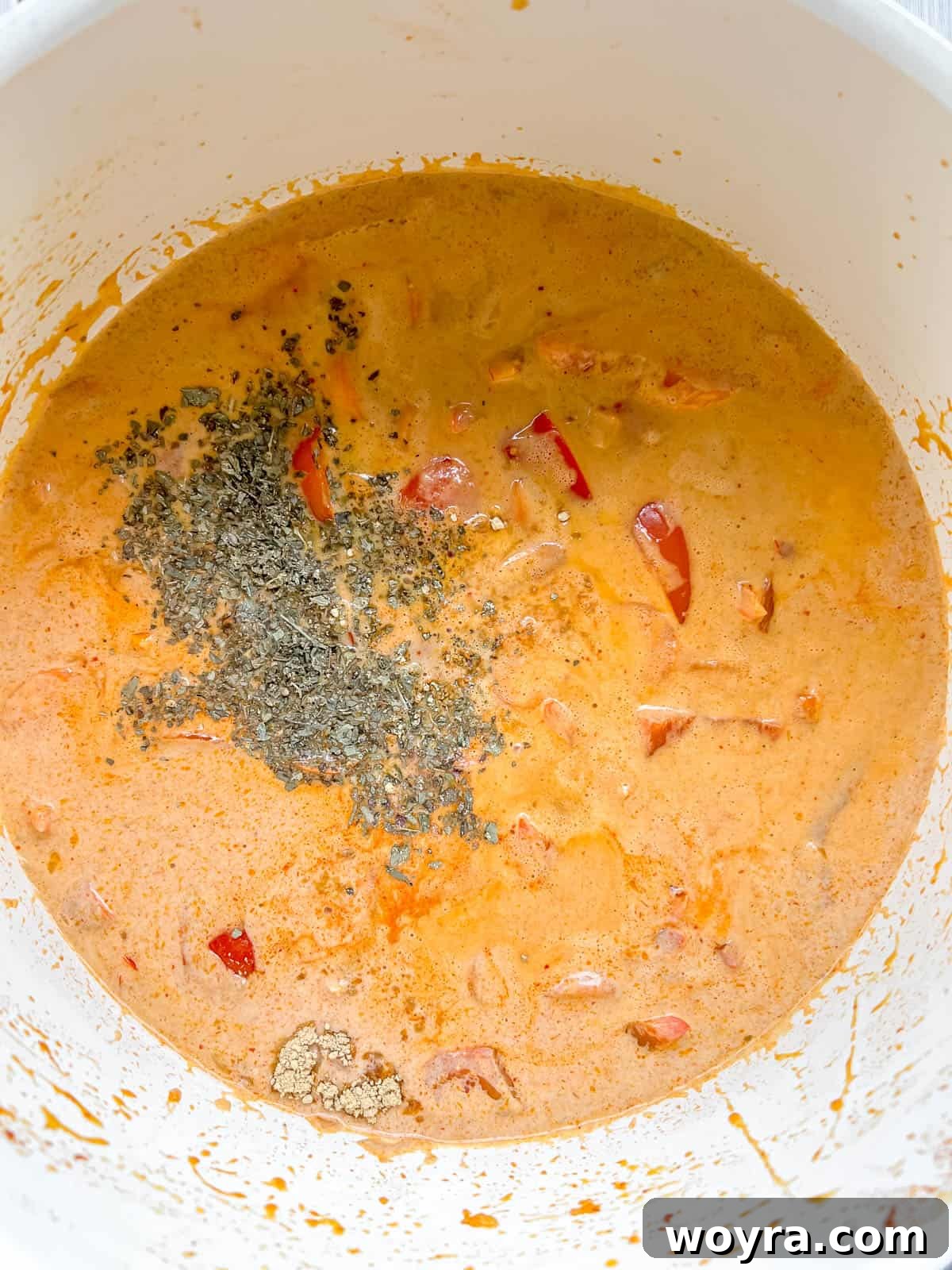
Step 5: Season and Simmer. Add the lime juice, maple syrup, water, salt, dried basil, ground ginger, and coconut aminos to the pan. Stir everything thoroughly until all the ingredients are well incorporated. Bring the mixture to a gentle simmer, allowing the flavors to meld and deepen.
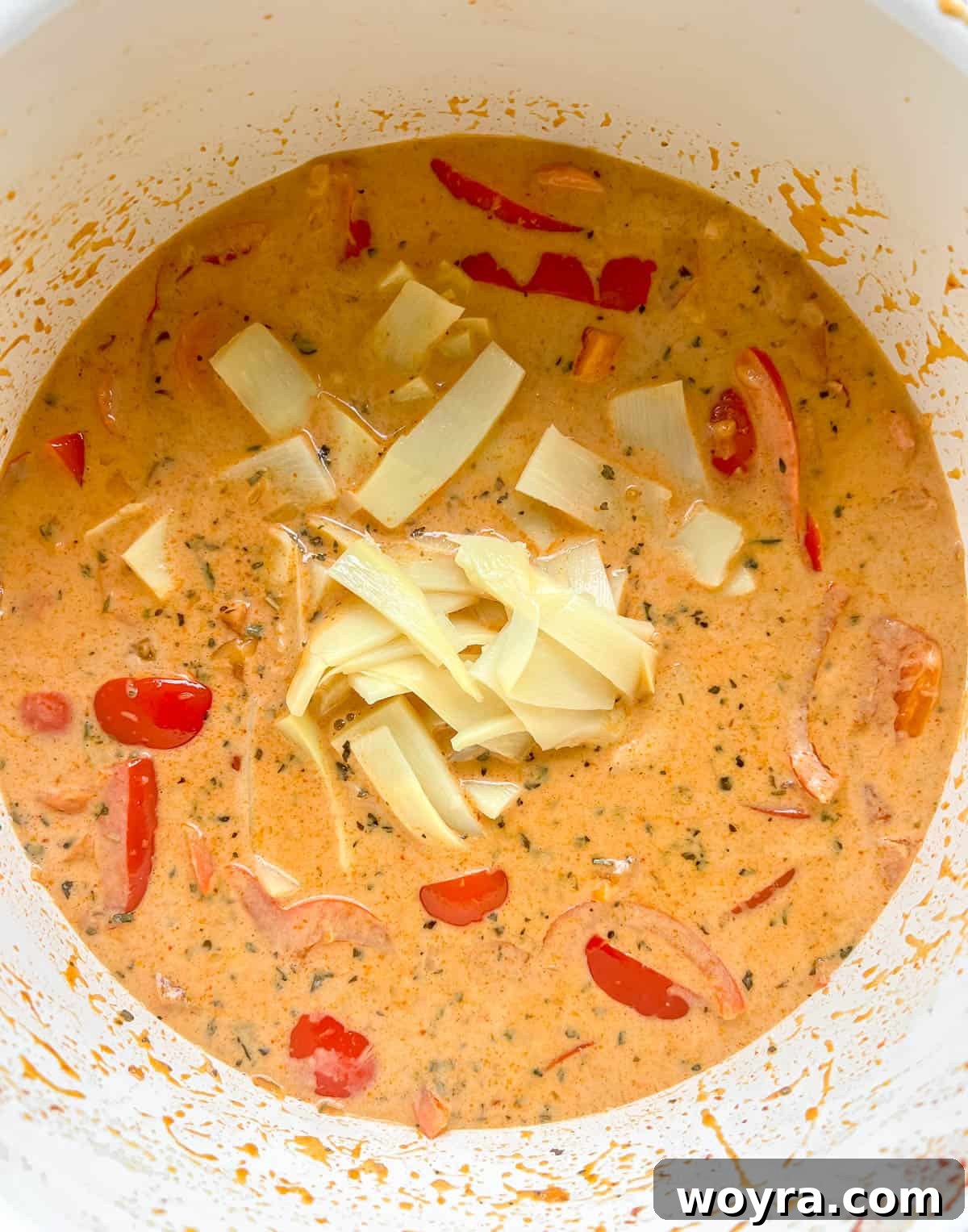
Step 6: Incorporate Bamboo Shoots. Stir in the canned bamboo shoots. Let the curry continue to simmer gently for approximately 10 minutes. This simmering time allows the bamboo shoots to absorb the rich flavors of the sauce and ensures all the vegetables are tender, yet still have a slight bite.
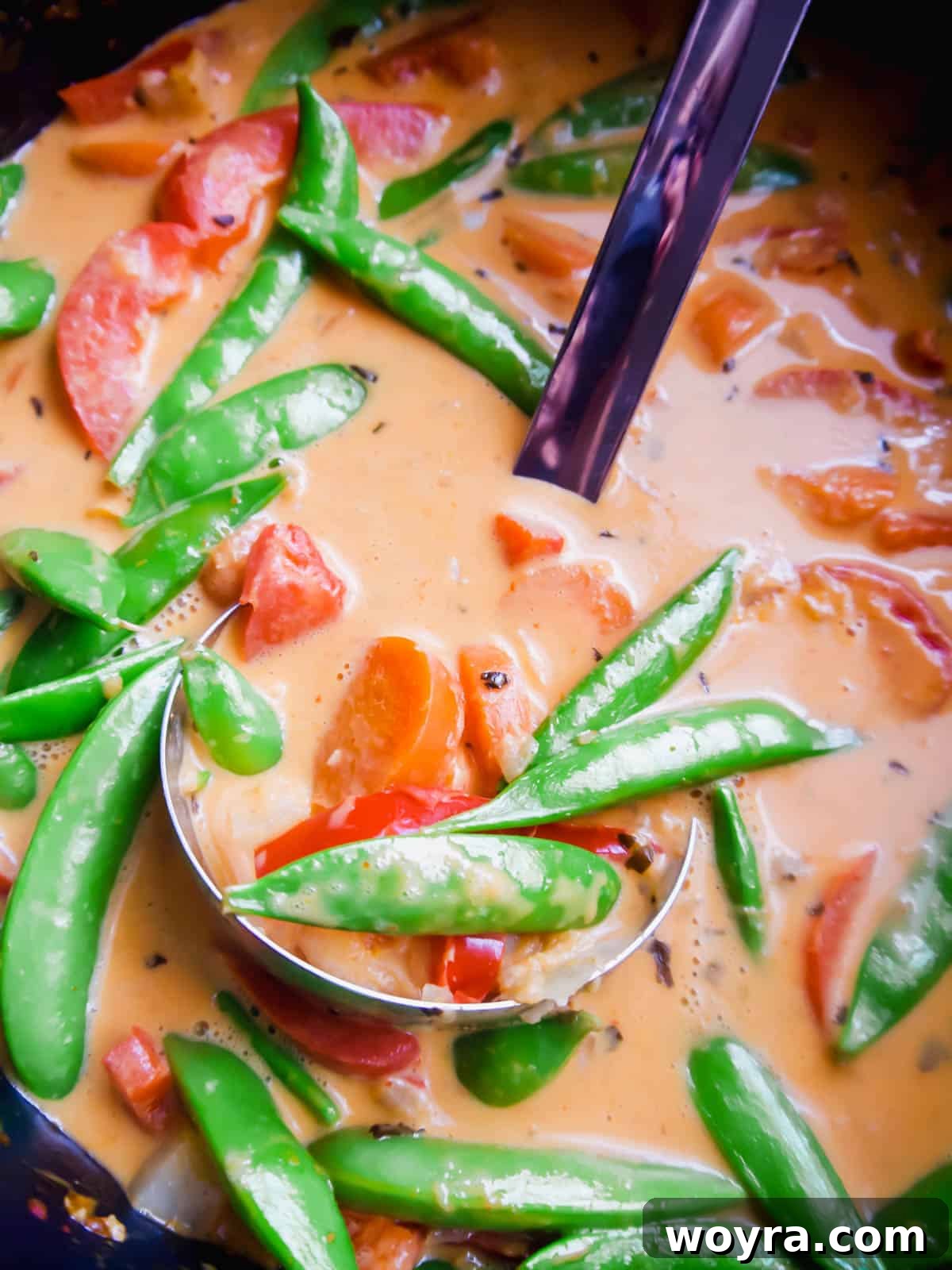
Step 7: Finish with Snap Peas. Finally, add the fresh snap peas to the curry. Cook for just another 3-5 minutes, or until they are crisp-tender and brightly colored. You want them to retain some of their crunch and vibrant freshness. Avoid overcooking to maintain their texture and nutritional value.
Serve your beautiful Vegan Thai Red Curry immediately with your choice of accompaniments, such as steamed rice, cauliflower rice, or roasted potatoes. Enjoy the rich aromas and incredible flavors!
Expert Tips for the Perfect Vegan Thai Red Curry
Achieving a truly outstanding Vegan Thai Red Curry is simple with a few insider tricks. These expert tips will help you elevate your homemade curry to restaurant-quality status:
- Adjusting the Spice Level: Thai Red Curry can range from mildly flavorful to intensely fiery. If you enjoy a spicier kick, feel free to add a pinch or two of red pepper flakes to the sauce along with the other seasonings. For even more heat, consider adding a thinly sliced fresh Thai bird’s eye chili or a dash of sriracha during the last few minutes of cooking. Always taste and adjust to your preference.
- Optimal Serving Suggestions: While delicious on its own, this curry truly shines when served with the right accompaniments.
- Classic Pairing: Steamed jasmine rice is a traditional and perfect choice, soaking up all the rich sauce. For a healthier or Paleo option, serve with fluffy cauliflower rice.
- Hearty Alternatives: Roasted potatoes or sweet potatoes make a wonderfully comforting and substantial side, especially if you’re looking for a grain-free meal.
- Added Freshness: Garnish your curry with fresh cilantro, a wedge of lime, or a sprinkle of chopped peanuts (if not nut-free) for an extra layer of flavor and visual appeal.
- Storing and Reheating Your Curry: This curry is fantastic for meal prep!
- Refrigeration: Store any leftovers in an airtight container in the refrigerator for 4-5 days. The flavors often deepen overnight, making it even more delicious the next day.
- Freezing: For longer storage, this curry freezes beautifully. Allow it to cool completely, then transfer it to a freezer-safe container or bag. It can be frozen for up to 2-3 months. Thaw overnight in the refrigerator before reheating gently on the stovetop or in the microwave, adding a splash of water or coconut milk if the sauce has thickened too much.
- Choosing Your Coconut Cream: The quality of your coconut cream makes a huge difference. Look for brands that contain only coconut and water, avoiding any with gums, emulsifiers, or other additives. A good quality coconut cream will yield a richer, smoother, and more authentic sauce.
- Don’t Skimp on Fresh Aromatics: Fresh ginger and garlic provide an unmatched depth of flavor. While powdered forms can be used in a pinch, fresh is always best for that vibrant, aromatic punch.
- Taste and Adjust: Always taste your curry before serving and adjust the seasonings as needed. You might want a little more lime for brightness, a touch more maple syrup for sweetness, or extra salt to bring out all the flavors.
More Irresistible Coconut Cream Sauce Recipes
If you’ve fallen in love with the creamy, rich goodness of the coconut cream sauce in this Vegan Thai Red Curry, you’re in for a treat! Coconut cream is an incredibly versatile ingredient, capable of creating luxurious, dairy-free sauces that enhance a variety of dishes. Explore these other fantastic recipes that harness the power of coconut cream:
Did you try this recipe? Please leave me a ⭐ review below! Your feedback helps other home cooks discover and enjoy this delicious Vegan Thai Red Curry.
⭐
⭐
⭐
⭐
Vegan Thai Red Curry (Paleo)
Dominique
4 people
10 mins
30 mins
40 mins
Share by Email
Print Recipe
Ingredients
- 1 Tbs olive oil
- 3/4 cup chopped onion (about ½ of a medium onion)
- 4 cloves garlic, minced
- 3 large carrots, peeled and sliced
- 2 red bell peppers, sliced into thin 2-inch long strips
- 3 Tbs red curry paste (“Thai Kitchen” brand is Paleo, Vegan and Gluten-free)
- 1 Tbs freshly grated ginger
- 1 14 ounce can of coconut cream (without preservatives, Savoy brand is great)
- 2 Tbs lime juice
- 3 Tbs maple syrup
- ½ cup water
- 1 tsp salt
- 1 tsp dried basil
- ¼ tsp ground ginger
- 1 Tbs coconut aminos
- 1 8 ounce can of bamboo shoots, drained and sliced
- 1 ½ cups snap peas
Instructions
-
Heat 1 tablespoon of olive oil in a large saucepan over medium-high heat. Add the minced garlic and chopped onion, and cook for 2-3 minutes until fragrant and softened. Reduce heat to medium.
-
Add the sliced carrots and red bell pepper to the pan and cook for 5-6 minutes, stirring occasionally, until slightly tender-crisp.
-
Stir in the red curry paste and freshly grated ginger, cooking for about 1 minute until fragrant. Then, add the coconut cream and mix until smooth.
-
Next, add the lime juice, maple syrup, water, salt, dried basil, ground ginger, and coconut aminos. Mix everything thoroughly. Stir in the bamboo shoots and let the mixture simmer gently for 10 minutes, allowing the flavors to meld.
-
Finally, add the 1 ½ cups of snap peas and cook for another 5-10 minutes, or until the snap peas are vibrant green and crisp-tender. Serve hot.
Notes
- Instead of coconut cream, you can use coconut milk for a slightly lighter sauce.
- Instead of maple syrup, you can use honey. Please note that using honey will make the recipe no longer vegan.
- You can add chicken, tofu, or chickpeas for extra protein. Add chicken to the sauce while cooking or prepare separately and add to your bowl. (Adding chicken will make the recipe non-vegan).
- Feel free to add other vegetables like baby corn, water chestnuts, broccoli, or cabbage to the sauce while it is cooking for more variety.
- You can make rice on the side (white, brown, or cauliflower rice) and add it to your bowl for a complete meal.
- You can also roast potatoes or sweet potatoes and add them to your bowl as a satisfying, grain-free accompaniment.
Nutrition
Carbohydrates: 27g
Protein: 3g
Fat: 5g
Saturated Fat: 1g
Polyunsaturated Fat: 1g
Monounsaturated Fat: 3g
Sodium: 603mg
Potassium: 472mg
Fiber: 5g
Sugar: 17g
Vitamin A: 11691IU
Vitamin C: 107mg
Calcium: 102mg
Iron: 3mg
Nutrition information is automatically calculated, so should only be used as an approximation.
Additional Info
Main Course
Asian
Tried this recipe?
Mention @perchancetocook or tag #perchancetocook!