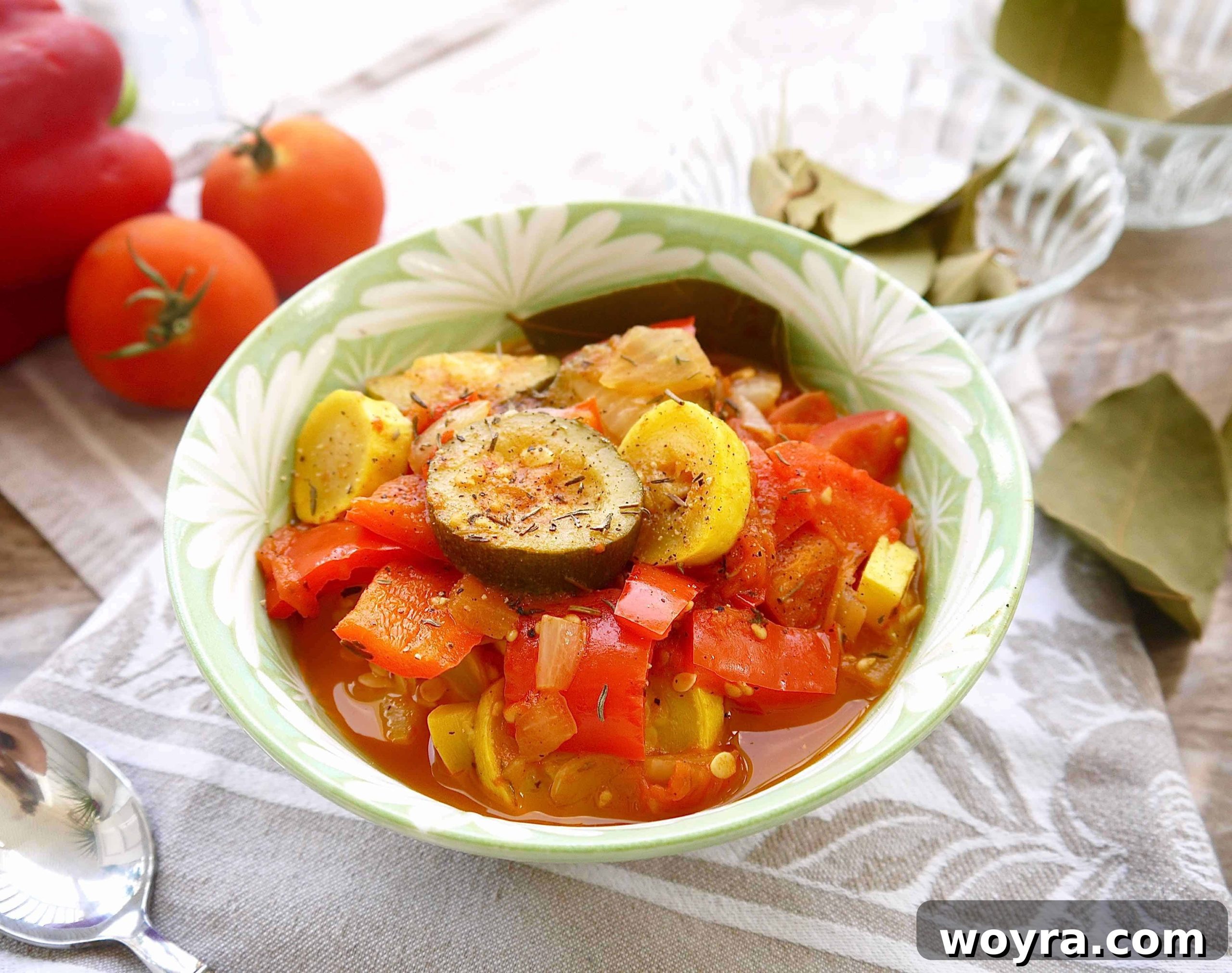
My Mom’s Authentic French Ratatouille: A Wholesome and Flavorful Classic
There’s a special magic in turning simple, fresh ingredients into something truly extraordinary. Just recently, I found myself gazing at a collection of zucchini, yellow squash, and ripe tomatoes in my refrigerator, teetering on the edge of no return. The thought of letting them go to waste felt like a culinary sin, prompting a delightful quest for inspiration. What could transform these humble vegetables into a dish that celebrated their natural goodness?
Immediately, my mind drifted to a cherished memory: my Mom’s Ratatouille. This vibrant, aromatic French dish is a staple in her kitchen, a testament to her French heritage and culinary prowess. It’s a symphony of flavors – sweet, savory, with just a hint of spice, brimming with garden-fresh vegetables. Seasoned with the classic duo of fresh thyme and bay leaves, her ratatouille isn’t just a meal; it’s an experience. In short, it is, unequivocally, the BEST.
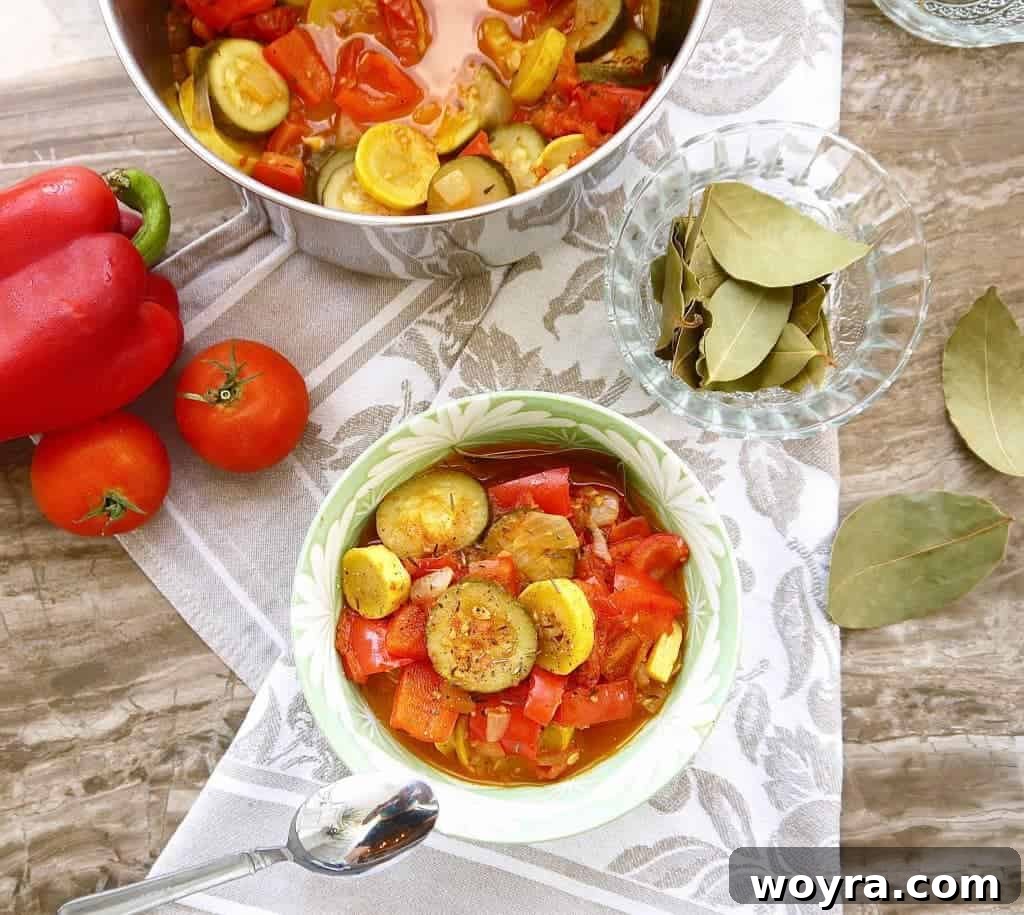
Unlocking Family Secrets: My Quest for the Perfect Ratatouille
Over the years, I’ve attempted to recreate my mom’s legendary ratatouille recipe multiple times. Each attempt was good, don’t get me wrong, but none quite captured that elusive, authentic “French way” flavor that makes hers so unforgettable. There was always something missing, a depth or balance I couldn’t quite achieve on my own. Determined to finally crack the code, I decided it was time to consult the master herself. With a pen in hand and a notepad ready, I called her, eager to transcribe every secret, every nuance of her delicious ratatouille.
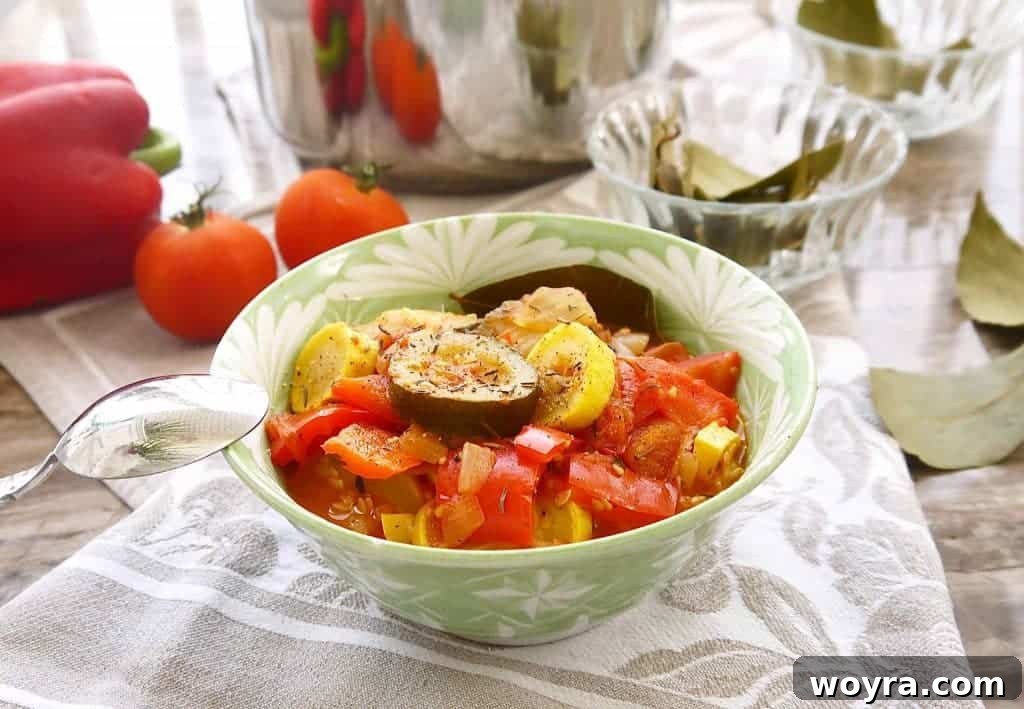
Tips from a French Master: More Than Just a Recipe
What I received wasn’t a rigid recipe with precise measurements, but rather a collection of invaluable tips and sagely advice. This approach, I realized, was a direct echo of how my own grandmother shared her culinary wisdom – through guidance and intuition, rather than strict quantities. It’s a testament to the art of French cooking, where feeling and tradition often outweigh exactitude.
My mom emphasized the importance of the order in which ingredients are added to the pot, a crucial step for building layers of flavor and achieving the perfect texture. She instructed me to add them in this specific sequence:
- Onions and garlic, to establish a fragrant base.
- Zucchini, followed by yellow squash, allowing them to soften slightly.
- Bell peppers, adding their sweet crunch.
- And finally, tomatoes, with a cautionary note: “make sure not to use too many.” This tip highlights the delicate balance required to prevent the dish from becoming overly acidic or watery.
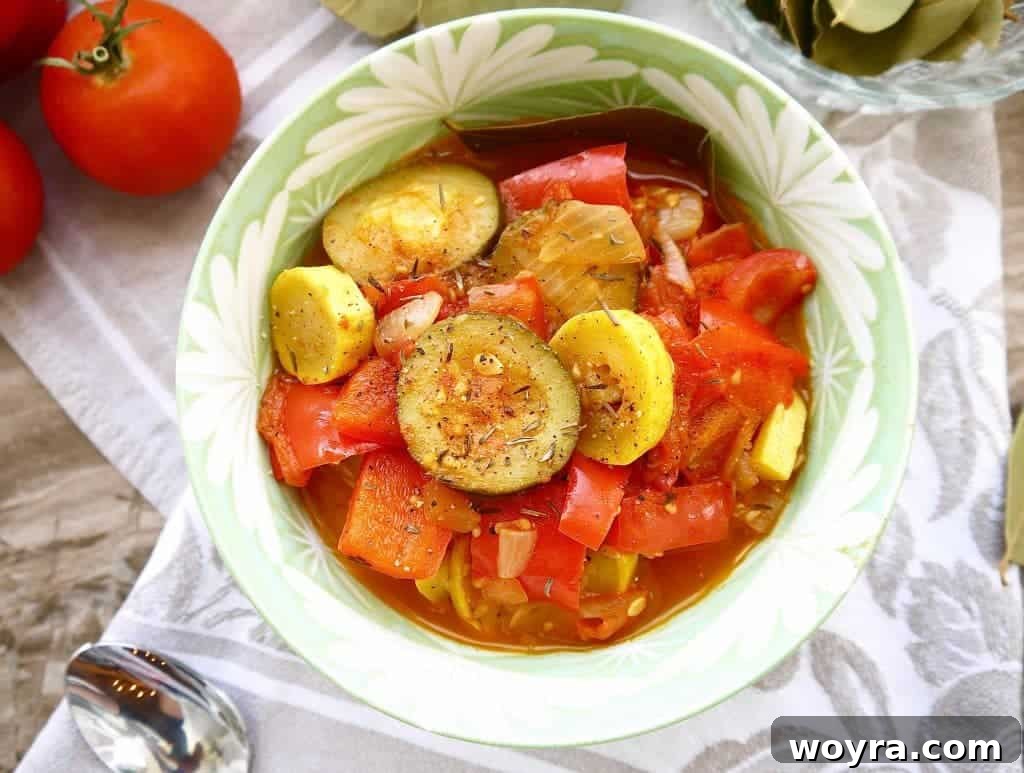
The Heart of Provence: Seasoning “The French Way”
When it came to seasoning, her instructions were equally clear and concise: “season the ratatouille ONLY with laurel and thyme.” Her words, delivered with undeniable French authority, cemented the authenticity of her method. My immediate reaction was a slight panic – “Laurel?! I don’t have Laurel!” A quick, frantic search confirmed that “laurel” is indeed a bay leaf, or that a bay leaf can be used in its place. The mild confusion quickly turned into clarity, ensuring my ratatouille would carry the true essence of Provençal herbs.
She also stressed the superior flavor of fresh thyme, if available. While I didn’t have fresh sprigs on hand and opted for dried thyme, the result was still utterly delicious. This proved that while fresh is always ideal, quality dried herbs can certainly do justice to this classic dish.
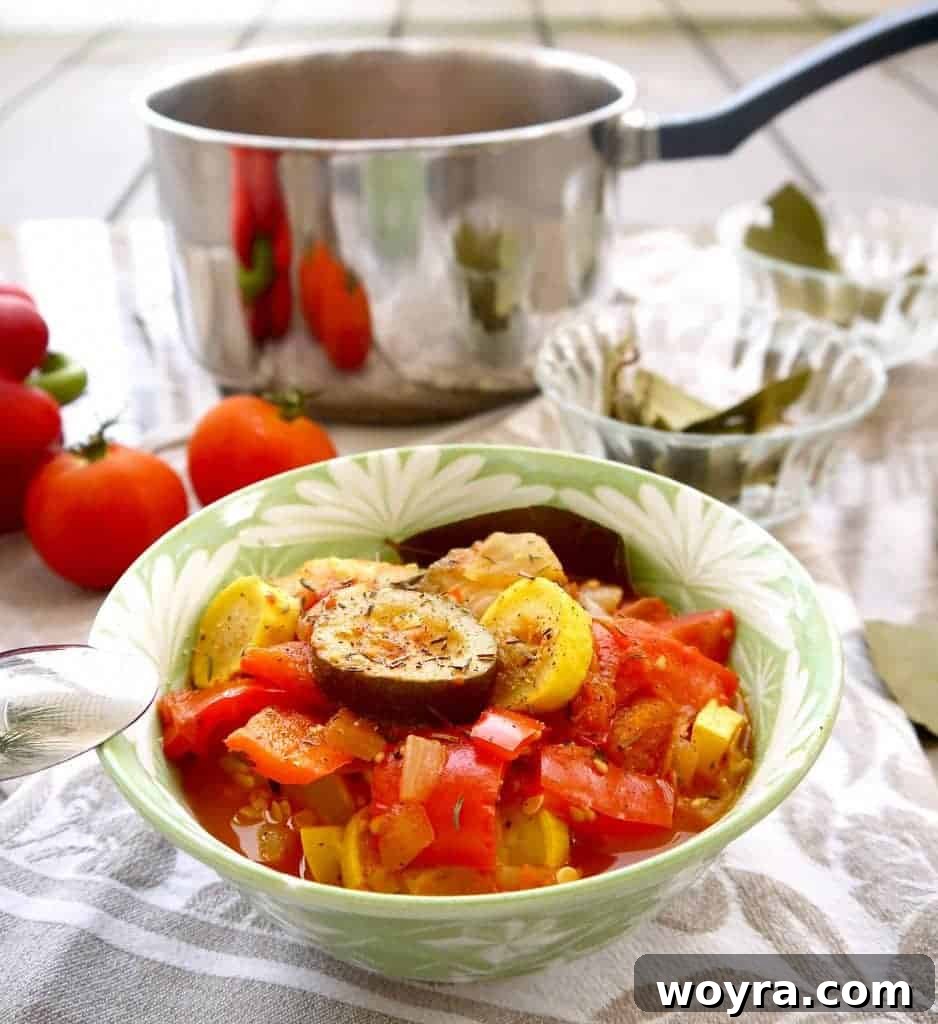
My Interpretation: A Taste of Home
Despite not having fresh thyme, nor the exact, grandmother-approved measurements for every ingredient, I followed my mom’s advice to the letter. And the outcome? The most flavorful, exquisitely textured ratatouille I had ever made. It wasn’t just a dish; it was a connection to my heritage, a loving tribute to generations of French cooking. This recipe, therefore, is my heartfelt version of her magnificent ratatouille, adapted with her wisdom as its cornerstone.
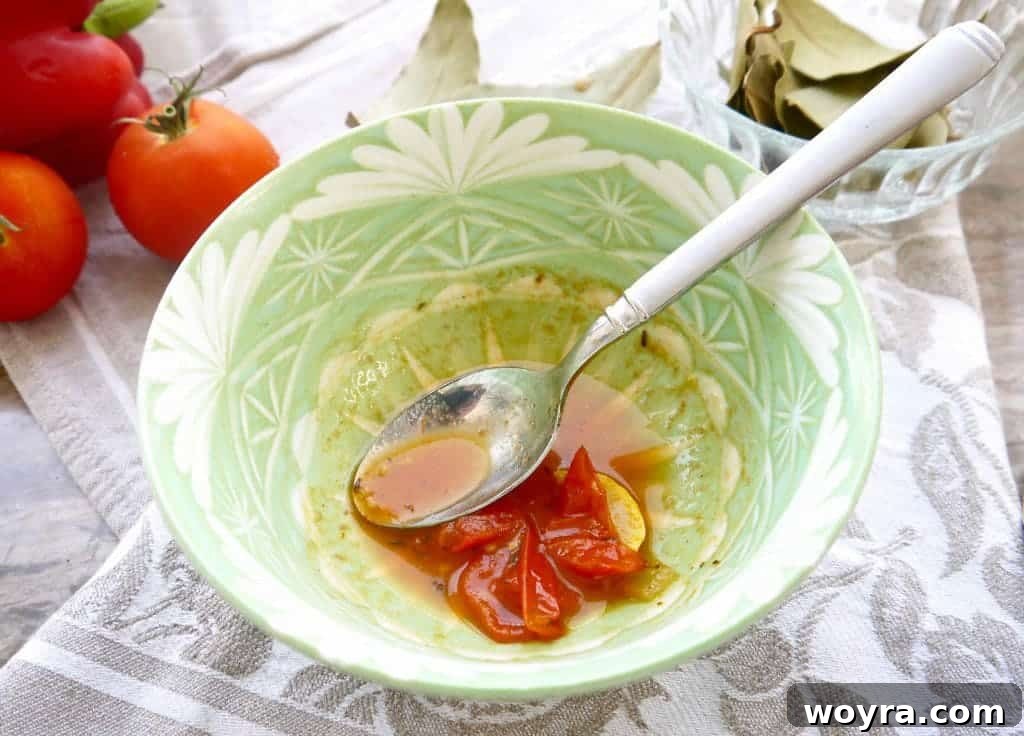
Each spoonful is a delightful experience. The vegetables, cooked to tender perfection, simply melt in your mouth, releasing their concentrated flavors. It’s so rich and satisfying, you’ll be tempted to drink every last drop. Imagine the best tomato soup you’ve ever tasted, but with perfectly seasoned, succulent vegetables elevating it to new heights. It’s truly good until the last spoonful, a comforting warmth that lingers long after the meal is finished.
Key Insights for Your Best Ratatouille
A minor detail worth mentioning: my mom typically uses a combination of green and red bell peppers in her ratatouille. However, I personally prefer not to use green peppers due to their slightly bitter taste, so I opted exclusively for red bell peppers in my version. This highlights the flexibility of ratatouille; feel free to customize the bell pepper colors to your preference – yellow and orange varieties also work beautifully, adding their own distinct sweetness and vibrant hues.
Another important tip to keep in mind, especially for first-time ratatouille makers: if your dish appears too liquidy during or immediately after cooking, don’t fret. As the ratatouille cools slightly, the natural starches and pectin from the vegetables will continue to thicken the juices, resulting in that wonderfully rich and cohesive texture characteristic of a perfect ratatouille. Patience is key, as the flavors also meld and deepen upon resting. So, serve it slightly cooled or reheated for optimal enjoyment.
Bon appétit!
My Mom’s Ratatouille (Paleo, GF)
Share by Email
Print Recipe
Ingredients
- 1/2 Tbs olive oil
- 1/2 cup diced yellow onion, (this was 1/2 of a yellow onion for me)
- 3 cloves garlic, sliced
- a pinch of crushed red pepper/ red pepper flakes, (more or less depending on the heat that you want)
- 1 large zucchini, sliced
- 1 large yellow squash, sliced
- 1 red bell pepper, diced (note: you can use any color bell pepper)
- 1 lb Campari tomatoes, chopped
- 1/4 tsp salt
- 1/4 tsp ground black pepper
- 1 bay leaf
- 1 tsp thyme, (dried or fresh)
Instructions
-
Put 1/2 Tbs olive oil into a large sauté pan and heat over medium heat. Add the onion, garlic, and crushed red pepper flakes to the pan, mix, and cook for 3-4 minutes, until translucent and fragrant.
-
Add the sliced zucchini into the pan, mix. Add the sliced squash into the pan, mix. Cook for 5 minutes, mixing every so often.
-
Then, add the red bell pepper to the pan, mix, and cook for about 3 minutes.
-
Next, add the campari tomatoes to the pan and mix. Add the salt, ground black pepper, bay leaf and thyme to the pot and mix.
-
Cover the pan and cook for 10 minutes over medium heat.
-
Then remove the cover from the pan, reduce the heat to low-medium and cook for 30 minutes, mixing every so often.
Nutrition
Carbohydrates: 13g
Protein: 3g
Fat: 2g
Saturated Fat: 0.4g
Polyunsaturated Fat: 0.5g
Monounsaturated Fat: 1g
Sodium: 161mg
Potassium: 714mg
Fiber: 4g
Sugar: 8g
Vitamin A: 2170IU
Vitamin C: 79mg
Calcium: 45mg
Iron: 1mg
Nutrition information is automatically calculated, so should only be used as an approximation.
Additional Info
Tried this recipe?
Mention @perchancetocook or tag #perchancetocook!
The Story of Ratatouille: A Culinary Journey from Nice
Ratatouille, at its heart, is a traditional Provençal stewed vegetable dish originating from Nice. Its name comes from the Occitan word “ratatolha” and French “ratatouiller,” meaning “to stir up.” Historically, it was a rustic dish prepared by farmers, using whatever fresh vegetables were available in their gardens during the bountiful summer months. This humble beginning is precisely what gives ratatouille its enduring charm and versatility. While the precise method of preparation can vary, the core ingredients remain consistent: tomatoes, garlic, onions, zucchini, eggplant (though my mom’s version omits this), bell peppers, and a fragrant medley of herbs like thyme and bay leaf.
The beauty of ratatouille lies in its celebration of seasonal produce. Traditionally, each vegetable would be sautéed separately before being combined and slowly simmered. This meticulous process, known as “cooking à la française,” ensures that each vegetable retains its distinct flavor and texture, contributing to a harmonious final dish. However, as my mother’s tips suggest, even a slightly simpler, layered approach can yield spectacular results. It’s a dish that embodies the sun-drenched flavors of the French Riviera, bringing a taste of the Mediterranean to any table.
Why Ratatouille is More Than Just a Vegetable Dish
Beyond its incredible taste and cultural significance, my Mom’s Ratatouille stands out as an exceptionally healthy meal. It’s naturally gluten-free and paleo, making it an excellent choice for those with specific dietary requirements or anyone looking to enjoy a wholesome, plant-forward meal. Packed with an abundance of fresh vegetables, it’s a nutritional powerhouse:
- Zucchini and Yellow Squash: Low in calories and rich in vitamins A and C, potassium, and dietary fiber, these summer squashes contribute to healthy digestion and hydration.
- Bell Peppers: Especially red bell peppers, are bursting with Vitamin C, a powerful antioxidant, and Vitamin A, vital for eye health. They also add natural sweetness and vibrant color.
- Tomatoes: A fantastic source of lycopene, an antioxidant linked to various health benefits, as well as Vitamin C and potassium.
- Onions and Garlic: Not only do they form the aromatic foundation of the dish, but they also offer anti-inflammatory and immune-boosting properties.
- Herbs (Thyme and Bay Leaf): These aren’t just for flavor; they also contain various antioxidants and compounds with potential health benefits.
This vibrant stew is a testament to how delicious and satisfying healthy eating can be. It’s light yet filling, offering sustained energy without the heaviness of richer dishes. For vegetarians and vegans, it’s a perfectly complete and incredibly satisfying main course, requiring no modifications.
Beyond the Pot: Serving & Pairing Suggestions
One of the many delights of ratatouille is its incredible versatility. While it shines as a standalone main course, particularly for a light lunch or dinner, it also excels as a vibrant side dish. Here are a few suggestions to elevate your ratatouille experience:
- As a Main Course: Serve a generous portion with a slice of crusty French bread to soak up the delectable juices. A sprinkle of fresh basil or parsley can add a final flourish.
- With Protein: It pairs beautifully with grilled chicken, baked fish, or pan-seared scallops. The fresh, herbaceous flavors of the ratatouille complement lean proteins wonderfully.
- With Grains: Spoon it over a bed of fluffy quinoa, brown rice, or even creamy polenta for a more substantial and comforting meal.
- Breakfast/Brunch: Believe it or not, ratatouille makes an excellent base for a hearty breakfast. Try topping it with a poached or fried egg, or even folding it into an omelet.
- As a Sauce: Leftover ratatouille can be lightly puréed and used as a delicious, healthy sauce for pasta or as a topping for homemade pizza.
- Cold or Warm: Ratatouille is one of those rare dishes that tastes fantastic both warm and at room temperature, making it ideal for picnics or meal prepping. Its flavors tend to deepen and meld even further the next day.
Mastering the Ingredients: A Guide to the Freshest Flavors
The success of any ratatouille hinges on the quality and freshness of its ingredients. Investing in ripe, flavorful produce will truly make a difference in the final taste:
- Olive Oil: Use a good quality extra virgin olive oil. Its fruity notes will enhance the overall flavor profile of the dish.
- Onions and Garlic: Choose firm, unblemished onions and garlic. They form the aromatic base, so their freshness is paramount.
- Zucchini and Yellow Squash: Look for firm, bright-skinned squashes that are heavy for their size. Avoid any with soft spots or blemishes.
- Bell Peppers: While I prefer red, any color works. Ensure they are firm, glossy, and vibrant. Green peppers can sometimes be a bit more bitter, so choose based on your preference.
- Tomatoes: Ripe, juicy tomatoes are essential. Campari tomatoes are an excellent choice for their balanced sweetness and acidity. Roma tomatoes or other garden-fresh varieties also work well. If fresh, ripe tomatoes aren’t in season, high-quality canned diced tomatoes can be a suitable substitute.
- Herbs: Fresh thyme is always preferred for its vibrant aroma, but dried thyme is a perfectly acceptable alternative. Ensure your dried herbs are not past their prime for maximum flavor. Bay leaves, whether fresh or dried, add a subtle, earthy depth that is characteristic of authentic ratatouille.
Embracing the simplicity of these fresh ingredients and following these guidelines will allow you to create a truly memorable and authentic French ratatouille, just like my mom’s.