
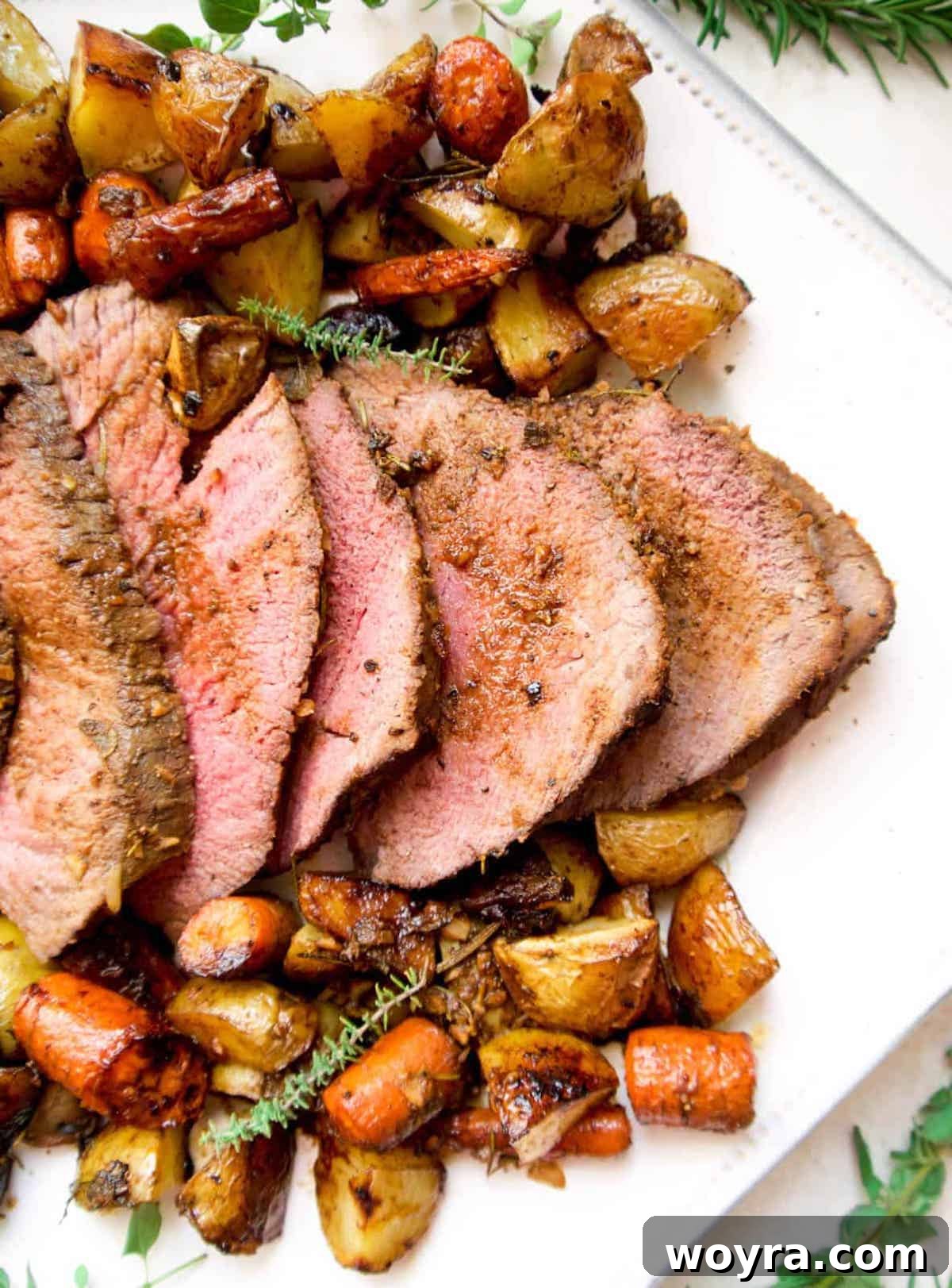
This Garlic and Fresh Herb Beef Clod Heart of Shoulder Roast is a truly delicious shoulder clod roast, generously coated in a vibrant mixture of fresh garlic, aromatic oregano, earthy thyme, fragrant rosemary, and smoky paprika. It’s slow-cooked to achieve an unparalleled tenderness and rich, savory flavor that will impress any palate!
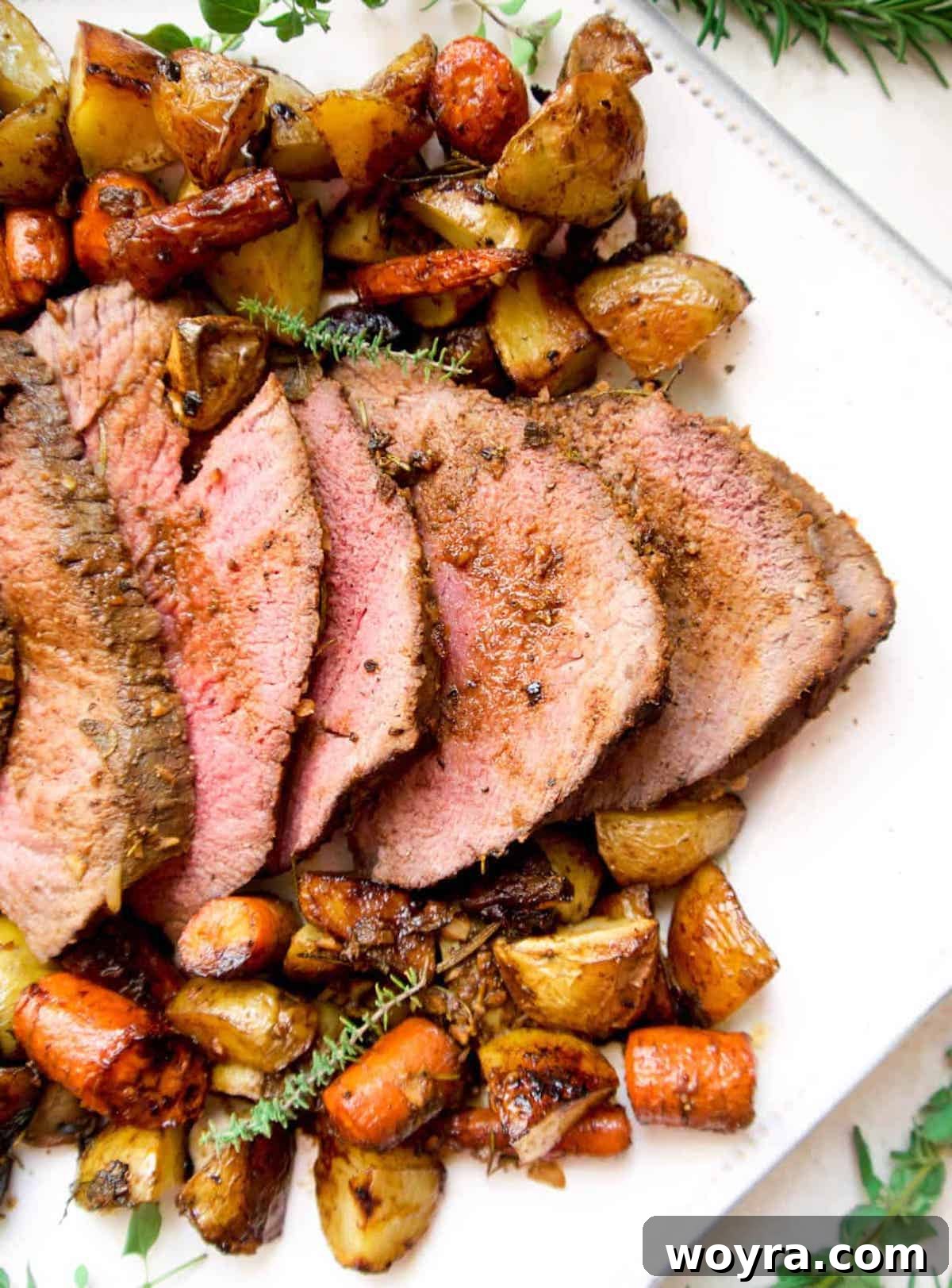
Garlic and Fresh Herb Beef Clod Heart of Shoulder Roast: A Succulent & Simple Recipe
Prepare to be amazed by this incredible recipe for a Heart of Shoulder Roast, also widely known as a Heart of Clod. For many, this cut of beef might be a new discovery, but once you experience its potential, it’s sure to become a staple in your culinary repertoire. This particular roast transforms a robust piece of meat into a fork-tender masterpiece, brimming with an unforgettable symphony of flavors.
Our journey begins with a substantial 5.75 lb Heart of Shoulder Roast. We lavishly season it with a meticulously prepared paste of fresh garlic, vibrant oregano, fragrant thyme, aromatic rosemary, a touch of smoked paprika, coarse sea salt, and freshly ground black pepper. This powerful herb crust is not just for flavor; it also contributes to a beautiful caramelized exterior. The roast is then patiently cooked in the oven, emerging after a specific duration not just tender, but extraordinarily juicy and infused with deep, savory notes. The result is a meal that tastes like it took hours of complex preparation, yet is surprisingly straightforward to achieve.
Table of Contents
- What is Beef Clod Heart of Shoulder Roast?
- Why This Recipe Works So Well
- Essential Recipe Ingredients
- Preparation Notes and Quality Meat Matters
- Step-by-Step Cooking Instructions
- Expert Tips for a Perfect Roast
- Serving Suggestions
- Storage and Reheating
- More Delicious Meat Recipes You’ll Love
- Other Flavorful Beef Recipes
- Garlic and Fresh Herb Beef Clod Heart of Shoulder Roast Recipe

What is Beef Clod Heart of Shoulder Roast?
The Beef Clod Heart of Shoulder, often simply called “Heart of Clod” or “Shoulder Clod,” is a cut of meat derived from the beef primal shoulder, or chuck primal. It’s essentially a large, lean, and moderately tough cut that, when cooked correctly, yields incredibly tender and flavorful results. This particular portion is highly prized for its rich beefy flavor, making it an excellent choice for roasting, slow cooking, or braising. It’s distinct from other chuck cuts as it’s often trimmed to remove excess fat and connective tissue, offering a leaner profile while retaining that deep, savory beef essence. Choosing this cut is a fantastic way to enjoy a premium-tasting roast without the premium price tag of more traditional cuts like prime rib or tenderloin. It’s a true hidden gem in the butcher’s case, offering exceptional value and a satisfying dining experience.
Why This Garlic and Fresh Herb Beef Clod Roast is a Must-Try
- Effortless Elegance for Any Occasion: Despite its impressive appearance and rich flavor, this recipe is surprisingly simple to prepare. It’s perfect for a special family gathering, a holiday meal, or even a comforting Sunday dinner, allowing you to create a gourmet experience with minimal fuss and maximum impact.
- A Powerhouse of Protein: Beef clod is naturally high in protein, making this roast a fantastic option for a satisfying and energy-boosting meal. It supports muscle health and keeps you feeling full longer, contributing to a balanced and nutritious diet.
- Naturally Healthy and Diet-Friendly: This recipe is inherently Paleo, Whole30 Compliant, and Gluten-Free, catering to various dietary preferences without compromising on taste. It relies on whole, unprocessed ingredients, ensuring a wholesome and nourishing dish for everyone at the table, free from common allergens and artificial additives.
- Explosion of Flavor and Aroma: The generous rub of fresh garlic, thyme, rosemary, oregano, and paprika permeates the meat during cooking, creating an incredibly aromatic experience that fills your home with the most inviting scents. Every bite is packed with complex, herbaceous notes complemented by the natural richness of the beef, creating a truly memorable flavor profile.
- Unbelievable Tenderness: Through a carefully calibrated cooking method, this naturally lean cut transforms into a remarkably tender and juicy roast. The initial high-heat sear locks in juices and develops a rich crust, while the subsequent lower, slower roast ensures the meat is cooked through perfectly, resulting in a melt-in-your-mouth texture that will defy your expectations for a shoulder cut.
- Versatile One-Pan Meal: By cooking the root vegetables (potatoes, carrots, and mushrooms) alongside the roast, you create a complete, flavorful meal in one pan. The vegetables absorb the rich pan juices, becoming incredibly delicious, tender, and beautifully caramelized accompaniments, simplifying both preparation and cleanup.
- Impressive Presentation: Whether served whole and carved dramatically at the table or pre-sliced for convenience, the Garlic and Fresh Herb Beef Clod Roast makes a stunning centerpiece that is sure to draw compliments and spark conversation among your guests.
Essential Recipe Ingredients for Your Herb-Crusted Beef Roast
The success of this savory beef clod roast lies in a combination of quality ingredients and a vibrant herb blend. Here’s what you’ll need to create this magnificent dish:
- Heart of Shoulder Roast (Beef Clod): A large, high-quality cut is paramount for the best results. I recommend a 5.75 lb heart of shoulder roast, a fantastic choice for its lean profile and rich flavor when slow-roasted. This particular cut comes from the shoulder/chuck area of the cow and is known for becoming incredibly tender with the right cooking method. When purchasing, look for a roast with good marbling, which contributes to juiciness and flavor. If a specific “heart of shoulder” is unavailable, a well-trimmed chuck roast or top blade roast can be a suitable alternative, though cooking times may vary slightly.
- Balsamic Vinegar: This ingredient is crucial for adding a touch of acidity, which not only brightens the flavors of the beef and herbs but also acts as a subtle tenderizer for the meat. It contributes to a beautiful, slightly sweet glaze and an added layer of complex flavor.
- Fresh Garlic: Minced fresh garlic is key to the aromatic herb paste. Using fresh garlic provides a pungent, robust flavor that dried garlic simply cannot replicate, deeply infusing the beef with its distinctive warmth and aromatic charm. One small head of garlic typically yields about 3 tablespoons of minced garlic.
- Fresh Thyme, Fresh Rosemary, Fresh Oregano: This is the holy trinity of herbs for our roast! Using fresh herbs is non-negotiable for achieving the best flavor and fragrance in this dish. The leaves are stripped from their stems and finely chopped, then combined to create a fragrant, earthy crust that clings beautifully to the meat, imparting deep, savory, and slightly peppery notes throughout the cooking process.
- Paprika: This spice is essential for adding a beautiful reddish-brown hue to the herb crust and contributes a warm, slightly sweet, and smoky flavor that perfectly complements the rich beef and fresh herbs. Use sweet or smoked paprika based on your preference.
- Salt and Pepper: These are indispensable seasonings to enhance all the other flavors and create a well-balanced taste in the roast and vegetables. Use coarse sea salt and freshly ground black pepper for the most impactful results.
- Olive Oil: Used as a vital binder for the herb paste, helping it adhere evenly and effectively to the meat. It also plays a crucial role in coating the vegetables, promoting caramelization and ensuring they roast beautifully alongside the beef. The olive oil is divided between the herb rub and the vegetables.
- Potatoes: Quartered potatoes (such as Yukon Gold, red potatoes, or even small new potatoes) are perfect for roasting alongside the meat. They absorb the savory beef drippings and herb flavors, becoming wonderfully tender on the inside and slightly crispy on the outside.
- Carrots: Sliced into substantial 2-inch long pieces, carrots add natural sweetness, earthy notes, and vibrant color to the dish. They soften beautifully in the pan juices, developing a delicious, tender texture.
- Mushrooms: Sliced mushrooms (cremini or button) bring an essential earthy, umami depth to the roasted vegetables. They soak up the rich flavors of the roast and the herbs, adding another layer of complexity to the side dish.
For precise measurements and detailed ingredient list, please refer to the complete recipe card below.
Preparation Notes and Why Quality Meat Matters
Crafting a truly exceptional roast begins with the quality of your ingredients, especially the star of the show: the beef. For this recipe, I highly recommend seeking out high-quality, grass-fed beef for your heart of shoulder roast. Grass-fed beef often boasts a richer, more complex flavor profile, and is known for being leaner and healthier, free from hormones and GMOs, and raised without grains. You can genuinely taste the difference in the final dish – it’s a foundational element for achieving that deep, satisfying beefy flavor and superior texture. When you start with excellent quality meat, you’re setting yourself up for success and a truly delicious outcome.
Cooking with premium ingredients elevates the entire dining experience. The subtle nuances in the beef, combined with the fresh, aromatic herbs, create a harmony of flavors that is simply unparalleled. Investing in good quality meat ensures that your efforts in the kitchen are rewarded with a truly memorable meal that you and your guests will savor. This commitment to quality is what makes a simple recipe extraordinary.
Over the years, utilizing superior products has inspired some of my favorite culinary creations. For instance, the richness of quality beef, bison, and pork formed the base for a delightful Paleo Pumpkin Meat Sauce Ragu. Similarly, premium chicken, bacon, and chicken stock were vital for a comforting Butternut Squash & Chicken Soup. And the robust flavor of high-quality sausage and stock made all the difference in a delicious Paleo Sausage, Apple, And Chestnut Stuffing. These recipes are testament to how much ingredient quality impacts the final taste, turning good food into truly great food.
Step-by-Step Instructions: Mastering Your Garlic and Herb Beef Roast
Follow these detailed steps to ensure your Heart of Shoulder Roast is perfectly cooked, tender, and bursting with flavor. While the preparation involves a few stages, the process is straightforward and yields incredibly rewarding results.
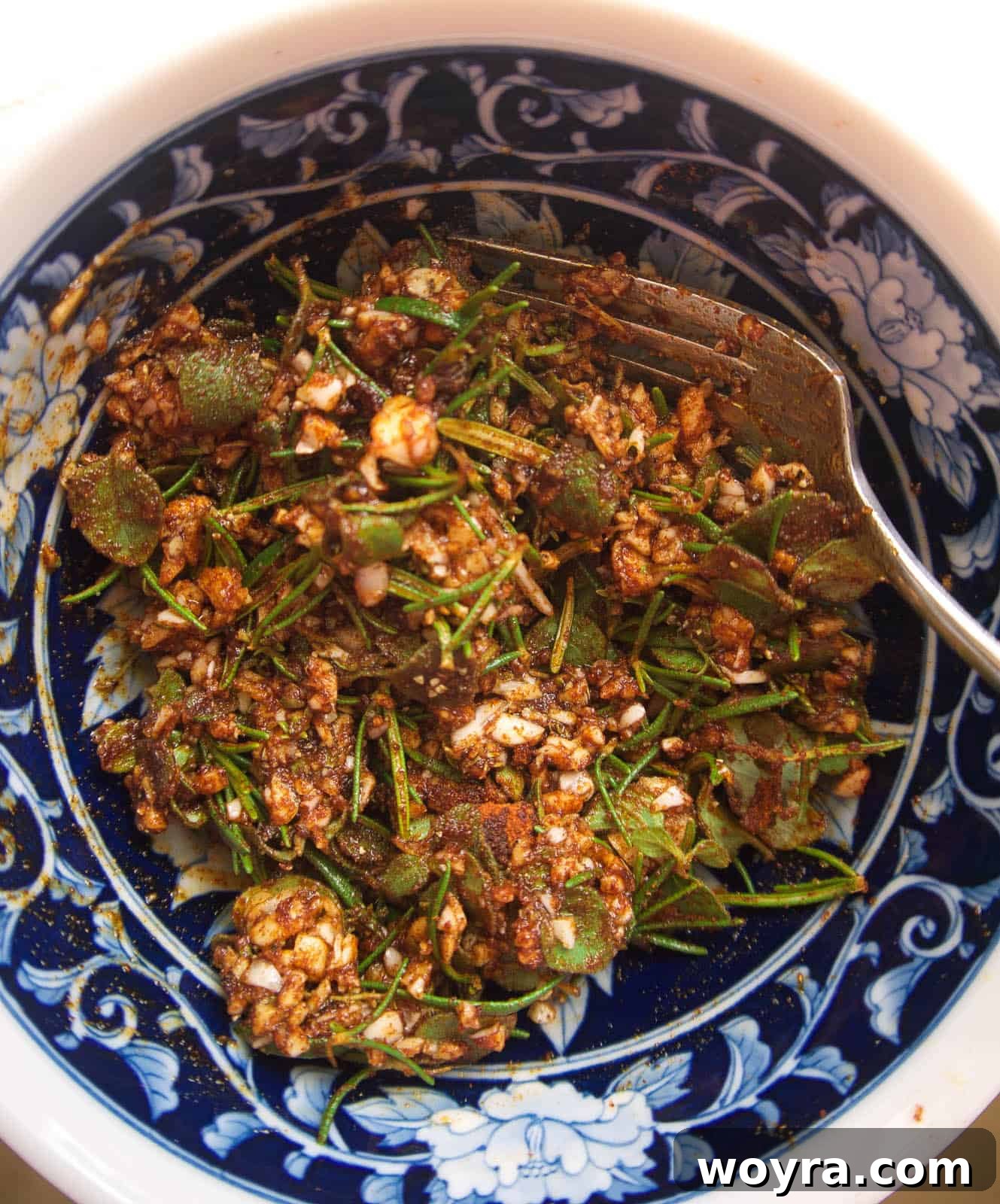
Step 1: Craft the Aromatic Garlic and Herb Paste
In a small mixing bowl, combine your minced fresh garlic, finely chopped fresh thyme leaves, fresh rosemary leaves, fresh oregano leaves, salt, pepper, 3 tablespoons of olive oil, and paprika. Stir these ingredients thoroughly with a spoon or spatula until they are well-incorporated and form a thick, fragrant paste. The olive oil helps to emulsify the mixture, ensuring that the herbs and spices adhere beautifully to the meat and release their full aromatic potential during cooking. This paste is the cornerstone of your roast’s incredible, savory flavor profile.

Step 2: Prepare the Roast for Searing
Begin by preheating your oven to a high temperature of 450°F (232°C). This initial high heat is crucial for developing a flavorful crust on your roast. Place your beef clod roast into a sturdy roasting pan (an approximately 12×16 inch pan is ideal). If your meat came in a package that contained any natural juices or liquid, pour that into the bottom of the pan as well to add extra moisture and depth of flavor during roasting. Drizzle the balsamic vinegar generously over the entire surface of the roast, ensuring it’s evenly coated. Next, take the freshly prepared garlic and herb paste and lavishly lather it over all sides of the beef roast. Make sure the entire surface of the meat is thoroughly covered to maximize both flavor penetration and crust development. Transfer the roasting pan to the preheated oven and cook at this high temperature for precisely 10 minutes. This initial searing phase is vital for locking in juices and creating that desirable caramelized exterior.
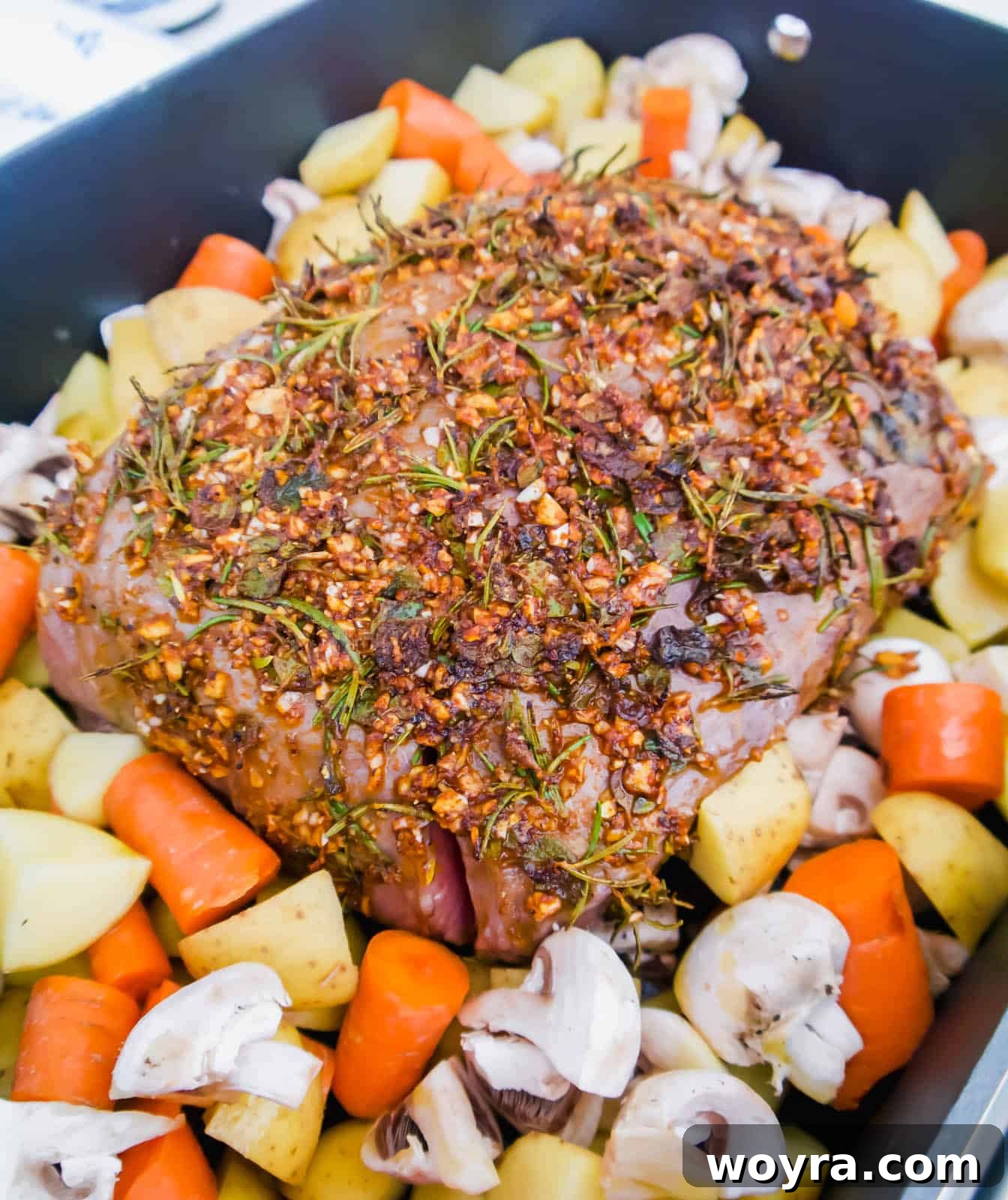
Step 3: Introduce the Vegetables and Begin Slow Roasting
After the initial 10 minutes of high-heat searing, carefully remove the roasting pan from the oven. At this point, reduce the oven temperature to 375°F (190°C). In a separate large bowl, combine the quartered potatoes, sliced mushrooms, and sliced carrots. Drizzle these vegetables with the remaining 4 tablespoons of olive oil and toss them thoroughly, ensuring that each piece is evenly coated. Arrange these seasoned vegetables neatly around the beef roast in the pan. The vegetables will cook directly in the savory beef drippings, absorbing all the wonderful flavors. Return the pan to the oven and continue to cook at 375°F for a duration of 60 minutes. To ensure even cooking and maximum flavor absorption for the vegetables, halfway through this cooking time (at the 30-minute mark), take the pan out, gently stir the vegetables, ensuring they are coated in the accumulating beef juices, and flip them over. This step promotes even browning and tenderizes them beautifully.
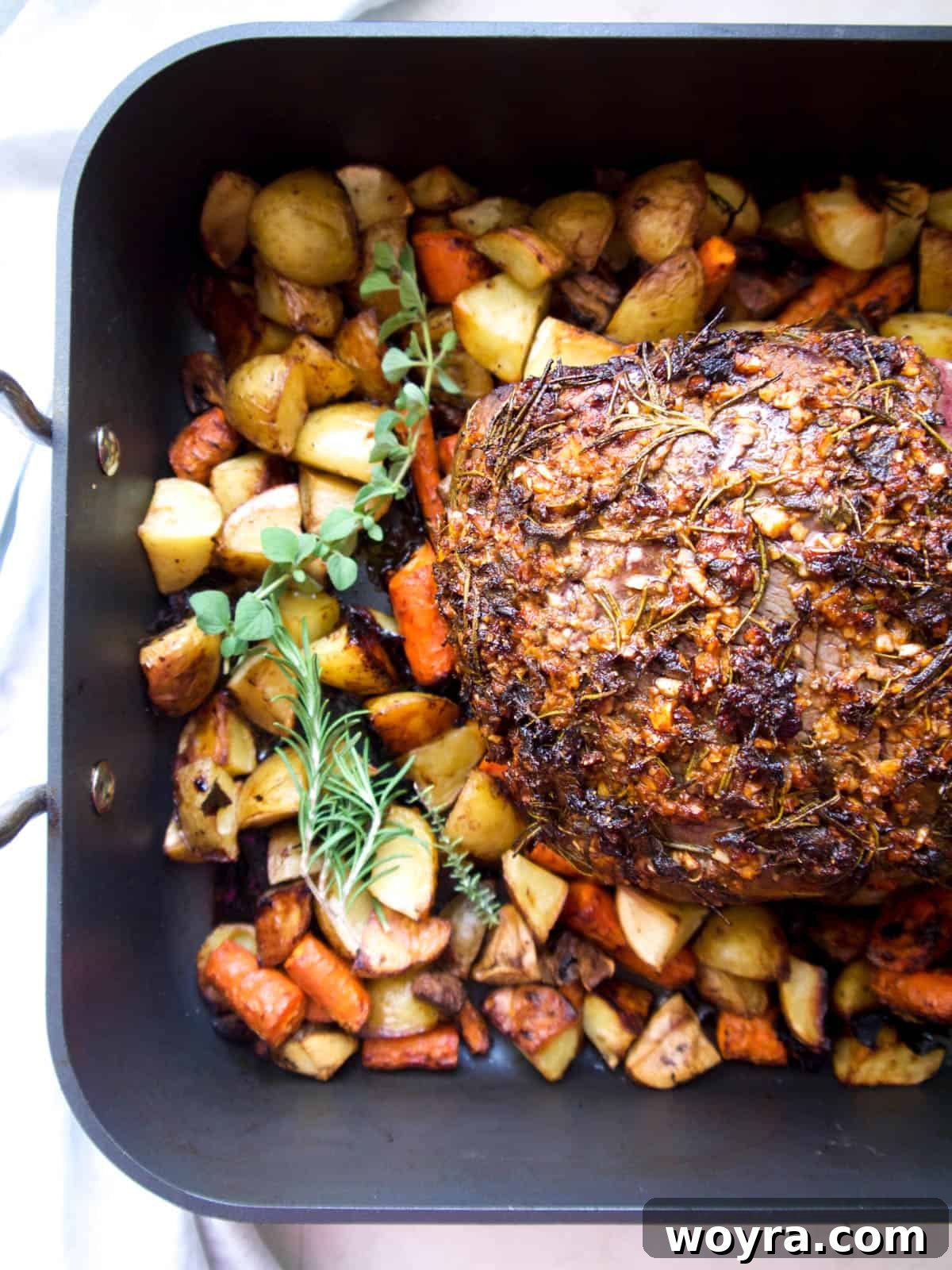
Step 4: The Finishing Touch and Crucial Rest
Once the 60 minutes of cooking with the vegetables are complete, loosely cover the entire roast (and the surrounding vegetables) in the pan with aluminum foil. This helps to trap steam and moisture, further tenderizing the meat. Return the pan to the 375°F oven and continue to cook for an additional 20 minutes, or until the internal temperature of the beef reaches your desired doneness. For a perfect medium-rare, aim for an internal temperature of 130-135°F (54-57°C) when measured with a meat thermometer in the thickest part of the roast, away from bone. Once the desired temperature is reached, turn off the oven completely but leave the roast inside, still covered with foil, for a crucial resting period of another 15-20 minutes. This resting period is absolutely critical for a succulent roast; it allows the muscle fibers to relax and the juices within the meat to redistribute evenly, resulting in an incredibly moist, tender, and flavorful roast. The residual heat in the oven will continue to gently cook the meat, bringing it to its final perfect temperature. In total, your roast will have cooked for approximately 110-120 minutes (10 mins at 450°F + 60 mins at 375°F + 20 mins covered at 375°F + 15-20 mins rest in off oven).
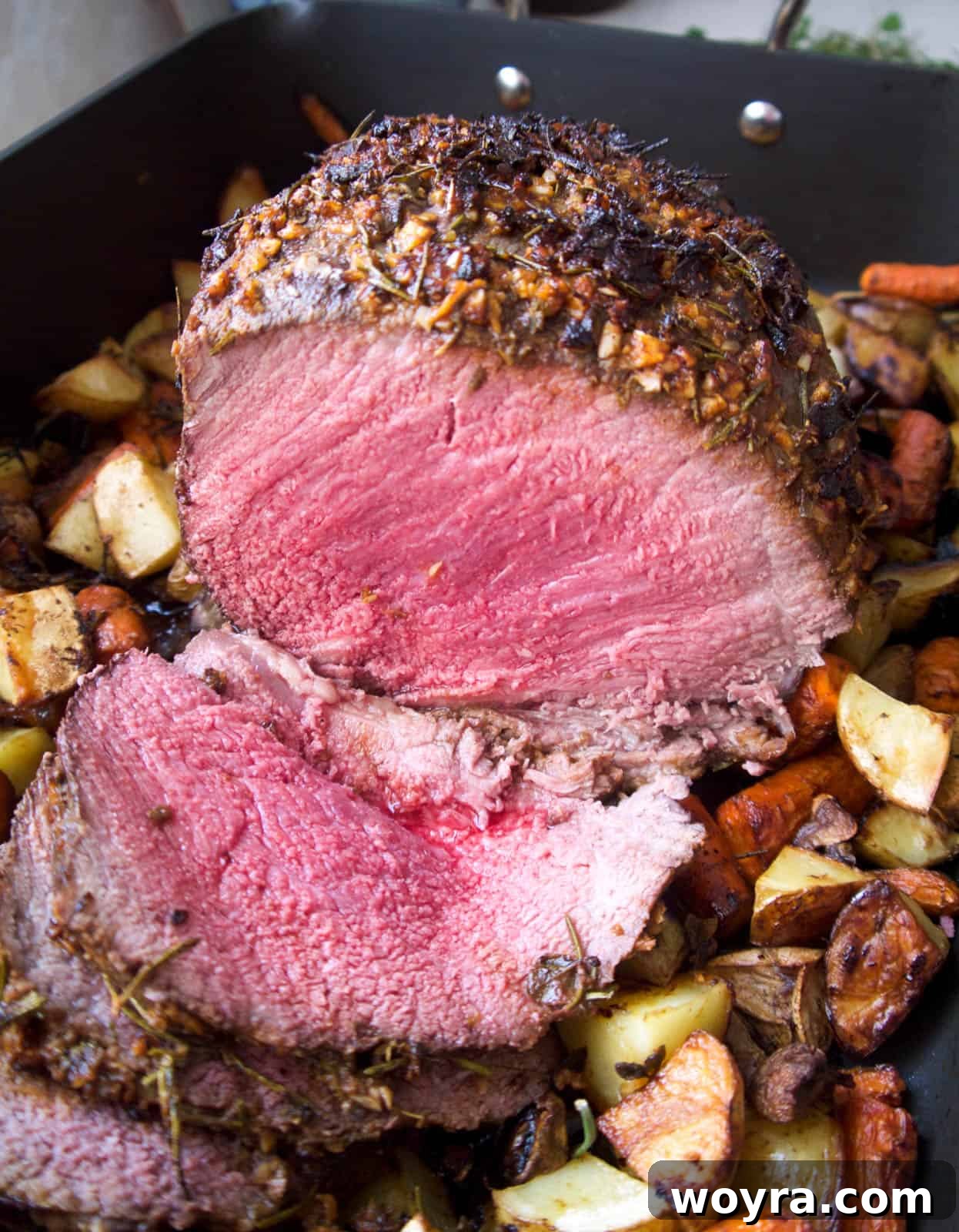
Expert Tips for Achieving Beef Roast Perfection
Elevate your roasting game with these expert tips, ensuring your Garlic and Fresh Herb Beef Clod Roast is nothing short of spectacular and consistently tender and flavorful:
- Monitor Internal Temperature for Perfect Doneness: The absolute best way to ensure your roast is cooked precisely to your preference is by using a reliable meat thermometer. For a juicy medium-rare, aim for an internal temperature of 130-135°F (54-57°C) before you remove it from the oven for resting. Remember, the temperature will rise a few degrees during the resting period. If you prefer medium, target 135-140°F (57-60°C). For well-done, target 150-155°F (65-68°C), but be mindful that beef clod is a leaner cut and can become dry if overcooked.
- The Indispensable Rest: Do NOT skip the resting period! This step is as crucial as the cooking itself. Resting allows the muscle fibers to relax and reabsorb the concentrated juices, making the meat incredibly tender, moist, and flavorful. Tent the roast loosely with foil during this time to retain warmth while the magic happens.
- Basting for Enhanced Flavor: During the cooking process, especially after you’ve added the vegetables, make it a point to periodically spoon the rich beef juices from the bottom of the pan over the carrots and potatoes. This not only keeps them moist and prevents drying but also infuses them with even more savory, beefy flavor, making them irresistible.
- Know Your Oven: Every oven has its quirks. If your oven tends to run hot or cold, or if it has noticeable hot spots, it’s vital to adjust your cooking time and temperature accordingly. An inexpensive oven thermometer can be a valuable tool for accurate temperature readings and consistent results.
- Slicing Against the Grain: For maximum tenderness in every bite, always slice your beef roast against the grain. Look closely at the direction of the muscle fibers in the meat and cut perpendicular to them. This action shortens the fibers, making each slice easier to chew and dramatically increasing its perceived tenderness.
- Start at Room Temperature: For more even cooking from edge to center, take your roast out of the refrigerator about 30-60 minutes before you plan to cook it. Allowing it to come closer to room temperature prevents the outside from overcooking or drying out before the inside reaches the desired doneness.
- Optional Stovetop Searing: For an even deeper, more robust crust and an extra layer of complex flavor, consider searing the roast in an oven-safe skillet on the stovetop over high heat for 2-3 minutes per side before transferring it to the roasting pan and proceeding with the oven instructions. This extra step develops a beautiful Maillard reaction, intensifying the beef’s flavor.
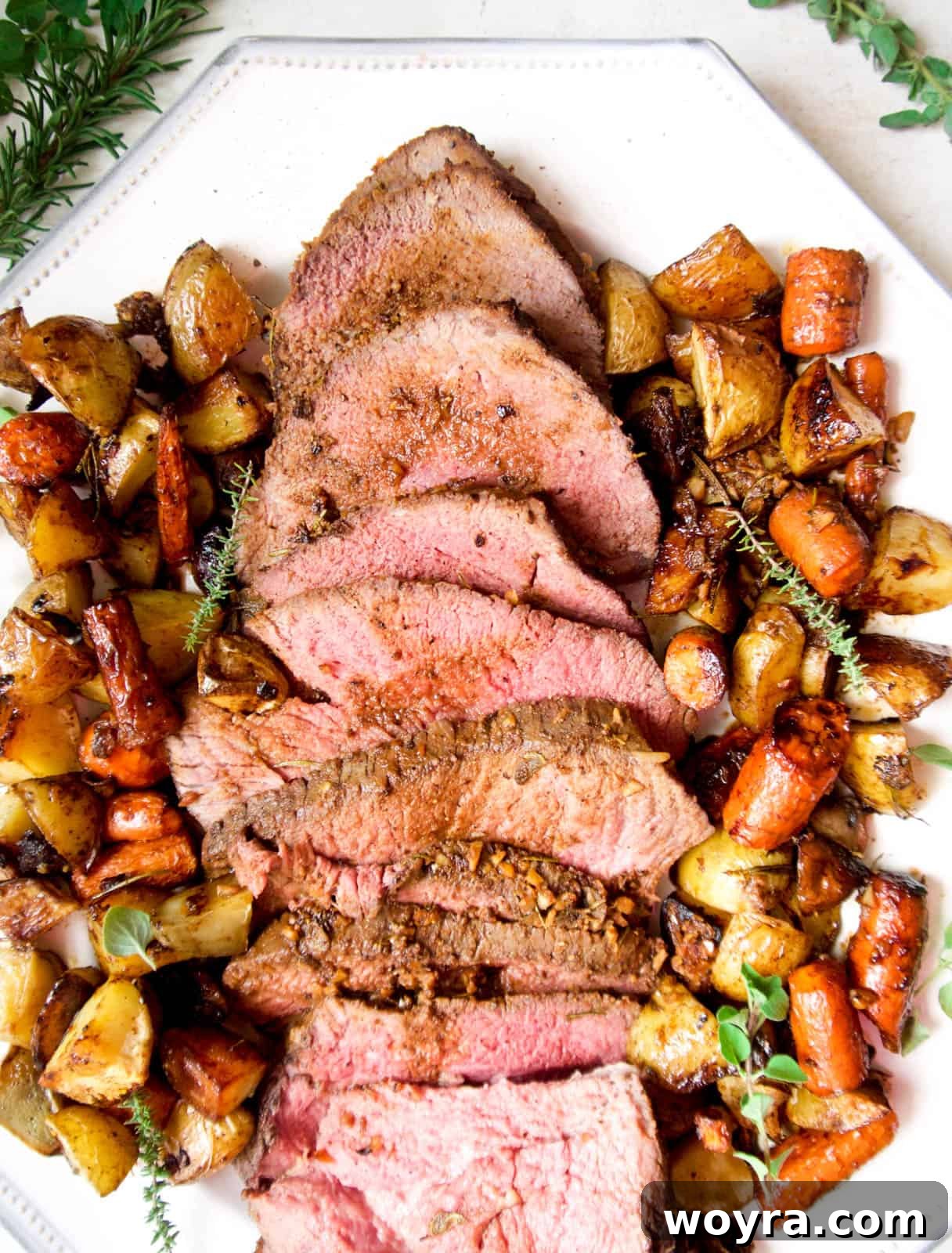
Serving Suggestions for Your Roast
This Garlic and Fresh Herb Beef Clod Heart of Shoulder Roast is designed to be a complete meal on its own, especially with the included roasted potatoes, carrots, and mushrooms. However, you can certainly elevate the dining experience and add variety with a few complementary side dishes:
- Fresh Green Salad: A simple mixed green salad with a light vinaigrette (like a lemon-herb dressing) can add a refreshing, vibrant contrast to the richness of the beef and roasted vegetables.
- Steamed Green Beans or Asparagus: For an extra dose of green and a touch of freshness, lightly steamed or quickly sautéed green beans or asparagus make wonderful, healthy additions.
- Crusty Bread: A warm, crusty baguette or sourdough loaf is perfect for soaking up any remaining delicious pan juices, ensuring no flavor goes to waste.
- Creamy Horseradish Sauce: For those who love a bit of a piquant kick, a creamy homemade or store-bought horseradish sauce makes a classic and delightful pairing with roast beef, cutting through the richness beautifully.
- Gravy: While the pan juices are flavorful enough, you can easily turn them into a simple gravy by thickening with a cornstarch slurry for a more traditional roast experience.
Storage and Reheating Tips for Leftovers
Leftovers of this delicious beef roast are fantastic and can be enjoyed for several days. Proper storage and reheating will ensure they remain flavorful, moist, and safe to eat.
- Storage: Allow any leftover roast and accompanying vegetables to cool completely to room temperature (within two hours of cooking). Transfer them to an airtight container and store in the refrigerator for up to 3-4 days. For longer storage, you can freeze slices of the cooked beef in an airtight freezer-safe bag or container for up to 2-3 months.
- Reheating in the Oven (Recommended): For best results and to maintain tenderness, preheat your oven to a moderate 300-325°F (150-160°C). Place the sliced beef and vegetables in an oven-safe dish, adding a splash of beef broth, water, or even a little leftover pan juice to keep it moist. Cover the dish loosely with aluminum foil to prevent drying out and heat until warmed through, typically about 15-25 minutes, depending on the thickness of the slices.
- Reheating on the Stovetop: Individual or smaller portions of sliced beef can be gently reheated in a skillet over medium-low heat. Add a tablespoon or two of beef broth or water to the pan, cover it, and heat until just warmed through. This method is excellent for maintaining moisture.
- Reheating in the Microwave (Use with Caution): While convenient, microwaving can sometimes dry out roast beef quickly. If using a microwave, place slices in a microwave-safe dish with a tablespoon of broth, cover loosely, and heat in short 30-second intervals, checking frequently, until just warmed through to avoid overcooking and toughening the meat.
- Serving Cold: Thinly sliced leftover roast beef makes an excellent addition to sandwiches, salads, or wraps for a quick and flavorful lunch!
More Delicious Meat Recipes You’ll Love
If you enjoy hearty and flavorful meat dishes, here are some other recipes to inspire your next meal, showcasing a range of techniques and flavors:
- This Eye of Round Roast by iFoodReal promises a juicy and tender experience, perfect for a classic roast beef dinner that’s both elegant and satisfying.
- For a comforting and aromatic poultry dish, my Thyme Infused Roasted Chicken with Root Vegetables is a personal favorite. It’s a complete meal with delightful seasonal root veggies that always hits the spot, combining ease with incredible flavor.
- Explore the rich, distinct flavors of lamb with this Grilled Leg of Lamb Steak from Healthy Seasonal Recipes, which looks perfectly cooked and utterly delicious, ideal for a more adventurous palate.
Other Flavorful Beef Recipes to Explore
Beef is an incredibly versatile protein, offering endless culinary possibilities across various cuisines and cooking styles. Here are a few more beef-centric recipes that offer diverse flavors and techniques for your next meal:
- These Korean Beef Bowls are a quick, tasty, and satisfying option that comes together in just 20 minutes! They are perfect for a flavorful weeknight meal when you need something delicious and fast.
- Dive into a rich and hearty meal with this Hearty Hungarian Beef Stew. This amazing slow cooker recipe is packed with the warm, comforting notes of paprika and tender beef, ideal for chilly evenings.
- For a healthy and complete meal in one, try these Healthy Stuffed Peppers. They are a family-friendly dish that’s both nutritious, filling, and incredibly delicious, making meal prep a breeze.
- This Tender London Broil by Seasonal Cravings is bursting with flavor and is naturally Paleo and Whole30 compliant, offering another great lean beef option that’s perfect for grilling or broiling.
- Indulge in this savory Beef Roulade with Bacon, Onion, and Thyme, a delightful recipe full of rich, savory flavors that will impress your dinner guests with its elegance and taste.
Did you try this recipe? Please leave me a ⭐ review below! Your feedback helps other home cooks!
Garlic and Fresh Herb Beef Clod Heart of Shoulder Roast
Share by Email
Print Recipe
Ingredients
- 5.75 lb heart of shoulder roast
- 2 Tbs balsamic vinegar
- 3 Tbs minced garlic, ( this was 1 small head of garlic for me )
- 1 Tbs fresh thyme, ( the leaves taken off the stem)
- 3 Tbs fresh rosemary, ( the leaves taken off the stem)
- 4 Tbs fresh oregano, ( the leaves taken off the stem)
- 1 tsp salt
- 1/2 tsp pepper
- 7 Tbs olive oil, divided
- 3 tsp paprika
- 3 lbs potatoes, halved and quartered
- 1 lb carrots, sliced 2 inches long
- 8 ounces mushrooms, sliced
Instructions
- Preheat oven to 450°F (232°C).
- Place the beef clod roast in a 12×16 inch roasting pan. If there is any liquid from the meat packaging, pour it into the pan as well.
- Pour the balsamic vinegar over the meat, ensuring it’s evenly coated.
- In a small bowl, mix together the minced garlic, fresh thyme, fresh rosemary, fresh oregano, salt, pepper, 3 tablespoons of olive oil, and paprika to form a thick paste. Generously apply this fresh herb paste to the top and sides of the roast, covering the entire surface.
- Place the pan with the meat into the preheated 450°F oven and cook for 10 minutes. After 10 minutes, reduce the oven temperature to 375°F (190°C).
- While the meat is in its initial sear, put the mushrooms, carrots, and potatoes in a separate bowl. Drizzle with the remaining 4 tablespoons of olive oil and mix well to coat all the vegetables.
- Carefully remove the pan from the oven. Arrange the seasoned carrots, mushrooms, and potatoes around the meat in the pan. Return the pan to the 375°F oven and continue to cook for 60 minutes. Halfway through this (at the 30-minute mark), gently stir the vegetables in the pan, tossing them with the beef juices, and flip them to ensure even cooking.
- After the meat and vegetables have cooked for one hour at 375°F, loosely cover the meat (and vegetables) with aluminum foil. Continue to cook for another 20 minutes at 375°F, or until the internal temperature of the beef reaches your desired doneness (e.g., 130-135°F for medium-rare).
- Once the roast reaches the desired internal temperature, turn off the oven. Leave the meat inside the heated oven, still covered with foil, for an additional 15-20 minutes. This crucial resting period allows the juices to redistribute, ensuring a tender and moist roast.
- Remove from the oven, slice the roast against the grain, and serve warm with the roasted vegetables. Serves 8.
Notes
- The meat will have a pinkish-red center if cooked following the internal temperature guidelines for medium-rare. If you prefer your meat more well-done, allow it to cook a bit longer until your desired temperature is reached, but be mindful not to overcook.
- Regularly basting the carrots and potatoes with the beef juices from the pan ensures they soak up maximum flavor and remain tender.
- Always consider your specific oven’s performance. If it tends to run hot or is less powerful, adjust cooking times accordingly for optimal results. An oven thermometer can be very helpful.
- A meat thermometer is your best friend for roast beef. It ensures accuracy and prevents over or undercooking.
Nutrition
Carbohydrates: 40g
Protein: 99g
Fat: 33g
Saturated Fat: 11g
Polyunsaturated Fat: 3g
Monounsaturated Fat: 20g
Trans Fat: 1g
Cholesterol: 264mg
Sodium: 566mg
Potassium: 2278mg
Fiber: 7g
Sugar: 5g
Vitamin A: 9965IU
Vitamin C: 40mg
Calcium: 134mg
Iron: 13mg
Nutrition information is automatically calculated, so should only be used as an approximation.
Additional Info