
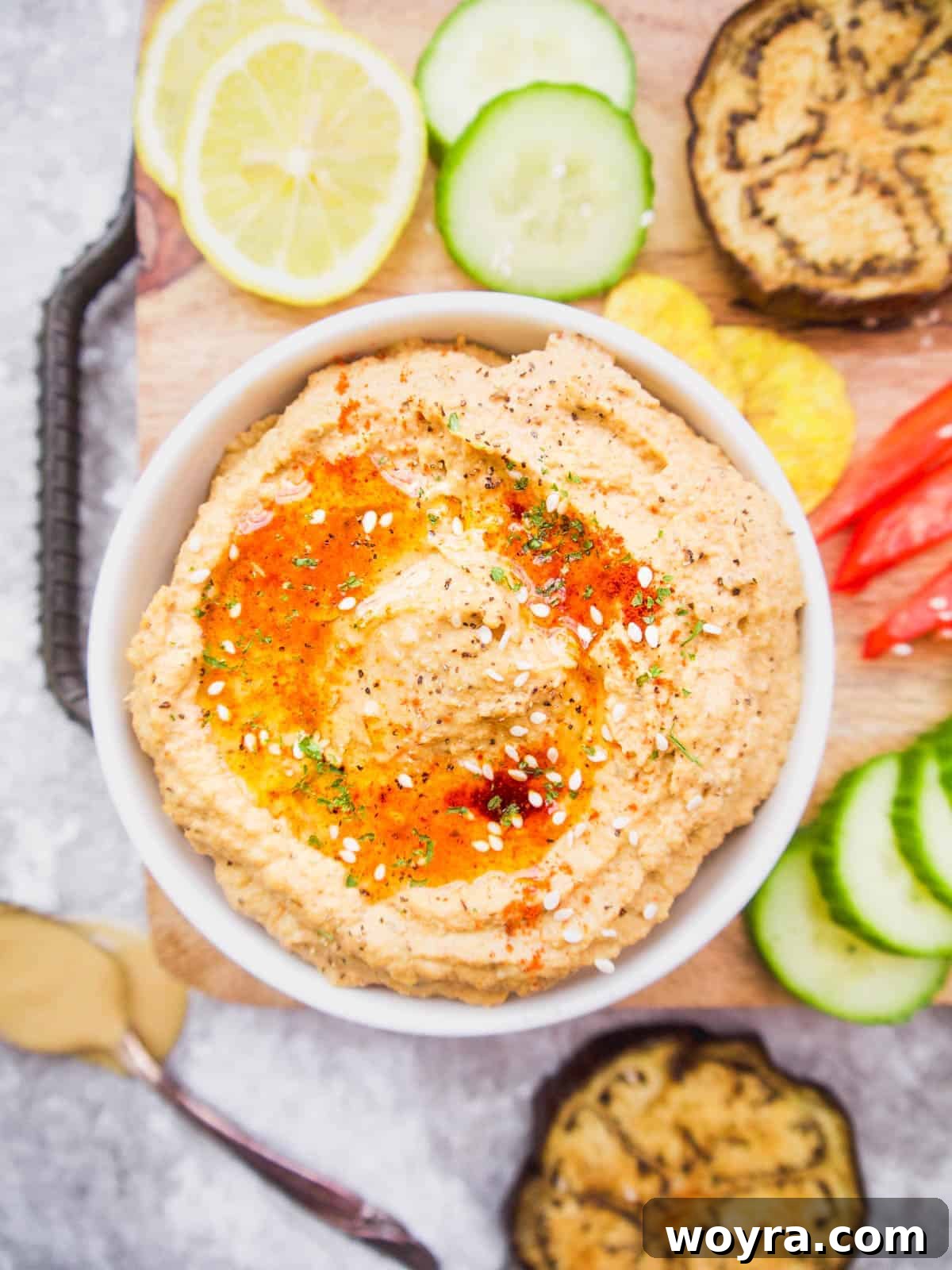
Indulge in a delightfully creamy and flavorful Cauliflower Hummus recipe, meticulously crafted by roasting vibrant cauliflower, sweet red peppers, and tender eggplant. This unique dip is expertly seasoned with rich tahini, zesty lemon juice, and an aromatic blend of spices, offering a truly exceptional
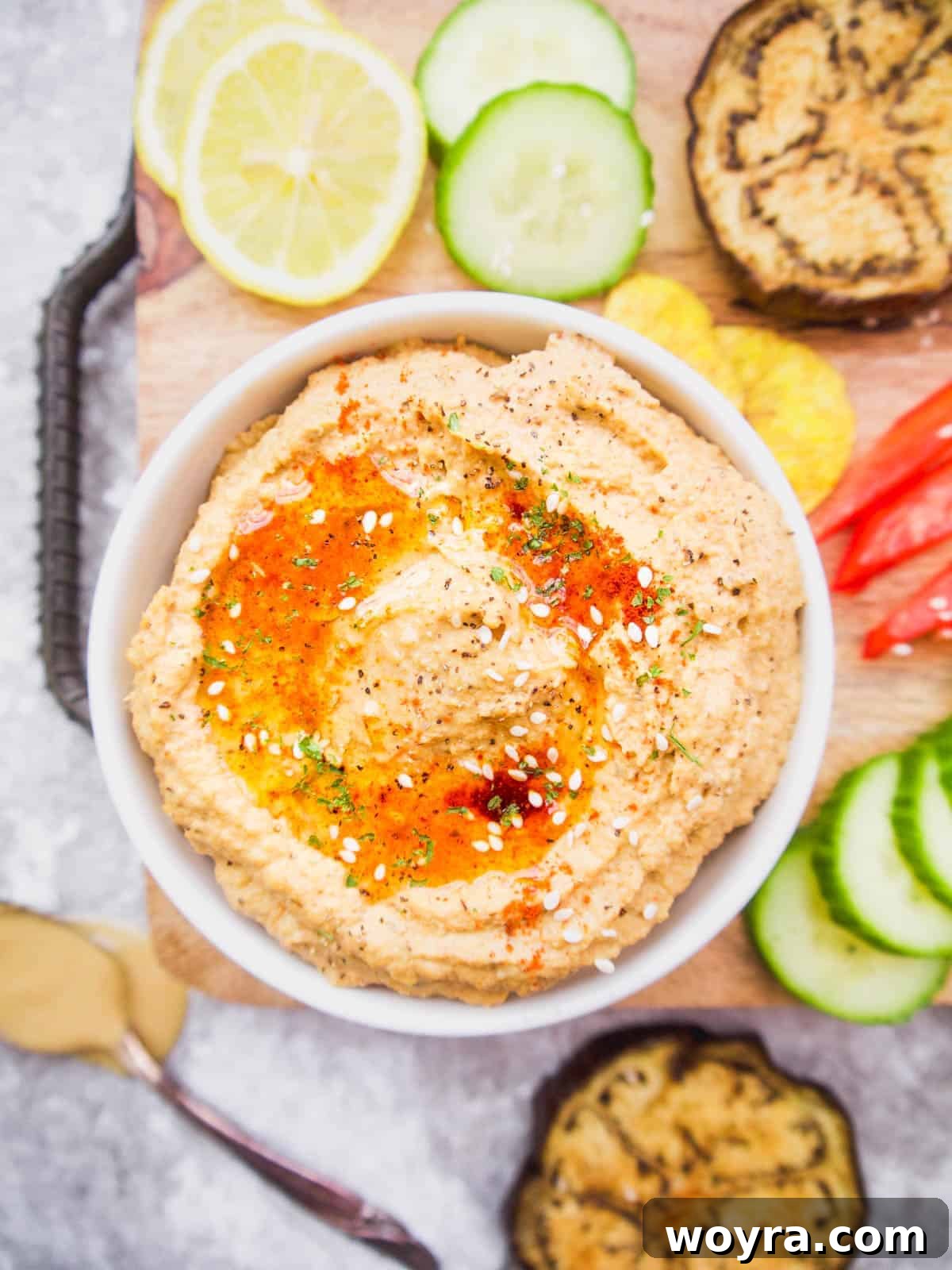
This roasted vegetable-based hummus stands out as one of our all-time favorite recipes, embodying a rich, creamy texture and a deeply satisfying flavor profile, all while being completely chickpea-free. We achieve this incredible depth by slow-roasting red peppers, cauliflower, and eggplant to caramelized perfection, then blending them with the essential hummus components: nutty tahini, bright lemon juice, earthy cumin, fragrant garlic powder, and a generous drizzle of high-quality olive oil. The result is a smooth, velvety dip that rivals traditional hummus in every way.
Beyond its incredible taste, this recipe is a fantastic legume-free hummus alternative, naturally compliant with a variety of dietary needs. It is
Table of Contents
- Why You’ll Love This Cauliflower Hummus
- Is Hummus Paleo? A Dietary Breakdown
- The Star Ingredients for Our Paleo Hummus
- Simple Step-by-Step Guide to Making Cauliflower Hummus
- Expert Tips for the Perfect Paleo Hummus
- How to Serve Your Mediterranean Cauliflower Hummus
- Storage and Make-Ahead Tips
- Other Healthy Snack Recipes You’ll Love
- Mediterranean Cauliflower Hummus (Paleo, Gluten-free) Recipe
Why You’ll Love This Cauliflower Hummus
This Mediterranean-inspired cauliflower hummus isn’t just a delicious dip; it’s a brilliant culinary innovation that caters to both taste and dietary needs. Here’s why this recipe deserves a prime spot in your kitchen:
- Authentic Hummus Flavor Without the Chickpeas: Experience all the creamy, savory notes of traditional hummus, but made entirely without legumes. This makes it an ideal choice for those with chickpea sensitivities or allergies, allowing everyone to enjoy this beloved spread.
- Perfect for Paleo and Whole30 Lifestyles: Adhering to strict dietary protocols like Paleo and Whole30 can be challenging, especially when craving familiar textures and flavors. This recipe offers a compliant solution, proving that healthy eating can still be incredibly satisfying and full of flavor.
- Naturally Gluten-Free and Dairy-Free: For individuals managing gluten or dairy intolerances, finding versatile and delicious snacks can be a hunt. This cauliflower hummus is inherently free from both, making it a safe and delightful option for a broader range of dietary preferences.
- Effortless Preparation: Despite its gourmet taste, this hummus is surprisingly simple to prepare. With straightforward steps and readily available ingredients, you can whip up a batch quickly, making it perfect for last-minute gatherings or meal prepping for the week.
- Nutrient-Rich and Wholesome: Packed with vegetables like cauliflower, red peppers, and eggplant, this dip is a powerhouse of vitamins, minerals, and fiber. It offers a nutrient-dense alternative to many processed snacks, supporting a balanced and healthy diet.
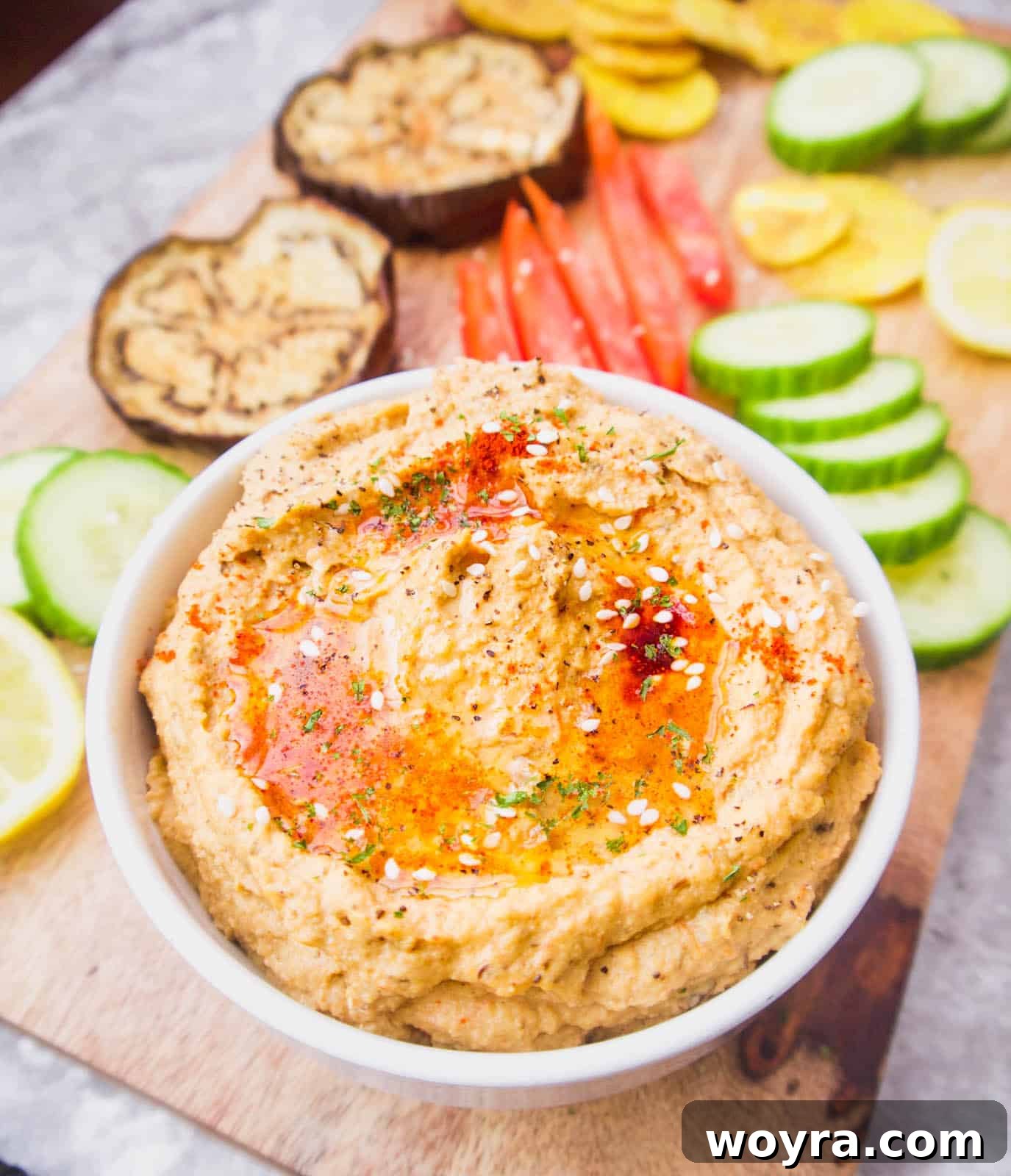
Is Hummus Paleo? A Dietary Breakdown
The question of whether hummus fits into a Paleo diet is common, and the answer, in short, depends entirely on its ingredients. Traditional hummus, made primarily from chickpeas, is generally not considered Paleo-friendly. Chickpeas fall into the category of legumes, and the Paleo diet typically excludes all legumes due to their potential anti-nutrients and lectins, which can be difficult for some people to digest.
However, this doesn’t mean you have to forsake the creamy delight of hummus entirely! The beauty of this recipe lies in its innovative approach. By replacing chickpeas with roasted vegetables like cauliflower, red peppers, and eggplant, we create a delicious and wholesome alternative that is fully compliant with Paleo principles. This allows you to enjoy the familiar texture and flavor profile of hummus while adhering to your dietary choices. So, yes, when thoughtfully crafted without chickpeas, hummus can indeed be a delightful part of your Paleo lifestyle!
The Star Ingredients for Our Paleo Hummus
Each ingredient in this recipe plays a crucial role in building the incredible flavor and silky texture of our chickpea-free hummus. Here’s a closer look at what you’ll need and why they’re essential:
- Cauliflower: The foundational ingredient, you’ll need a full head of cauliflower, cut into florets. When roasted, cauliflower becomes tender, slightly sweet, and provides the perfect neutral base and creamy texture for our hummus, mimicking the body of chickpeas.
- Red Pepper: Half a red pepper, sliced, is added for its inherent sweetness and vibrant color. Roasting it intensifies its flavor, contributing a Mediterranean depth and subtle tang that beautifully complements the other vegetables.
- Eggplant: Use half a large eggplant, sliced (or a whole small one). Roasted eggplant becomes incredibly soft and adds a rich, smoky, and slightly earthy flavor, enhancing the overall Mediterranean profile and contributing to the hummus’s luxurious creaminess.
- Tahini: This essential sesame paste is non-negotiable for a truly authentic hummus taste. Four tablespoons of tahini bring a distinctive nutty, slightly bitter, and incredibly rich flavor, along with an emulsifying quality that makes the dip smooth and cohesive.
- Olive Oil: Five tablespoons of high-quality olive oil are used, divided. One tablespoon for roasting helps caramelize the vegetables, while the remaining four tablespoons are vital for blending. It adds a silky texture, richness, and classic Mediterranean flavor to the final hummus.
- Lemon Juice: Four tablespoons of fresh lemon juice provide essential acidity and brightness. It balances the richness of the tahini and roasted vegetables, lifting the flavors and giving the hummus its signature refreshing zing.
- Garlic Powder: One teaspoon of garlic powder ensures a consistent garlic flavor throughout the dip. It’s a convenient way to add that pungent, savory kick without the raw intensity of fresh garlic.
- Cumin: Half a teaspoon of cumin is a cornerstone spice in Mediterranean cuisine. Its warm, earthy, and slightly peppery notes are crucial for creating the classic hummus taste profile.
- Salt & Black Pepper: One teaspoon of salt and a quarter teaspoon of black pepper are added to enhance all the other flavors, bringing them into harmony and ensuring the hummus is perfectly seasoned.
- Paprika (for garnish): A sprinkle of paprika at the end adds a beautiful pop of color and a mild, sweet, or smoky flavor, making the hummus even more inviting.
For a precise list of measurements and additional details, please refer to the recipe card below.
Simple Step-by-Step Guide to Making Cauliflower Hummus
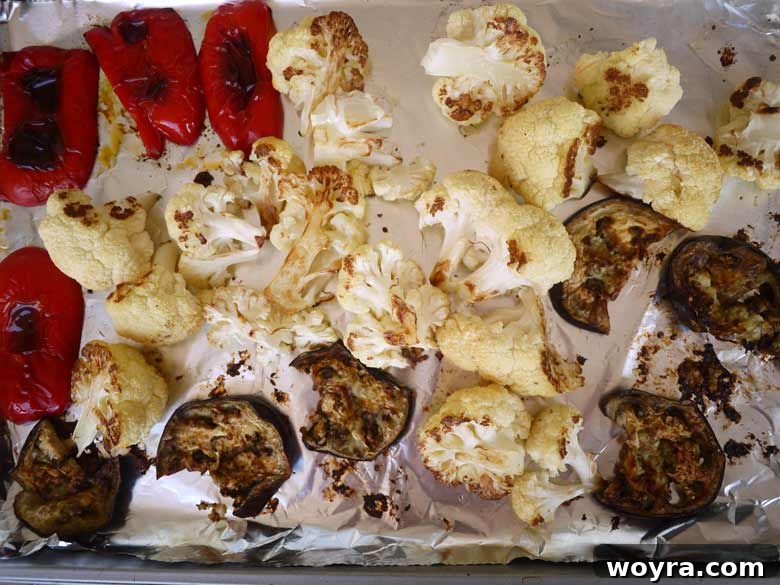
Step 1: Perfectly Roast the Vegetables. Begin by preheating your oven to 400°F (200°C). Line a baking sheet with aluminum foil for easy cleanup, then drizzle with 1 tablespoon of olive oil. Spread the cauliflower florets, sliced red pepper, and sliced eggplant evenly across the pan. Toss them gently to ensure they are all nicely coated in the olive oil. Roast for approximately 40 minutes, flipping the vegetables halfway through, until they are beautifully tender and caramelized, with slightly browned edges. This roasting process is key to developing their deep, sweet flavors.
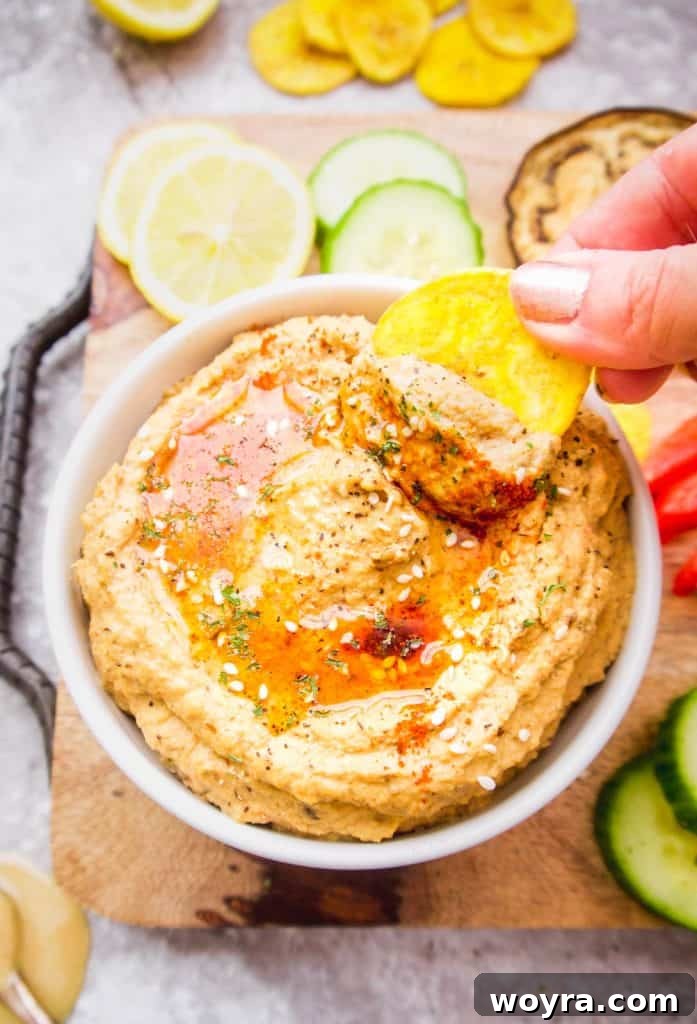
Step 2: Blend to Smooth Perfection. Once the roasted vegetables have cooled slightly, transfer them to a high-speed blender or food processor. Add the tahini, the remaining 4 tablespoons of olive oil, fresh lemon juice, salt, garlic powder, black pepper, and cumin. Blend all ingredients until they achieve a wonderfully smooth and creamy hummus texture. You may need to stop and scrape down the sides of the blender with a spatula several times to ensure everything is thoroughly incorporated. The blending process typically takes about 3-5 minutes, depending on the power of your appliance. Once smooth, pour the finished hummus into a serving bowl.
Why Roast the Vegetables?
Roasting the cauliflower, red peppers, and eggplant is not just an optional step; it’s a fundamental technique that transforms the flavor and texture of this chickpea-free hummus. The high heat of the oven brings out the natural sugars in the vegetables, leading to a beautiful caramelization that adds incredible depth and sweetness. This process mellows any bitterness, especially in the eggplant, and creates a smoky undertone that is reminiscent of traditional Mediterranean cooking. Moreover, roasting softens the vegetables significantly, making them easier to blend into the exceptionally smooth and creamy consistency that is characteristic of good hummus. Without roasting, the hummus would lack complexity and might have a less desirable texture.
Expert Tips for the Perfect Paleo Hummus
Achieving the ideal texture and flavor for your Paleo cauliflower hummus is easy with these simple tips:
- Taste and Adjust Seasonings: The beauty of homemade hummus is the ability to customize it to your preference. Don’t be shy about tasting the hummus after blending and adjusting the amounts of lemon juice, tahini, olive oil, cumin, salt, and pepper. A little extra of any of these can make a big difference in the final flavor balance.
- Achieve Your Desired Consistency: If your hummus is too thick or you prefer a silkier texture, simply add a bit more olive oil (or even a tablespoon of water) while blending until it reaches your desired consistency. Add it slowly, a tablespoon at a time, until it’s perfect.
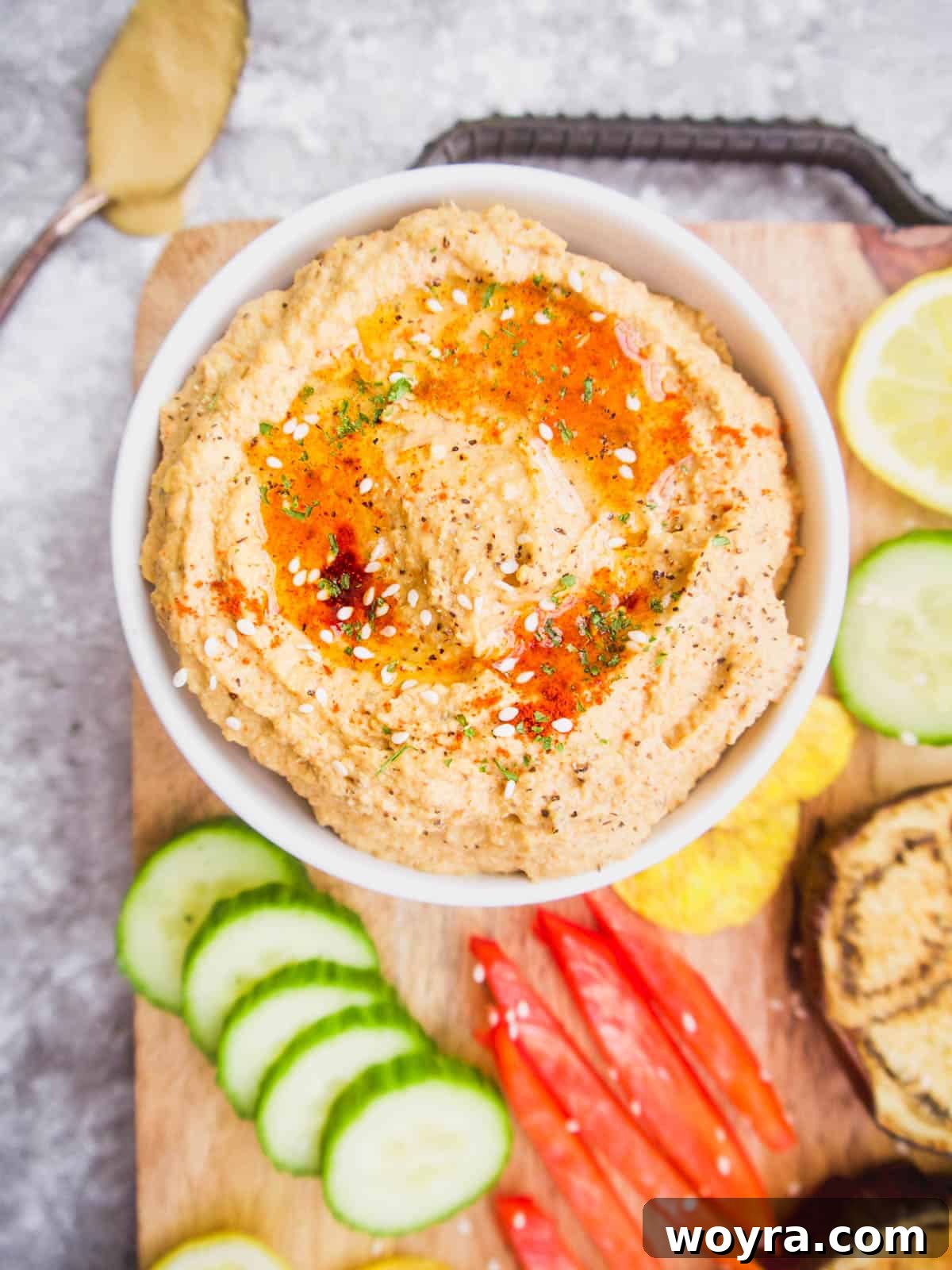
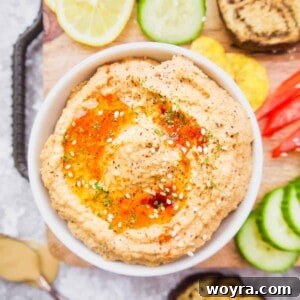
- Elevate Your Presentation: For a professional touch when serving, scoop the hummus into a shallow bowl and create a swirl with the back of a spoon. Drizzle a little extra virgin olive oil over the top and finish with a sprinkle of paprika for color and a touch of flavor. You can also add a few fresh herb sprigs like parsley or cilantro.
How to Serve Your Mediterranean Cauliflower Hummus
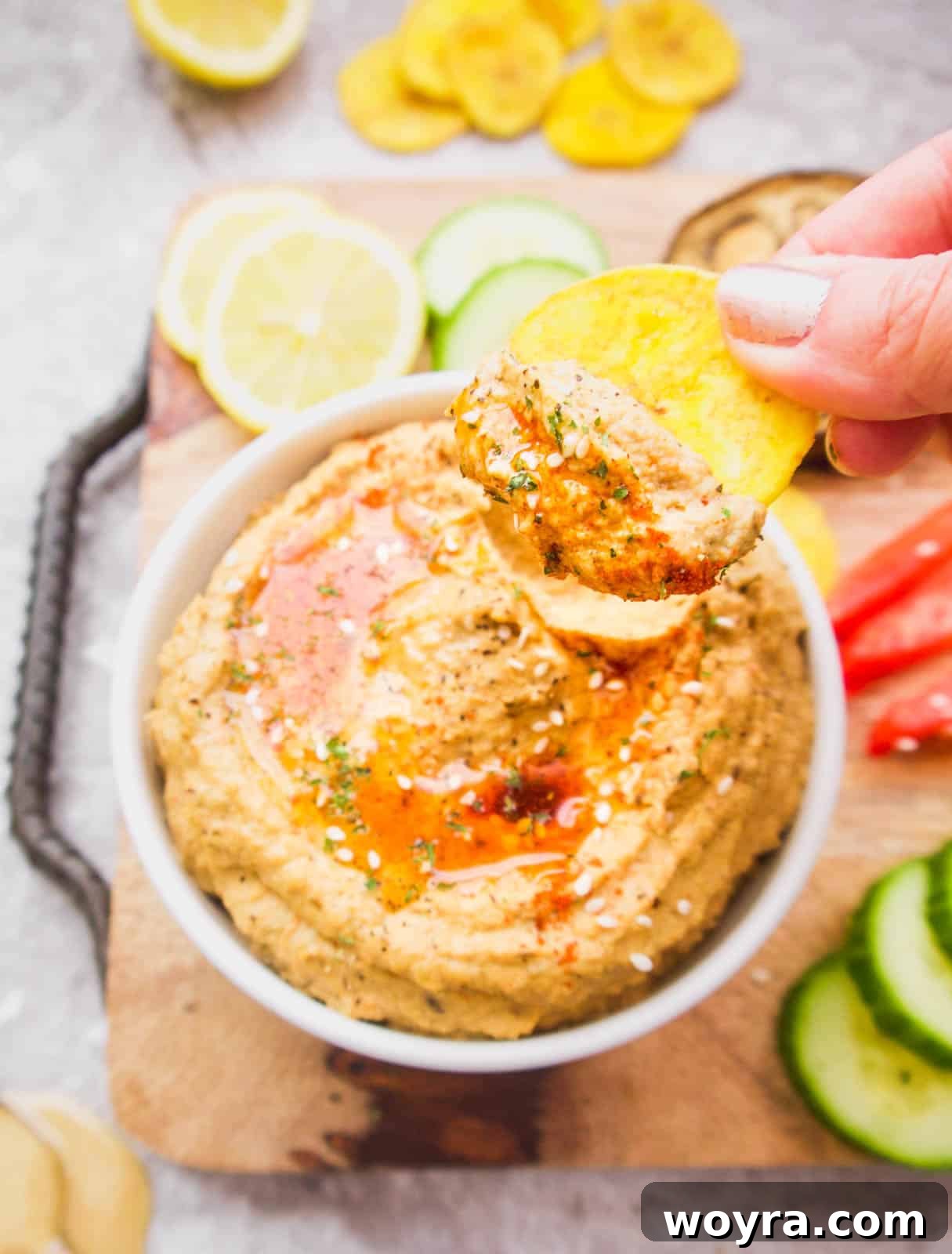
This versatile Paleo cauliflower hummus is perfect for any occasion, from a quick healthy snack to an elegant appetizer. Here are some fantastic ways to enjoy it:
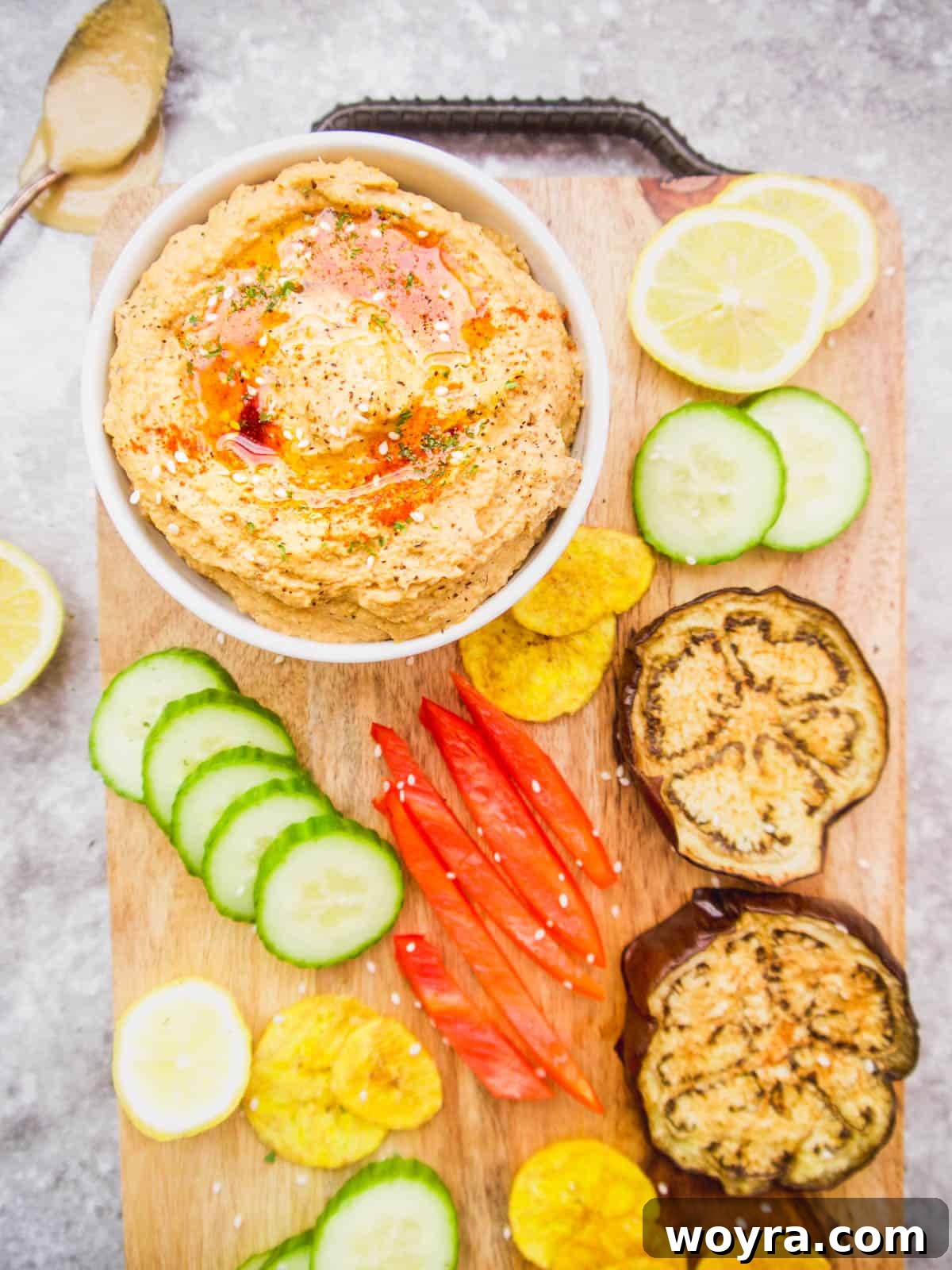
- With a Rainbow of Raw Vegetables: The ultimate pairing for hummus! Serve with crisp carrot sticks, refreshing cucumber slices, vibrant red pepper strips, juicy cherry tomatoes, crunchy celery, and tender broccoli florets. The contrast of textures and flavors is simply delightful.
- Alongside Paleo-Friendly Chips and Crackers: For those who love a good crunch, pair your hummus with plantain chips, sweet potato chips, or any other chip or cracker that aligns with your dietary needs. The robust flavor of the hummus stands up beautifully to these hearty dippers.
- Homemade Almond Crackers: Take your dipping experience to the next level with my Paleo Everything Almond Crackers. Their savory crunch and nutty flavor make them an excellent companion for this rich cauliflower hummus.
- As a Sandwich or Wrap Spread: Don’t limit hummus to just dipping! Use it as a flavorful spread in lettuce wraps, on grain-free bread, or as a base for chicken or tuna salad to add moisture and a burst of Mediterranean flavor.
- Beyond Dips: Explore other healthy snack ideas, such as those found on Allergy Awesomeness’s Gluten-free Dairy-free Snacks list. Many of these would perfectly complement your new favorite chickpea-free hummus.
Storage and Make-Ahead Tips
Preparing this delicious cauliflower hummus in advance can save you time and ensure you always have a healthy snack on hand. Once prepared, store the hummus in an airtight container in the refrigerator. It will stay fresh and flavorful for up to 4-5 days. For optimal freshness, you might want to drizzle a thin layer of olive oil over the surface before sealing the container; this helps prevent the hummus from drying out and maintains its vibrant color. While freezing is possible, the texture might change slightly upon thawing, becoming a bit grainier. If you choose to freeze, thaw it overnight in the refrigerator and give it a good stir or a quick re-blend to restore its creaminess.
Other Healthy Snack Recipes You’ll Love
Did you try this recipe? Please leave me a ⭐ review below!
Mediterranean Cauliflower Hummus (Paleo, Gluten-free)
Ingredients
- 1 head cauliflower, cut into smaller florets
- 1/2 red pepper, sliced
- 1/2 large eggplant, sliced (if your eggplant is small, use all of it)
- 4 Tbs tahini
- 5 Tbs olive oil, (divided- 1 Tbs to roast veggies, 4 Tbs for the hummus)
- 4 Tbs lemon juice
- 1 tsp salt
- 1 tsp garlic powder
- 1/4 tsp black pepper
- 1/2 tsp cumin
- paprika for garnish
- olive oil for garnish
Instructions
- Preheat your oven to 400 degrees Fahrenheit (200°C).
- Cover a cookie sheet with aluminum foil and drizzle 1 tablespoon of olive oil on top, spreading it evenly.
- Arrange the eggplant slices, red pepper slices, and cauliflower florets on the prepared pan. Toss them well to ensure they are nicely coated in the olive oil.
- Roast the vegetables for 40 minutes. Remember to flip the vegetables halfway through the cooking time to ensure even caramelization.
- Remove the pan from the oven and allow the roasted vegetables to cool down completely before proceeding.
- Transfer the cooled roasted vegetables, tahini, the remaining 4 tablespoons of olive oil, lemon juice, salt, garlic powder, black pepper, and cumin into a blender or food processor.
- Blend the ingredients until they transform into a smooth and creamy hummus texture. You may need to stop the blender and scrape down the sides with a spatula several times to ensure all ingredients are fully incorporated. This process should take approximately 3-5 minutes, depending on the power of your blender.
- Once the hummus has reached your desired consistency, transfer it to a serving bowl. Garnish with a sprinkle of paprika and an extra drizzle of olive oil, then serve and enjoy!
Notes
- Customize the seasonings to your tastes. You can add more or less of the lemon juice, tahini, olive oil, cumin, salt, or pepper to achieve your preferred flavor balance.
- If you desire a thinner or creamier texture for your hummus, gradually add more olive oil (or a tablespoon of water) while blending until it reaches your desired consistency.
- When serving, present the hummus in a decorative bowl, create a swirl with a spoon, and finish with a fresh drizzle of olive oil and a final sprinkle of paprika for an appealing presentation.
Nutrition
Nutrition information is automatically calculated, so should only be used as an approximation.
Additional Info