
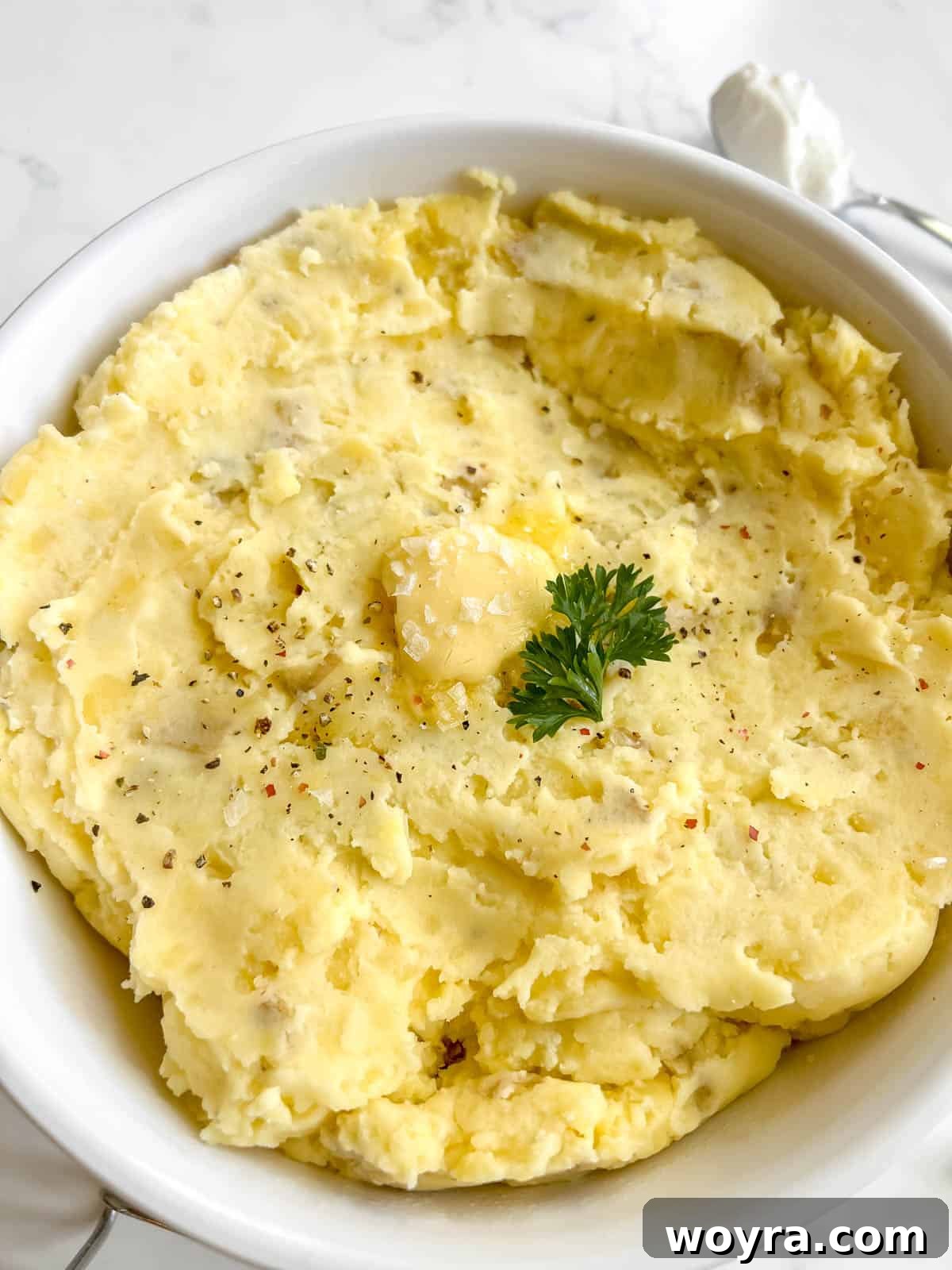
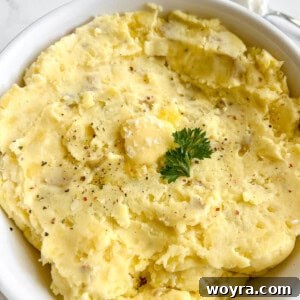
These homemade Greek Yogurt Mashed Potatoes are a revelation! Prepare to fall in love with their incredibly creamy, rich, and savory profile. Exceptionally easy to prepare, they truly are the perfect, versatile side dish for any meal, offering a delightful twist on a classic comfort food.
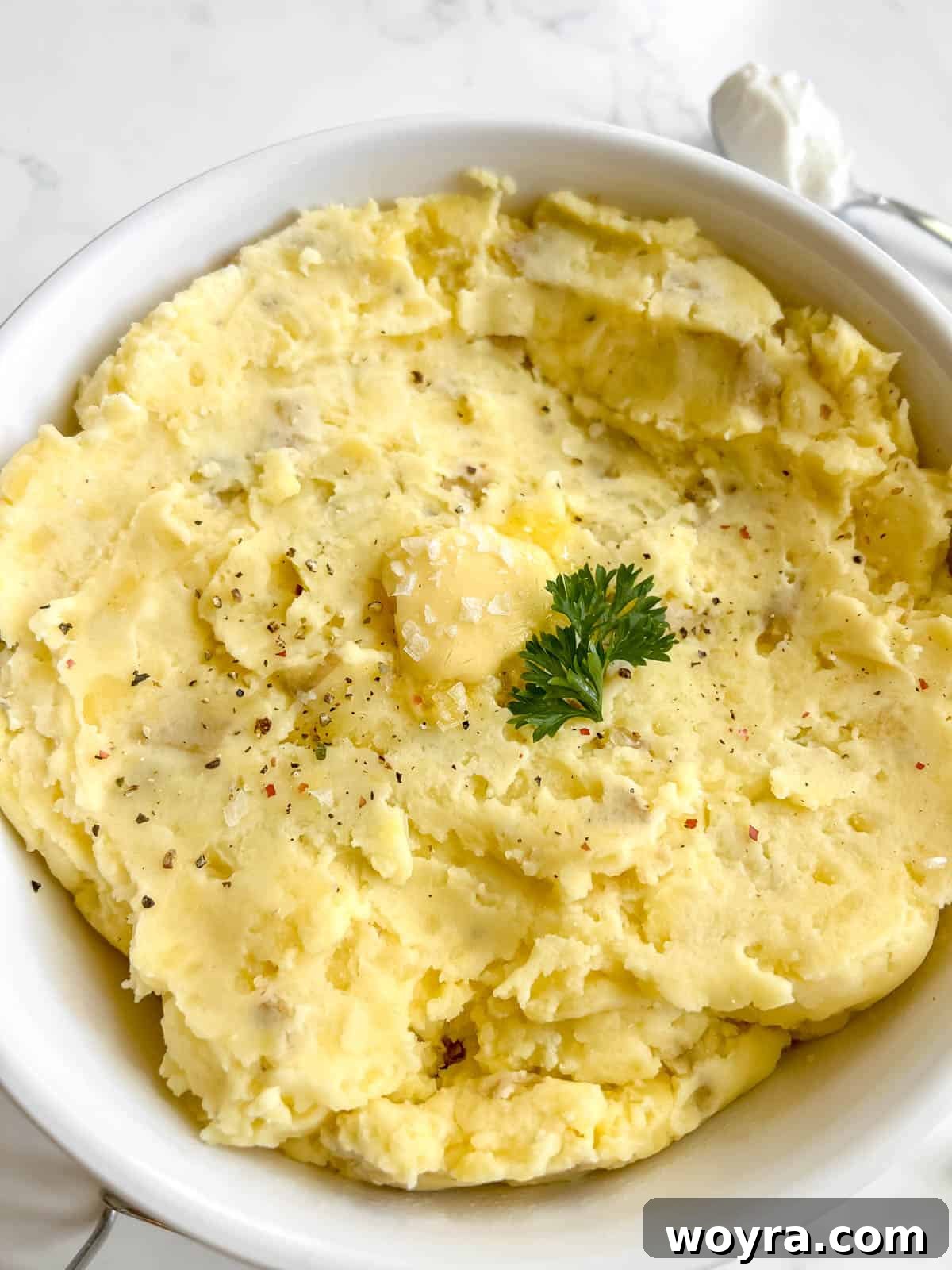
The Ultimate Creamy Mashed Potatoes with a Healthy Twist
Mashed potatoes hold a special place in everyone’s heart, a quintessential comfort food beloved across cultures. While many variations exist—some preferring milk, others cottage cheese, and some even keeping the skins on—my personal quest has always been for a recipe that combines ease of preparation with undeniable deliciousness. This quest led me to discover the magic of Greek yogurt in mashed potatoes, transforming a beloved dish into something truly extraordinary. It’s a simple addition that delivers incredible results, elevating the creaminess and adding a subtle tang that perfectly complements the savory potato flavor.
Beyond being a standalone delight eaten straight from the bowl (no judgment here!), these Greek yogurt mashed potatoes are an ideal companion for a variety of main courses. Imagine them alongside a hearty healthy chicken turkey meatloaf, providing a smooth contrast to its robust flavors. Or, pair them with a light and flavorful lemon ginger turmeric salmon for a balanced and incredibly satisfying dinner. Their versatility makes them a staple for weeknight dinners and special occasions alike, promising to impress with every spoonful.
Table of Contents
- Why You Will Love This Recipe
- Key Ingredients for Perfection
- Customizing Your Mashed Potatoes: Additions and Substitutions
- Step-by-Step Instructions for Creamy Perfection
- Expert Tips for the Best Greek Yogurt Mashed Potatoes
- Serving Suggestions
- Storage and Reheating FAQs
- Frequently Asked Questions
- Other Delicious Potato Recipes You’ll Love
- Greek Yogurt Mashed Potatoes Recipe Card
Why You Will Love This Recipe
These Greek Yogurt Mashed Potatoes aren’t just delicious; they offer a fantastic blend of flavor, texture, and nutritional benefits. Here’s why this recipe deserves a permanent spot in your culinary repertoire:
- A Healthier Protein Boost: Incorporating Greek yogurt is a brilliant way to add extra protein to your diet without sacrificing flavor or texture. It makes these mashed potatoes more satisfying and contributes to a balanced meal. If you’re keen on exploring more ways to include this versatile ingredient, be sure to try my Greek yogurt banana bread for a delightful sweet treat!
- Unmatched Creaminess and Texture: The unique combination of creamy Greek yogurt, rich butter, and a touch of milk (or heavy cream) creates an incredibly velvety and smooth texture that’s simply irresistible. Forget dry or lumpy mashed potatoes; these are pure bliss.
- Effortlessly Customizable: This recipe serves as a perfect canvas for your culinary creativity. Whether you prefer a subtle hint of garlic, a sprinkle of fresh herbs, or a pinch of spices, these mashed potatoes are incredibly easy to adapt to your personal taste preferences and complement any main dish.
- Simple Ingredients, Incredible Flavor: You don’t need a pantry full of exotic items to create this masterpiece. A handful of fresh, wholesome ingredients is all it takes to whip up a batch of these flavorful potatoes.
- The Ultimate Comfort Food, Elevated: Mashed potatoes are synonymous with comfort, and this version takes that experience to a new level. It’s warm, inviting, and deeply satisfying, making it perfect for cozy evenings or festive gatherings. For another heartwarming classic, don’t miss my recipe for creamed peas with a dairy-free option!
Key Ingredients for Perfection
Crafting the perfect Greek yogurt mashed potatoes begins with selecting the right ingredients. Each component plays a vital role in achieving that desirable creamy texture and rich flavor profile:
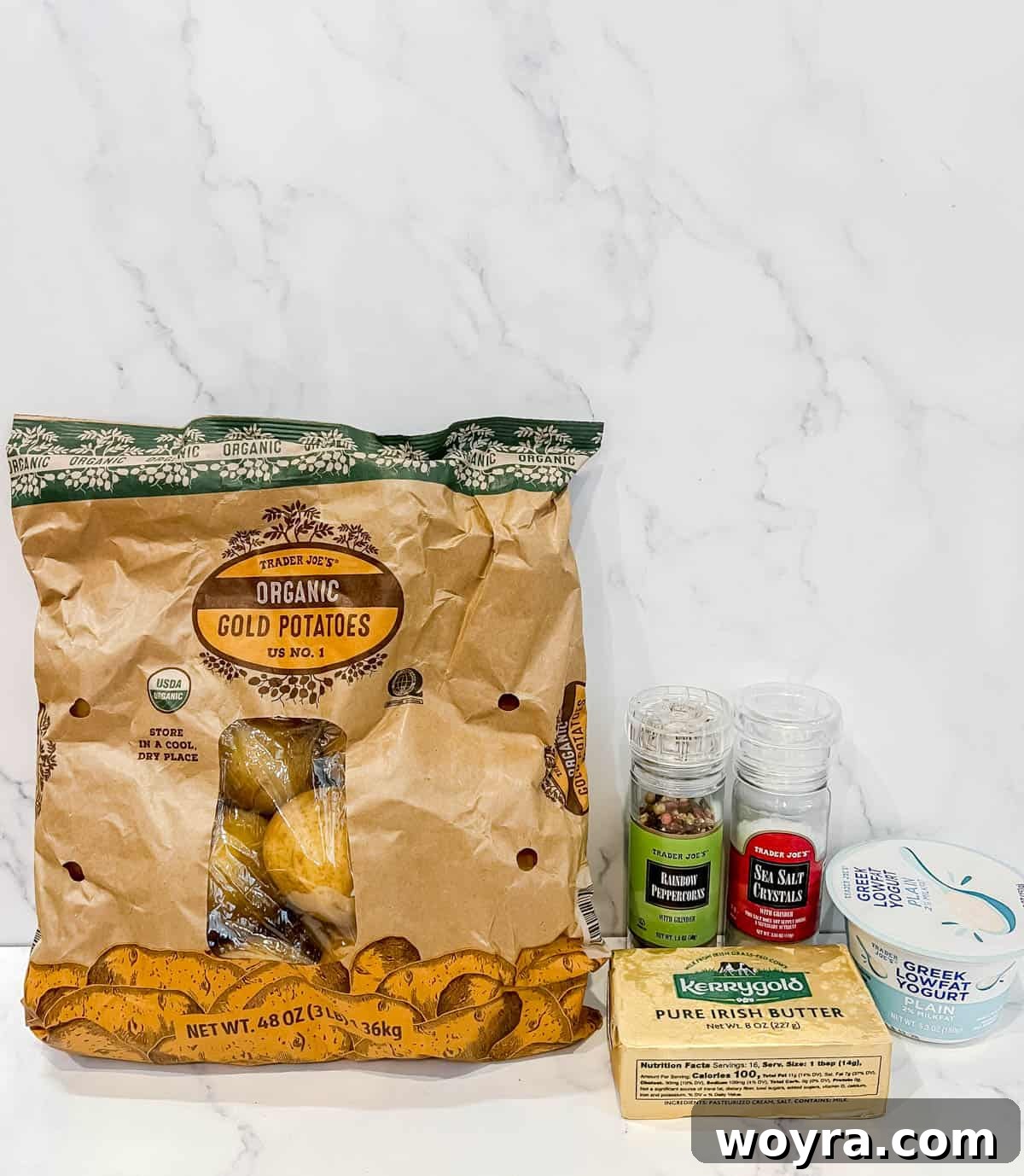
- Gold Potatoes: These are my absolute favorite choice for mashed potatoes, and for good reason! Gold potatoes have a naturally buttery flavor and a thin, delicate skin that’s barely noticeable when mashed, allowing you to often skip peeling for a more rustic texture and added nutrients. Their smooth, waxy texture results in a wonderfully creamy mash without becoming gummy.
- Unsalted Butter: A good quality butter is non-negotiable here. It contributes significantly to the richness, flavor, and overall luxuriousness of the mashed potatoes. Using unsalted butter allows you to control the total sodium content in your dish.
- Greek Yogurt: The star ingredient! You can use either low-fat or regular-fat Greek yogurt, both work beautifully. The Greek yogurt provides a delightful tang, enhances the creaminess, and adds a healthy boost of protein. It’s what gives these mashed potatoes their signature velvety texture and unique flavor depth.
- Salt and Freshly Ground Black Pepper: These fundamental seasonings are crucial for bringing out the natural flavors of the potatoes and balancing the richness. Adjust according to your preference; a little extra salt can make all the difference, and freshly ground pepper adds a nice aromatic kick.
- Milk (or Cream): A splash of milk helps to achieve the desired consistency and adds another layer of creaminess. You can use any milk you prefer, from whole milk for richer results to a lower-fat option if desired.
For a detailed list of exact measurements, please refer to the comprehensive recipe card located at the bottom of this article.
Customizing Your Mashed Potatoes: Additions and Substitutions
One of the best aspects of this Greek yogurt mashed potato recipe is its adaptability. Feel free to experiment with these additions and substitutions to tailor the dish to your liking or to use what you have on hand:
- Potato Varieties: While Gold potatoes are highly recommended for their texture, you can absolutely substitute them with other starchy potato varieties like Russet potatoes or Idaho potatoes. Keep in mind that Russets have a thicker, earthier skin, so peeling them is generally advised for a smoother mash.
- Dairy Alternatives: For an even richer and more indulgent texture, swap out regular milk for heavy cream or half and half. For a slightly lighter but still creamy result, you can use whole milk or even a combination of milk and a bit more Greek yogurt.
- Garlic Infusion: Add a couple of cloves of minced garlic to the boiling water with the potatoes, or roast whole garlic cloves until tender and mash them in for a delightful roasted garlic flavor. Garlic powder can also be added to taste during mashing.
- Fresh Herbs: Elevate the flavor with fresh chives, parsley, or dill. Chop them finely and stir them in at the end for a burst of freshness and color.
- Cheese Please: For an extra layer of savory goodness, fold in some grated Parmesan cheese, sharp cheddar, or even a creamy goat cheese while mashing.
- Spice It Up: A pinch of smoked paprika, a dash of nutmeg, or a hint of cayenne pepper can add unexpected depth and warmth to your mashed potatoes.
- Onion & Leek: Sauté finely diced onions or leeks until caramelized, then fold them into the mashed potatoes for a sweet and savory element.
- Broth for Flavor: If you find the potatoes a bit too dry even after adding milk/butter, a small splash of warm chicken or vegetable broth can add moisture and a savory depth.
Don’t be afraid to get creative! These suggestions are just starting points to inspire your perfect bowl of mashed potatoes.
Step-by-Step Instructions for Creamy Perfection
Achieving perfectly creamy Greek yogurt mashed potatoes is simpler than you might think. Follow these straightforward steps for a consistently delicious result:
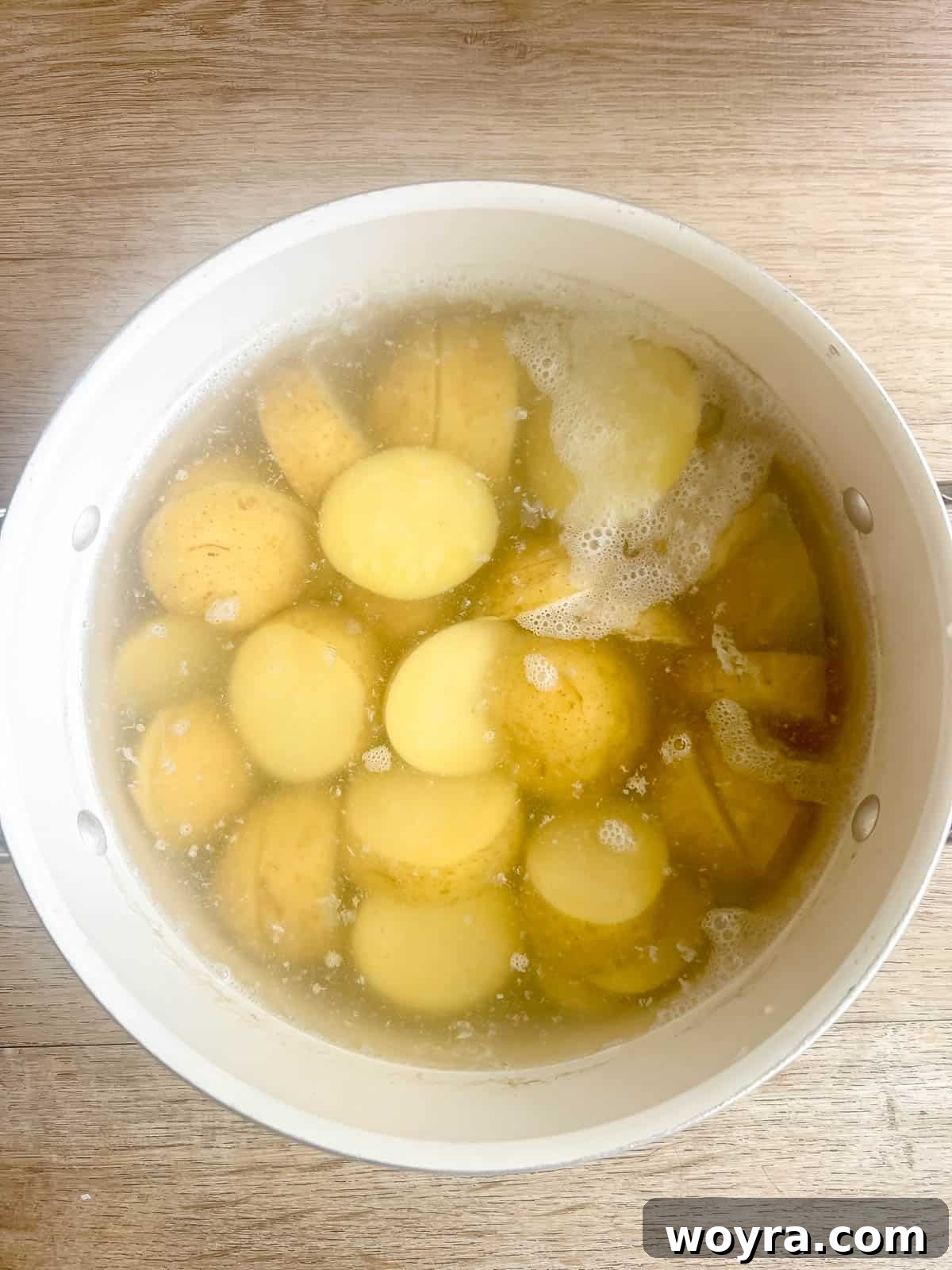
Step 1: Prepare and Boil the Potatoes. Wash and slice your chosen potatoes (Gold potatoes work best here) into roughly 1.5-inch pieces. You can choose to peel them or leave the skins on, especially with Gold potatoes. Place the potato slices in a large pot and cover them with cold water. Add a generous pinch of salt to the water (this seasons the potatoes from the inside out!). Bring the water to a rolling boil over medium-high heat, then reduce heat slightly and let them simmer until they are fork-tender, typically about 15-20 minutes. Drain the potatoes thoroughly in a colander.
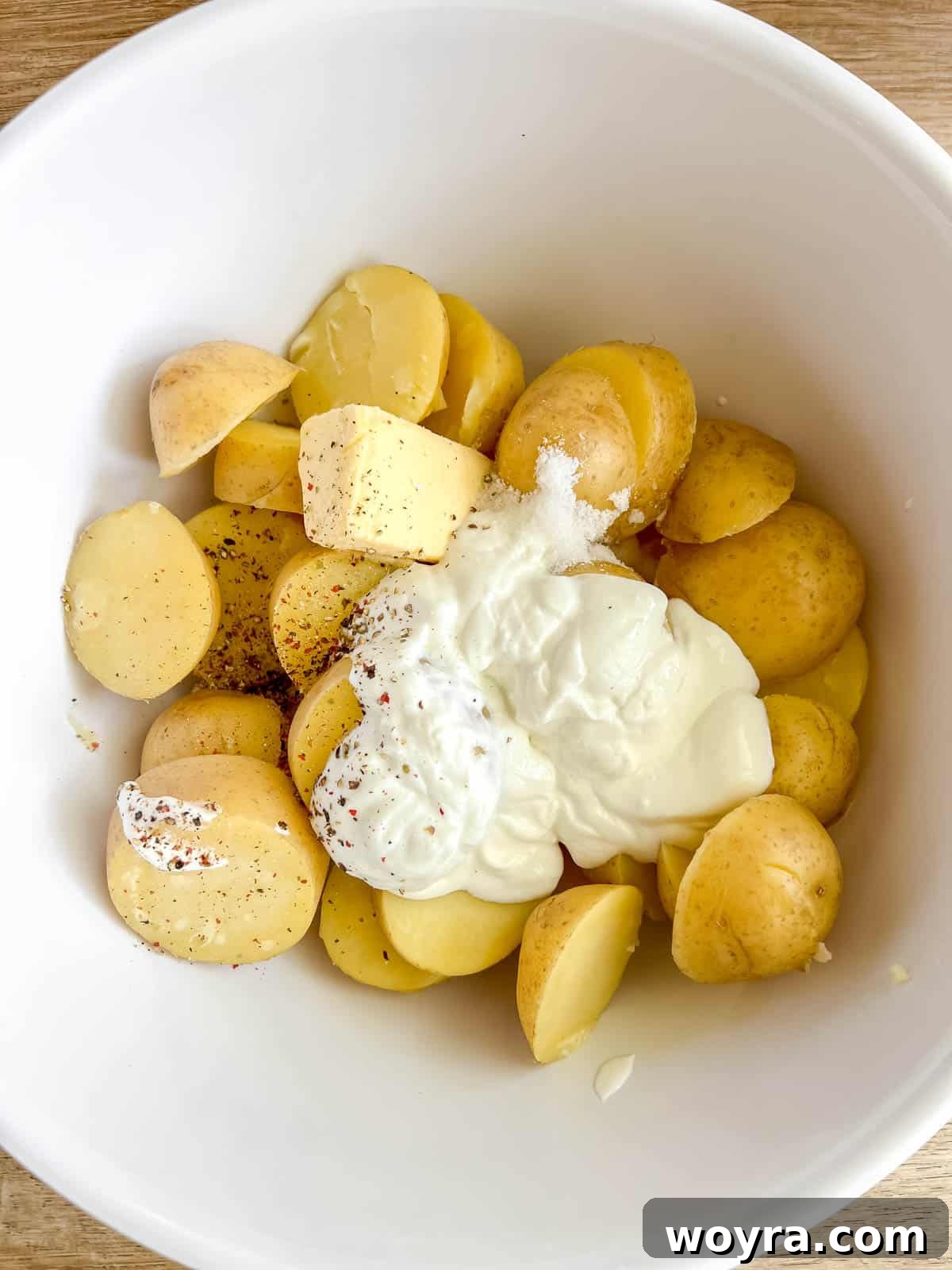
Step 2: Combine with Creamy Ingredients. Transfer the hot, drained potatoes back into the large pot or a spacious mixing bowl. Immediately add the Greek yogurt, butter, milk (or heavy cream/half and half), salt, and freshly ground black pepper. The residual heat from the potatoes will help the butter melt and integrate seamlessly.
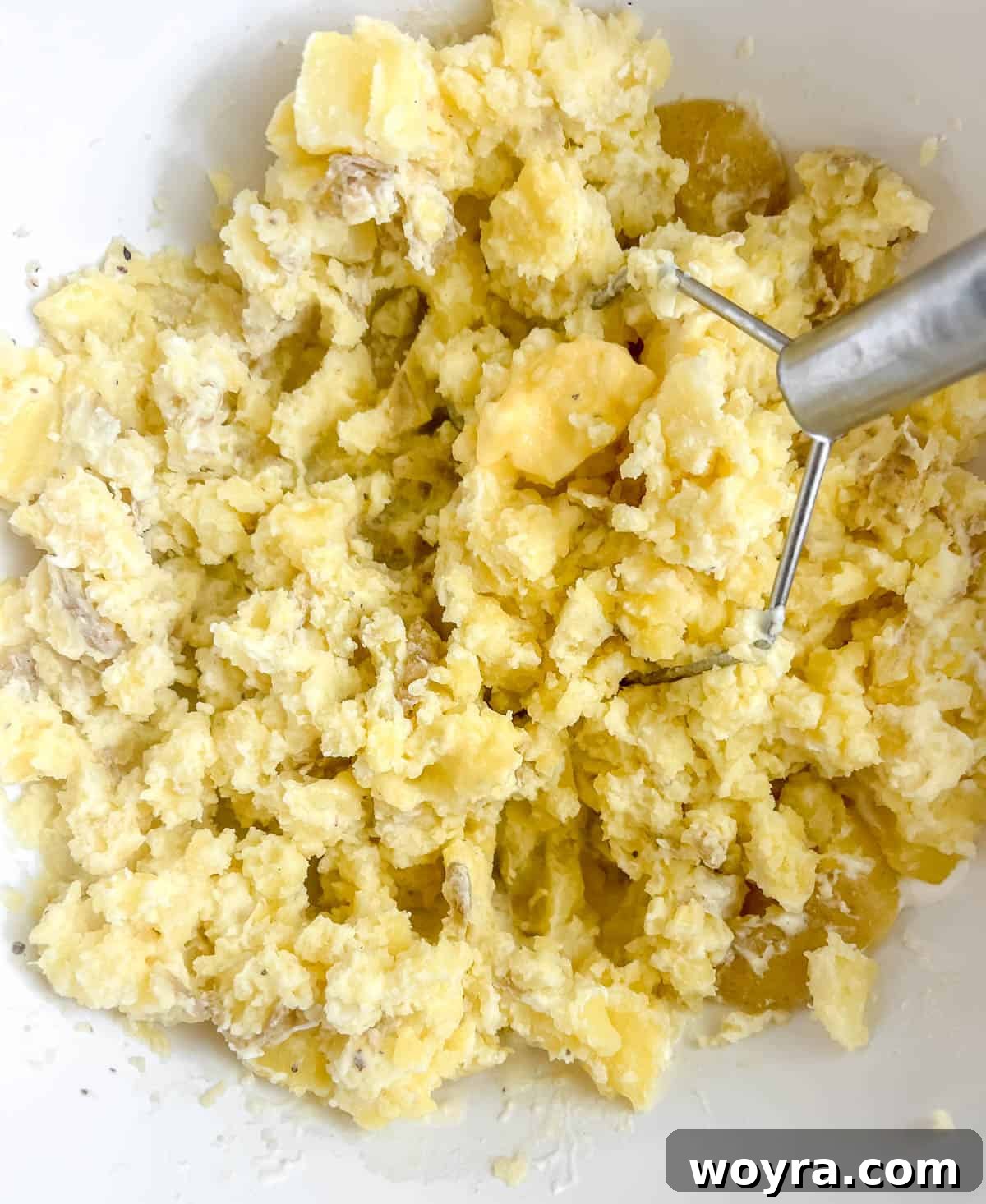
Step 3: Mash to Perfection. Using a sturdy potato masher, begin mashing all the ingredients together. Mash until you achieve your desired consistency – whether you prefer a slightly chunky texture or perfectly smooth. Work quickly but gently to avoid over-mashing, which can lead to gummy potatoes. The Greek yogurt and butter will help create that signature creaminess.
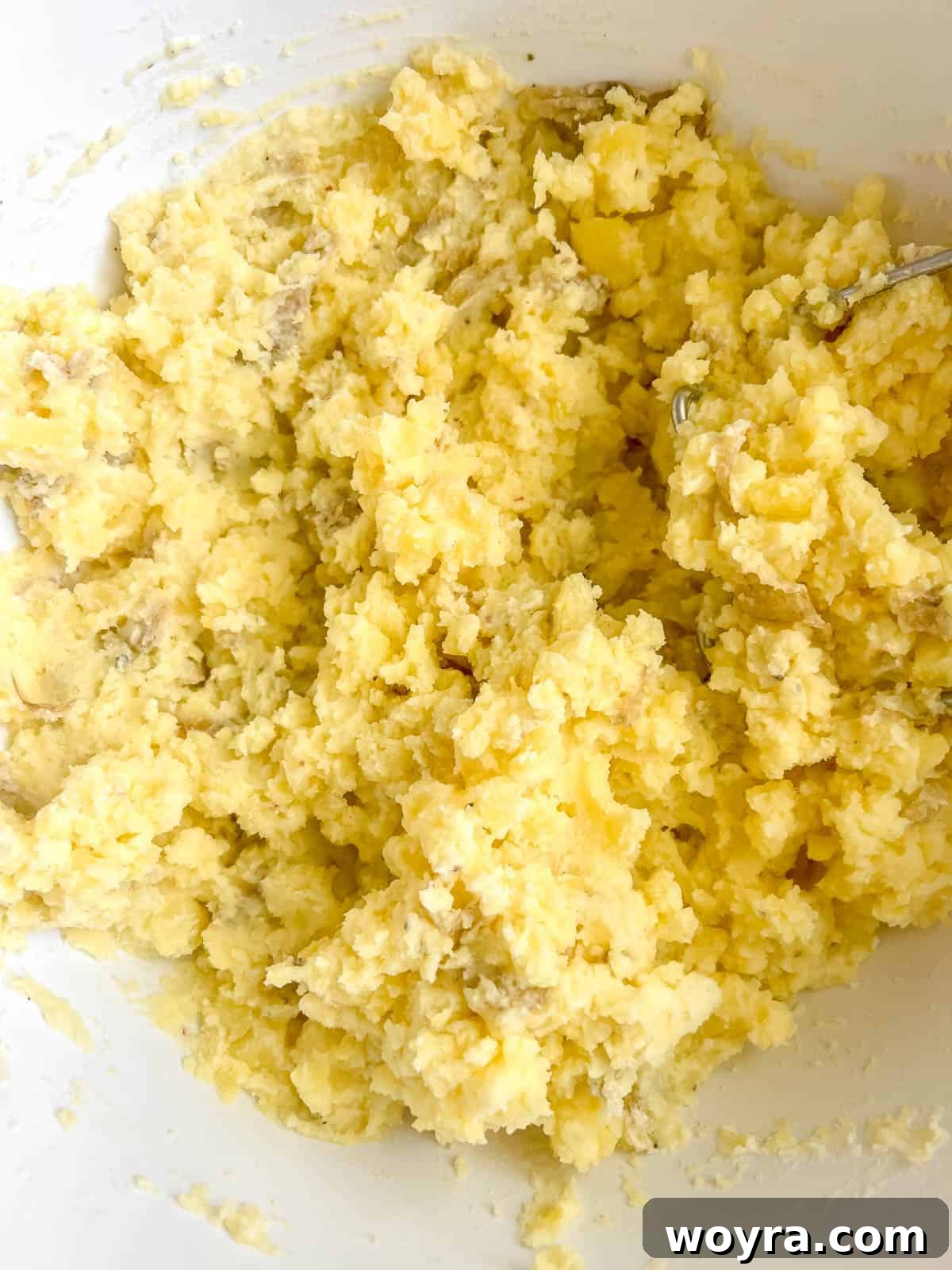
Step 4: Taste, Adjust, and Serve. Once mashed, give your potatoes a taste test. This is where you fine-tune the flavors! Adjust the salt and pepper as needed. If the texture is too dry or stiff for your liking, add a little more milk and/or butter, one tablespoon at a time, mashing again until you reach the ideal creaminess. Serve immediately while warm, perhaps with a dollop of extra butter or a sprinkle of fresh chives.
Expert Tips for the Best Greek Yogurt Mashed Potatoes
To ensure your Greek Yogurt Mashed Potatoes are consistently perfect, keep these expert tips in mind:
- Choose the Right Potatoes: As mentioned, Gold potatoes (Yukon Gold) are ideal due to their naturally buttery flavor and creamy texture when mashed. Russets also work well but generally require peeling. Avoid waxy potatoes like red or new potatoes, as they tend to become gluey when mashed.
- Salt the Boiling Water: This is a crucial step! Salting the water seasons the potatoes from the inside out, resulting in a more flavorful mash. Aim for water that tastes like the sea.
- Start with Cold Water: Always place potatoes in cold water and then bring it to a boil. This allows the potatoes to cook evenly from the outside in, preventing the exterior from overcooking and becoming mushy while the interior remains hard.
- Drain Thoroughly: Watery mashed potatoes are a common pitfall. After boiling, drain the potatoes well. You can even return them to the hot, empty pot over low heat for a minute or two, shaking gently to evaporate any excess moisture. This ensures the butter, yogurt, and milk can properly emulsify.
- Warm Your Dairy: While not strictly necessary, gently warming the milk/cream and even the Greek yogurt before adding them to the hot potatoes can help them incorporate more smoothly and maintain the potatoes’ warmth.
- Don’t Over-Mash: Over-mashing potatoes, especially with a food processor or blender, breaks down too much starch, leading to a gluey, gummy texture. A simple potato masher or a potato ricer (for ultimate smoothness) is best.
- Taste and Adjust: Seasoning is personal. Always taste your mashed potatoes before serving and adjust salt, pepper, or other seasonings as needed. You might be surprised how much difference a little extra salt or a fresh herb can make!
- Use Good Quality Ingredients: Since there are so few ingredients, the quality truly shines through. Opt for good butter and fresh, flavorful Greek yogurt.
- For Extra Richness: Don’t hesitate to use full-fat Greek yogurt and heavy cream instead of milk. You can also brown the butter slightly before adding it for a nutty flavor.
Serving Suggestions
These incredibly creamy Greek Yogurt Mashed Potatoes are a versatile side dish that complements a wide array of meals. Here are some ideas to inspire your next dinner:
- Classic Roasts: A perfect partner for roasted chicken, turkey, beef, or pork loin. The creaminess beautifully absorbs pan juices and gravies.
- Hearty Meatloaf: Serve alongside a comforting meatloaf, like this healthy chicken turkey meatloaf, for a complete and satisfying meal.
- Fish Dishes: The subtle tang of Greek yogurt pairs wonderfully with flaky fish. Try them with grilled salmon, baked cod, or even this vibrant lemon ginger turmeric salmon.
- Stew and Casseroles: Ideal for sopping up rich sauces from beef stew, shepherd’s pie, or chicken casseroles.
- Vegetarian Mains: A fantastic accompaniment to roasted vegetables, mushroom steaks, or lentil loaves.
- Breakfast/Brunch: Yes, seriously! A dollop alongside scrambled eggs, bacon, or sausages can be a delightful savory twist to breakfast.
- Holiday Feasts: These mashed potatoes are a must-have on any holiday table, offering a lighter yet equally decadent alternative to traditional versions.
- Garnish Ideas: Elevate presentation and flavor with a sprinkle of fresh chives, chopped parsley, crispy bacon bits, a drizzle of good olive oil, or a swirl of roasted garlic butter.
Storage and Reheating FAQs
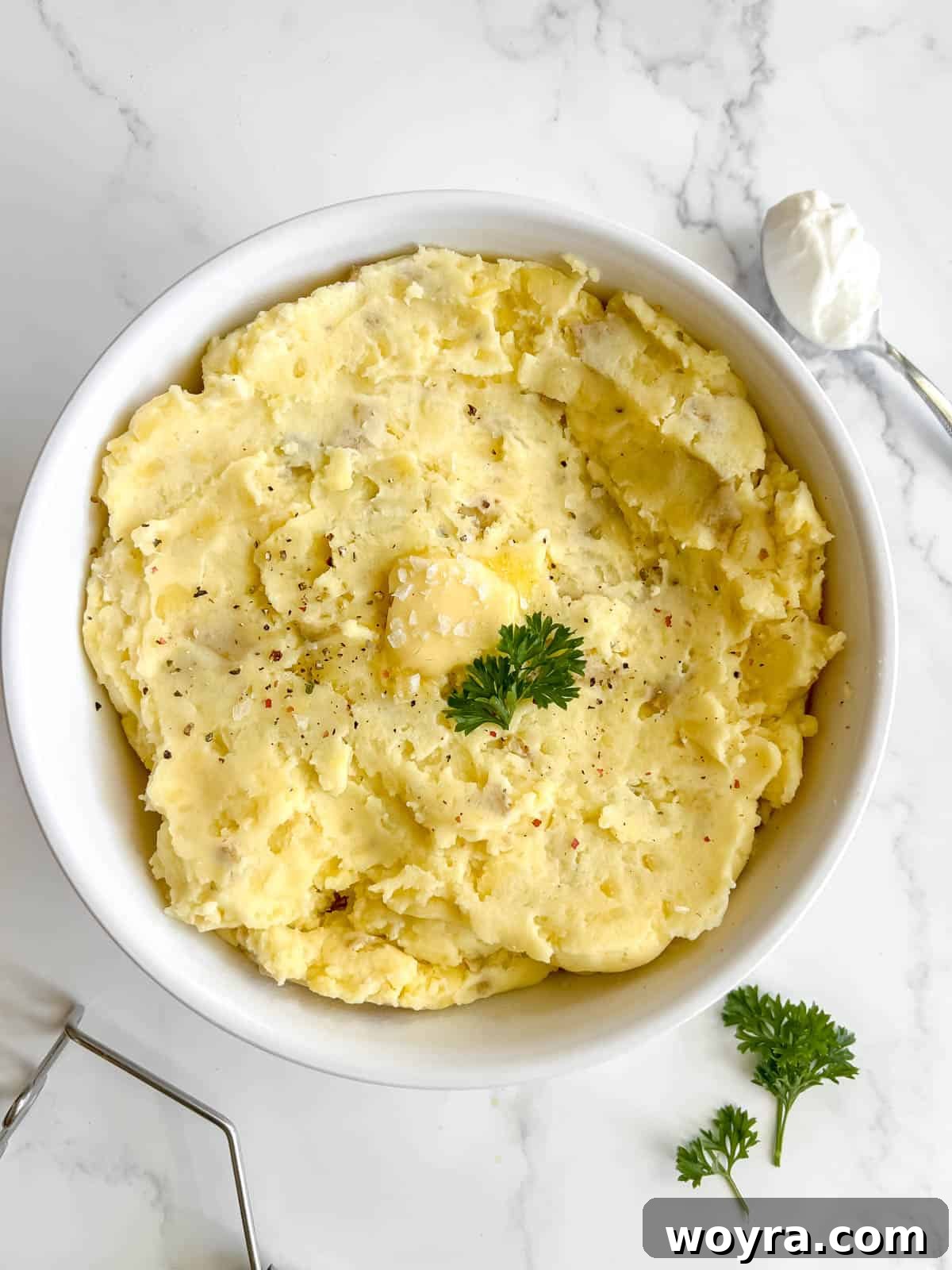
Leftover Greek yogurt mashed potatoes should be stored in an airtight container in the refrigerator. They will stay fresh and delicious for 3-4 days.
Absolutely! These mashed potatoes are a great make-ahead option. Simply follow the recipe, allow them to cool completely, then transfer them to an airtight container and refrigerate until you’re ready to serve. Making them ahead can save significant time on busy days or when hosting.
There are a few ways to reheat them to bring back their creamy texture:
- Microwave: Place individual servings in a microwave-safe bowl, add a splash of milk or butter, cover, and heat in 30-60 second intervals, stirring in between, until heated through and creamy.
- Stovetop: Transfer the mashed potatoes to a saucepan over low heat. Add a tablespoon or two of milk or butter and stir frequently until warmed through and creamy again.
- Oven: For larger batches, place mashed potatoes in an oven-safe dish, add a little milk or butter, cover with foil, and bake at 350°F (175°C) for 20-30 minutes, or until heated through. Stir before serving.
You may need to add a bit more milk, cream, or butter during reheating to restore their original creamy consistency.
While most mashed potatoes can be frozen, the Greek yogurt in this recipe can sometimes alter the texture slightly upon thawing, making it a bit grainier. If you choose to freeze, ensure they are cooled completely, then store in an airtight, freezer-safe container or bag for up to 1-2 months. Thaw in the refrigerator overnight and reheat gently, adding extra dairy and butter as needed to restore creaminess.
Frequently Asked Questions
Not necessarily! It largely depends on the type of potatoes you are using and your personal preference. For Gold potatoes (Yukon Gold), which have a thin, relatively neutral-tasting skin, leaving the skin on is perfectly fine and even recommended by some for added fiber and rustic appeal. However, if you’re using Russet potatoes or Idaho potatoes, which have a thicker, tougher skin, I highly recommend peeling them for a smoother, more refined mashed potato experience. The skins of these varieties tend not to blend as seamlessly into the mash.
For creamy mashed potatoes, a traditional vertical-handled potato masher with a grid or wavy pattern is excellent. If you desire an ultra-smooth, lump-free consistency, a potato ricer or food mill is your best friend. Avoid using a food processor or immersion blender, as these can over-process the potatoes, breaking down starches too much and resulting in a gummy, unappetizing texture.
The key to avoiding gummy mashed potatoes is to avoid overworking them. Use a potato masher or ricer, not an electric mixer or food processor. Mash just until smooth, or to your desired consistency. Also, ensure your potatoes are cooked until truly fork-tender before mashing, and drain them very well to remove excess water. Too much moisture or too much mashing can both lead to gumminess.
Other Delicious Potato Recipes You’ll Love
If you’re a fan of potatoes, you’re in for a treat! Beyond these creamy Greek yogurt mashed potatoes, there are countless ways to enjoy this versatile vegetable. Here are some of my other favorite potato-centric recipes that you might just love:
Did you try this recipe? Please leave me a ⭐ review below! Your feedback helps other home cooks discover and enjoy these delicious recipes.
Greek Yogurt Mashed Potatoes
Dominique
6
10 mins
20 mins
30 mins
Email Recipe
Print Recipe
Equipment
-
1 potato masher
Ingredients
- 3 lbs gold potatoes, sliced into 1.5 inch pieces (peeled or unpeeled both work here)
- 4 Tablespoons unsalted butter
- 1/2 cup Greek yogurt (full-fat or low-fat)
- 1/3 cup heavy cream or milk
- 1 teaspoon salt (or to taste)
- 1/4 teaspoon ground black pepper (or to taste)
Instructions
-
Place the sliced potatoes into a large pot filled with cold water. Add a generous pinch of salt. Heat the water over medium-high heat and then boil the potatoes for 15-20 minutes, or until fork-tender. Drain thoroughly.
-
Return the drained potatoes to the large pot or transfer to a sturdy mixing bowl. Add the butter, Greek yogurt, heavy cream/milk, salt, and pepper.
-
Using a potato masher, mash all ingredients together until smooth and creamy, or to your desired consistency. Avoid over-mashing to prevent a gummy texture.
-
Taste the mashed potatoes and adjust seasoning (salt and pepper) as needed. If the texture is too dry, add a bit more butter or milk/cream, one tablespoon at a time, mashing gently until the perfect creaminess is achieved. Serve warm and enjoy!
Notes
- For an alternative to Gold potatoes, you can use Russet or Idaho potatoes. Remember to peel Russet potatoes for the smoothest result.
- Instead of milk, you can use heavy cream or half and half for an even richer consistency.
- If your mashed potatoes seem too dry after mashing, gradually add more butter and/or cream (or milk) until they reach your desired level of creaminess.
- Consider adding roasted garlic, fresh chives, or a sprinkle of Parmesan cheese for extra flavor.
Nutrition
Calories:
260kcal
Carbohydrates:
41g
Protein:
7g
Fat:
8g
Saturated Fat:
5g
Polyunsaturated Fat:
0.4g
Monounsaturated Fat:
2g
Trans Fat:
0.3g
Cholesterol:
23mg
Sodium:
472mg
Potassium:
1002mg
Fiber:
5g
Sugar:
3g
Vitamin A:
261IU
Vitamin C:
45mg
Calcium:
65mg
Iron:
2mg
Nutrition information is automatically calculated and should be used as an approximation. It may vary based on specific ingredients and brands used.
Additional Info
Side Dish
American
Tried this recipe?
Mention @perchancetocook or tag #perchancetocook on social media!